
 Canada
 USA
USA Japan
Japan


IndustrialAdhesive Tape Manufacturing Process: Step-by-Step & Guide

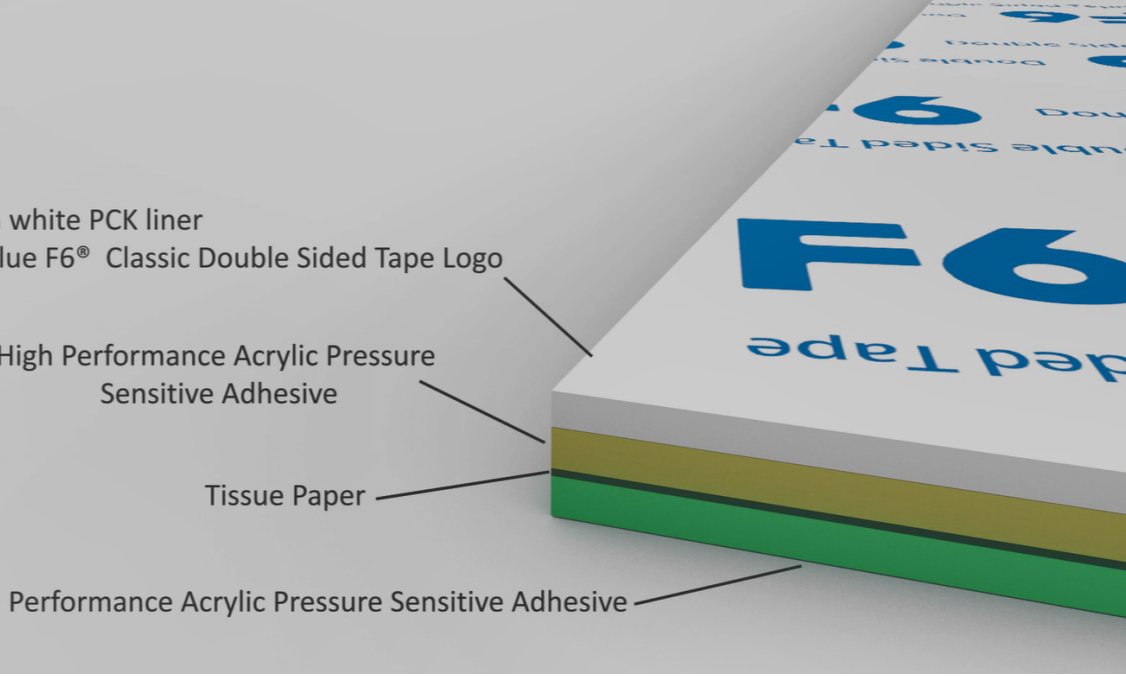
The adhesive tape manufacturing process is a sophisticated engineering feat. It transforms raw polymers and films into high-performance bonding tools. Millions of industries rely on these products daily for assembly and packaging. Understanding how these tapes are made requires a look at chemical formulation and mechanical precision.
Modern manufacturing ensures that every roll meets strict performance standards. This involves a sequence of highly controlled stages. Each step contributes to the final strength, durability, and temperature resistance of the tape. Engineers must balance chemical properties with physical application needs.
The journey of a tape begins long before it reaches the coating line. It starts with the selection of raw materials tailored for specific environments. From automotive trims to electronic components, the manufacturing path defines the product’s success. This article details the complex steps involved in creating industrial-grade adhesive solutions.
1.What Materials Are Used in Adhesive Tape Production?
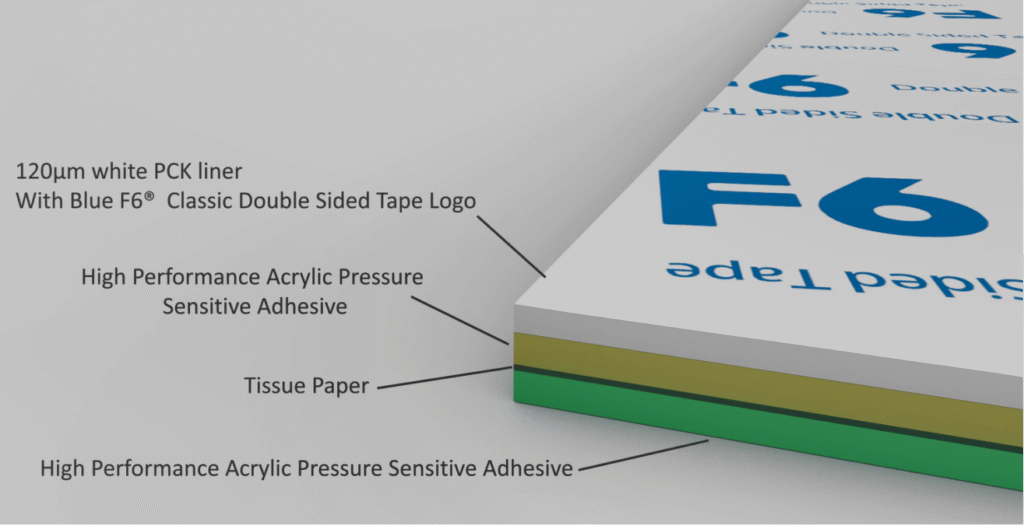
The performance of industrial adhesive tapes is fundamentally determined by their core components: the adhesive system, backing (or carrier), and release liner—each engineered to ensure bonding performance, structural stability, and application reliability.
Adhesive systems, the core functional component, are primarily formulated from acrylics, rubbers, or silicones: Acrylic adhesives offer superior UV resistance and long-term stability for automotive, electronic, and outdoor use; Rubber adhesives provide high initial tack for temporary holding and remove no residue; silicone adhesives withstand extreme temperatures up to 260°C for high-temperature processing.
The backing acts as the tape’s structural backbone, with common materials including PET films, non-woven fabric,tissue papaer, PE foam, and cloth. For transfer tapes, no traditional carrier is used—only a pure adhesive layer supported by a release liner.
Release liners/films are critical auxiliary components, with common types including glassine paper (general-purpose), PE-coated kraft paper (moisture-resistant, heavy-duty), and PET release films (high-precision, electronic-grade). All are silicone-coated for controlled release, preserving adhesive performance while enabling easy unwinding.
| Material Component | Common Types | Key Characteristic |
| Adhesive | Acrylic, Rubber, Silicone | Bonding Strength |
| Backing/Carrier | PET,PE Foam, Tissue, Fiberglass,PVC,MOPP | Tensile Strength |
| Release Liner | Glassine, PE Film, Kraft Paper | Easy Release |
2.How Is the Adhesive Tape Manufacturing Process Executed?
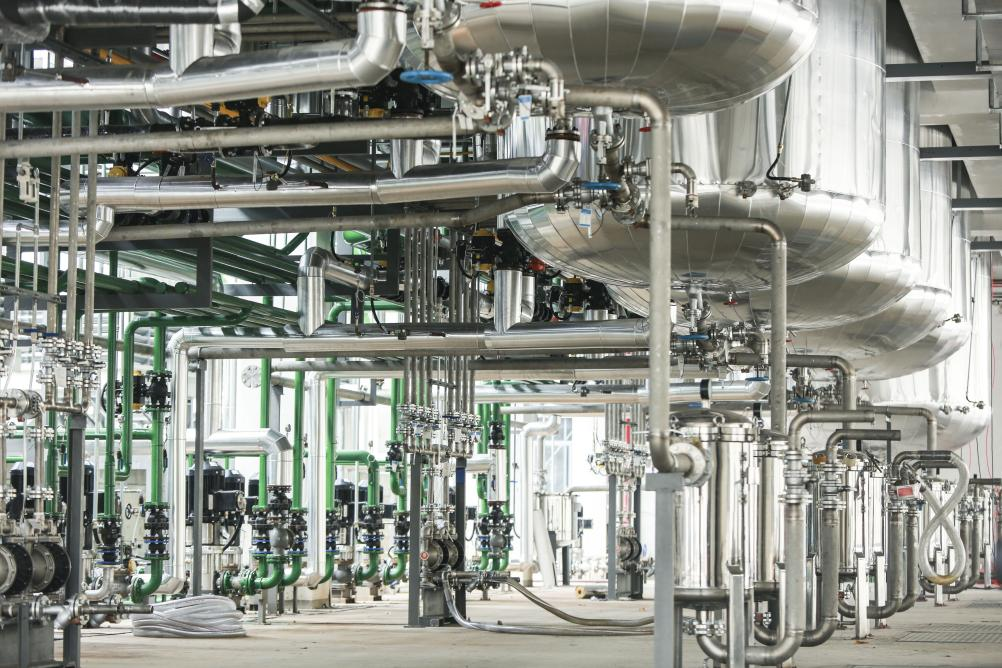
The first stage is adhesive formulation. Polymers, tackifiers and functional additives are precisely blended in closed mixing systems. Viscosity and solid content are strictly controlled within standard ranges to ensure stable coating performance and consistent adhesion. This step is the foundation for the tape’s bonding strength and durability.
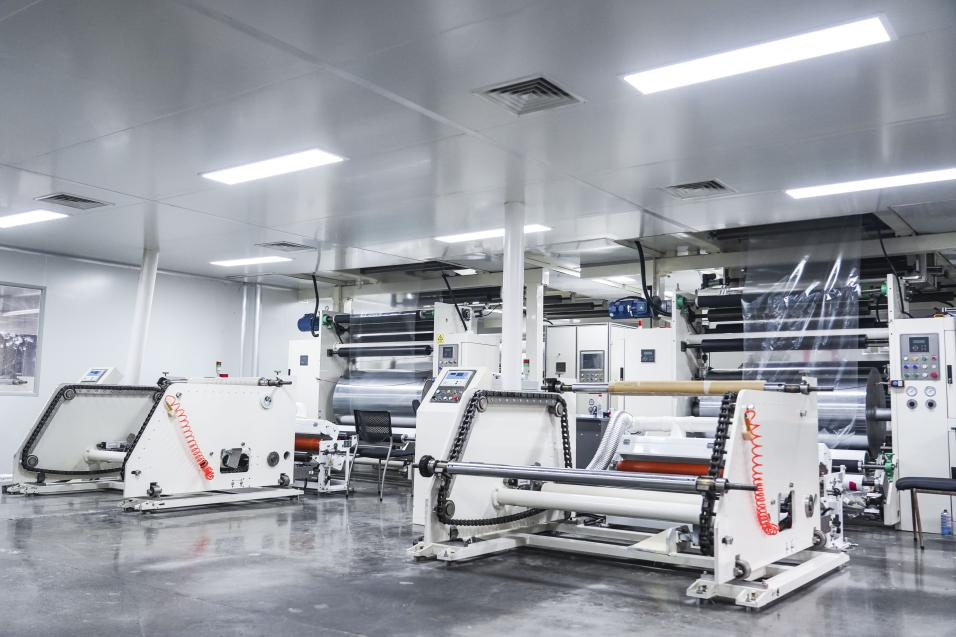
Next, the coating process begins. The backing material (web) is fed into high-speed precision coating equipment at a stable speed. Advanced coating technologies (slot-die, gravure or comma coating) are adopted to achieve micron-level uniform adhesive thickness. Coating precision is controlled to ±1μm, ensuring no unevenness or missing coating, which directly determines the tape’s bonding uniformity.
After coating, The coated web enters a multi-stage continuous drying oven to remove solvents or moisture in the adhesive. According to adhesive type, heat curing or UV curing is performed: heat curing triggers polymer crosslinking at 80-120℃, while UV curing achieves rapid crosslinking under ultraviolet irradiation. This step enhances the adhesive’s cohesion, shear resistance and thermal stability, ensuring long-term bonding reliability.
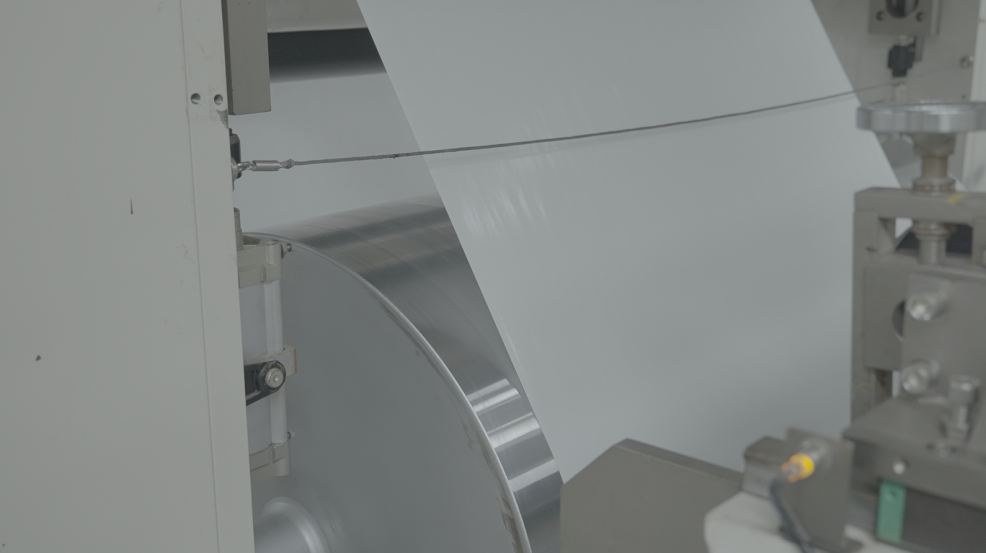
Once dried,the finished tape is wound into large jumbo rolls (width up to 1.2m, length up to 5000m) under constant tension. Tension control is critical here to avoid web wrinkling or adhesive layer damage, laying the foundation for subsequent slitting.
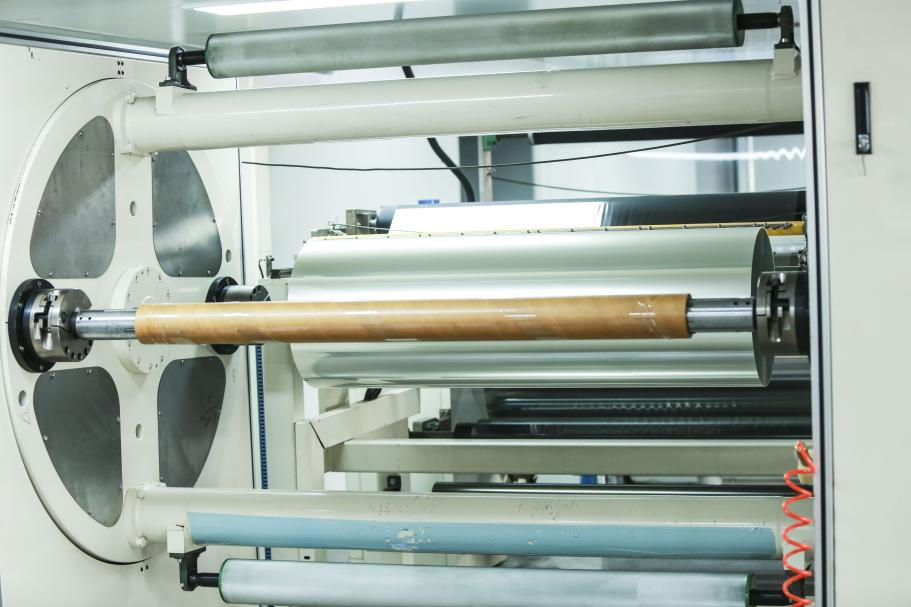
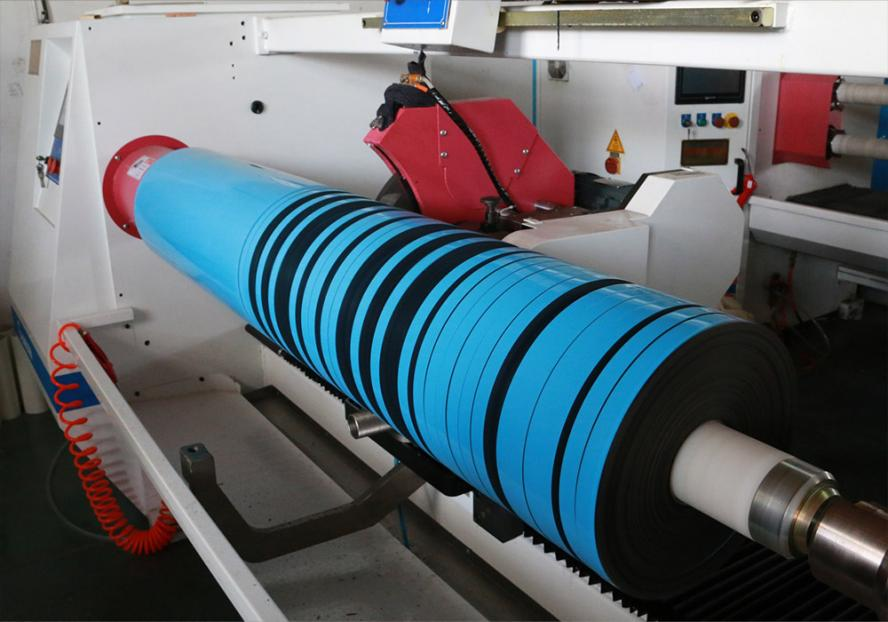
They are then moved to the converting department. Here, rewinding and slitting machines process the massive jumbo rolls, rewinding and cutting them into the specific dimensions required by customers.
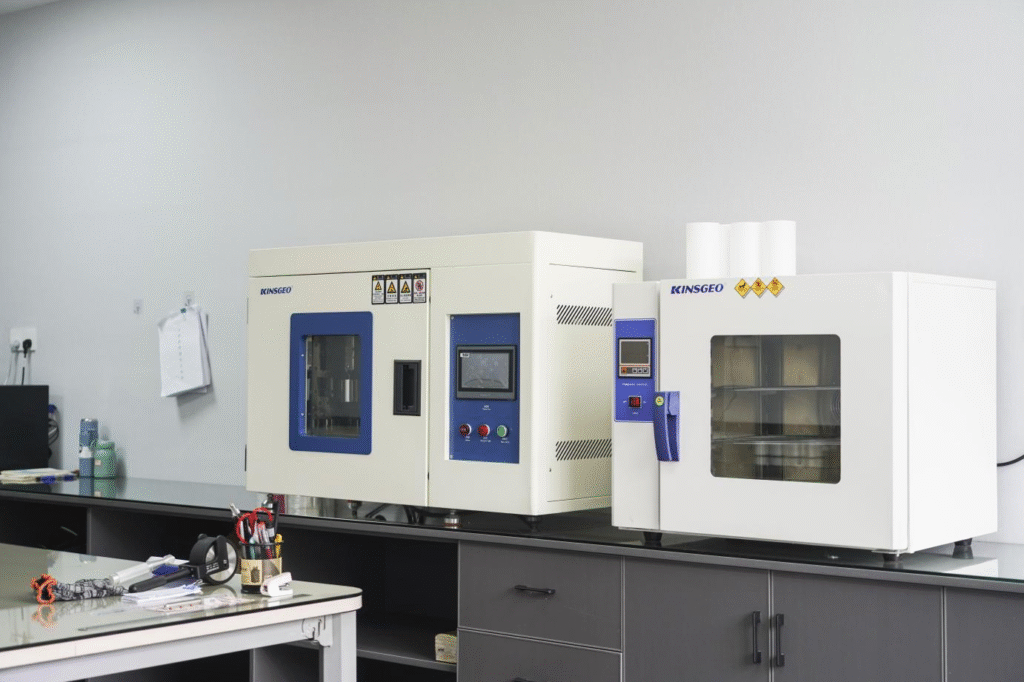
After slitting and rewinding, strict quality testing is conducted, including adhesion strength, thickness uniformity, and surface defect inspection, to ensure each roll meets F6 Tape’s industrial standards.
3.Why Technical Precision Defines Tape Quality
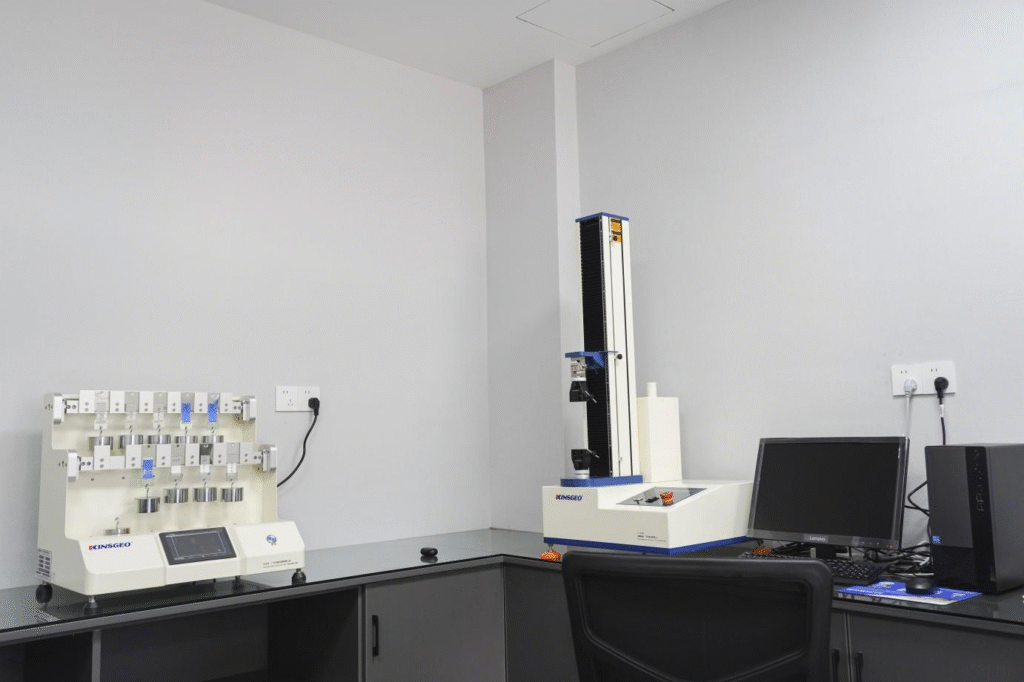
Quality control is integrated into every stage of the adhesive tape manufacturing process. Technicians perform peel adhesion tests to measure the force required to remove the tape. A standard industrial tape might require a force of 20N/25mm or higher. These metrics ensure the tape will not fail under stress.
Shear strength is another critical metric. This measures the adhesive’s ability to withstand continuous sliding forces. Tapes used in construction must have high shear strength to hold weight over years. Without proper chemical curing, the adhesive would “ooze” or slip over time.
Environmental testing is also mandatory for high-end products. Samples are placed in aging chambers to simulate years of UV exposure. This confirms that the tape will not turn brittle or lose its grip. Scientific data collection prevents product recalls in critical sectors like aerospace and electronics.
4.Summary
The adhesive tape manufacturing process combines chemical formulation, precision coating, and rigorous testing. From mixing raw polymers to the final slitting of rolls, each step ensures reliability. By understanding these stages, users can better select tapes that withstand environmental stress. High-quality manufacturing ultimately results in stronger, longer-lasting industrial bonds.
7.FAQ:
1.What is the most critical step in industrial tape manufacturing?
Coating precision is the most critical step. It determines the uniformity of the adhesive layer across the entire roll. Even minor variations in thickness can lead to bond failure in sensitive applications.
2.How is double-sided tape different from single-sided tape?
Double-sided tape involves coating adhesive on both sides of a carrier. Alternatively, it can be a transfer tape where the adhesive is coated onto a release liner. This allows for bonding two surfaces together directly.
3.Why are some adhesive tapes cured with UV light?
UV curing is a fast way to cross-link polymers without using heat. This process increases the thermal resistance and chemical stability of the adhesive. It is often used for tapes in the electronics and automotive industries.
4.What role does the release liner play?
The release liner protects the adhesive from contamination and prevents it from sticking to itself. It is coated with a release agent, like silicone, to allow for easy peeling. Without a high-quality liner, the tape would be impossible to unwind or apply.
5.Can adhesive tapes be eco-friendly?
Yes, many modern tapes use solvent-free manufacturing processes. Water-based adhesives and hot-melt technologies reduce the emission of volatile organic compounds (VOCs). These methods are safer for the environment and the factory workers.
Reference Sources
Pressure Sensitive Tape Council (PSTC)
European Adhesive Tape Association (AFERA)
ASTM International (Standard Test Methods for Adhesion)