
 Canada
 USA
USA Japan
Japan


Solving 7 Common Adhesive Tape Problems: A Technical Guide

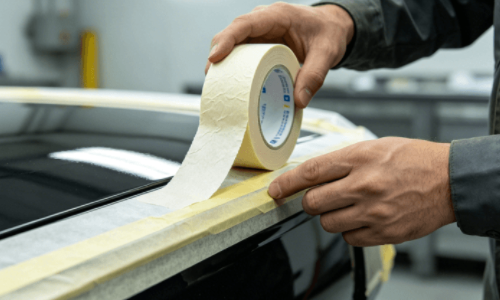
In high-volume manufacturing and OEM assembly, adhesive tape is rarely just “sticky paper.” It is a precision-engineered component. When a tape fails—whether it’s an electrical insulation tape flagging on a wire harness or a masking tape leaving residue on a freshly painted surface—the root cause is often a mismatch between the adhesive chemistry and the application environment.
Understanding why these failures occur is the first step toward optimizing your production line and reducing rework costs. This guide analyzes the most frequent adhesive tape problems from an engineering perspective and provides actionable solutions.
1.Surface Energy Mismatch (The “Beading” Effect)
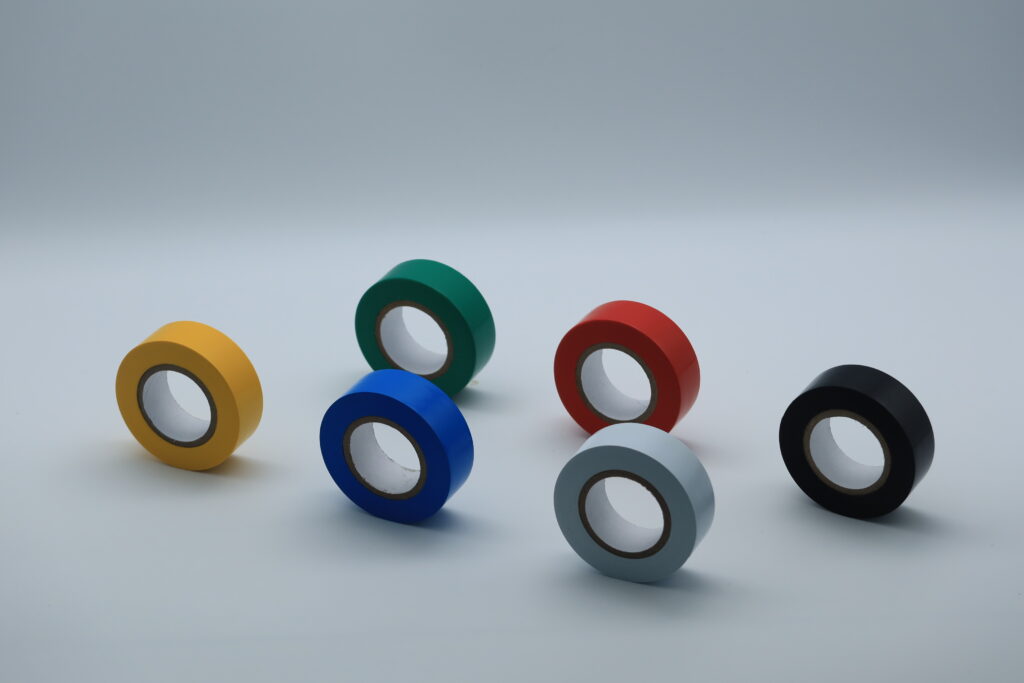
One of the most common reasons for poor initial tack is a disparity in surface energy. Every substrate has a “dyne level.” Metals and glass have high surface energy (HSE), making them easy to bond with. However, modern plastics like polyethylene (PE) or polypropylene (PP) have low surface energy (LSE).
The Problem: The adhesive “beads up” rather than “wetting out” across the surface. This leads to weak bonds that peel away with minimal force.
The Solution:
- Identify the Substrate: Ensure your adhesive is specifically formulated for LSE surfaces if working with plastics.
- Surface Treatment: Use a chemical primer or physical treatments like corona or flame treatment to increase the surface energy before application.
- Adhesive Selection: Transition to a high-tack acrylic or a modified rubber adhesive designed for difficult-to-bond materials.
2.Adhesive Flagging (The “Memory” Problem)
Flagging occurs when the ends of a tape lift or “pop off” after being wrapped around a curved surface, such as a pipe or a cable bundle.
The Problem: This is usually caused by the “memory” of the tape backing. If a tape is applied under too much tension, the backing wants to return to its original flat state. If the adhesive’s shear strength cannot overcome this restorative force, the ends lift.
The Solution:
- Zero-Tension Wrap: Ensure the final 2–3 inches of the tape wrap are applied with zero tension.
- Higher Shear Adhesive: Select a tape with higher internal strength (cohesion) to resist the backing’s pull.
- Increase Overlap: For cylindrical applications, ensure a significant overlap (at least 50%) to create a “tape-to-tape” bond, which is often stronger than a “tape-to-substrate” bond.
3.Cohesive Failure vs. Adhesive Failure (The Residue Issue)
When you remove a tape and it leaves a sticky mess behind, you are witnessing cohesive failure.
The Problem: The internal bond of the adhesive has broken, leaving part of the glue on the substrate and part on the backing. This is often caused by heat degradation, UV exposure, or “plasticizer migration” from the substrate (common in PVC materials).
The Solution:
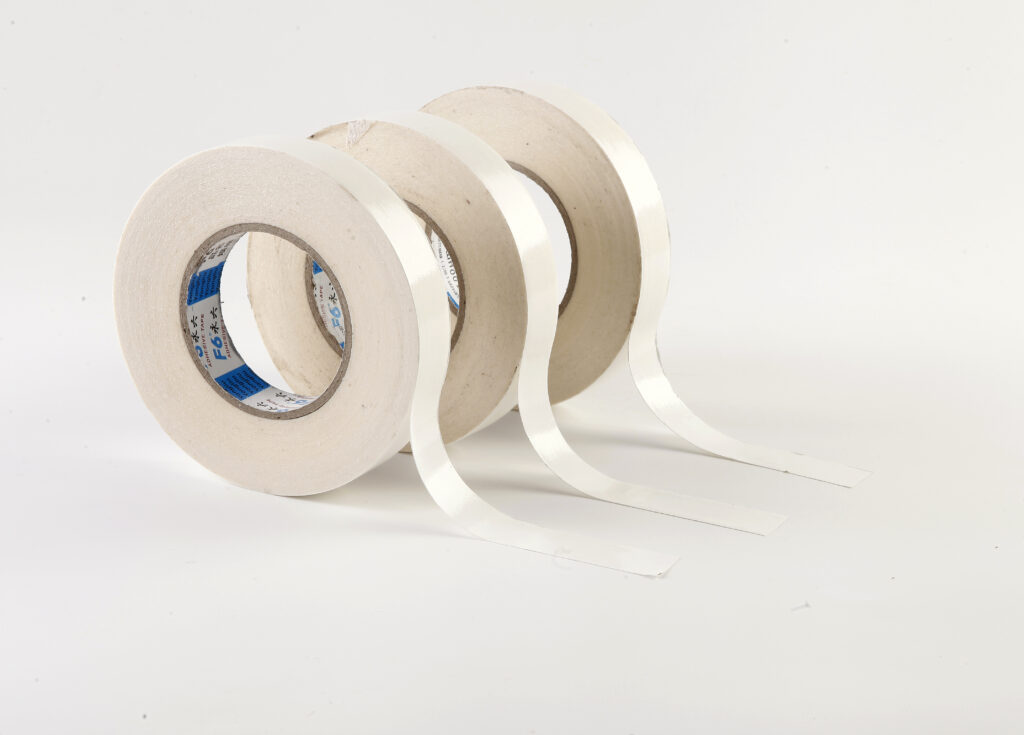
- Temperature Rating: Match the tape to the operating environment. If your process involves a bake cycle, use a high-temperature masking tape (such as those found in F6 Tape’s masking solutions).
- UV Resistance: If the application is outdoors, switch from a rubber-based adhesive to an acrylic-based adhesive, which offers superior UV stability.
- Solvent Cleaning: Use isopropyl alcohol (IPA) to clean surfaces before application to prevent chemical reactions that soften the adhesive.
4.Adhesive Tape Diagnostics: Quick Reference Table
| Problem | Potential Root Cause | Engineering Solution |
| Telescoping | High tension during winding/storage | Store in cool, dry areas; check roll tension specs. |
| Bubbling/Tunneling | Outgassing of substrate or uneven pressure | Use a weighted roller; allow substrate to “dwell.” |
| Cracking Backing | UV degradation or extreme cold | Switch to UV-stabilized PE or Aluminum Foil backings. |
| Ghosting | Micro-transfer of adhesive resins | Adjust removal speed and angle (90-degree vs. 180-degree). |
5.Inadequate Pressure (The “Dwell Time” Factor)
Pressure-sensitive adhesives (PSA) require exactly that: pressure. The bond is not instantaneous at a molecular level.
The Problem: The tape is applied lightly by hand, and it falls off shortly after. The adhesive hasn’t had the opportunity to flow into the microscopic valleys of the substrate.
The Solution:
- Mechanical Application: Whenever possible, use a rubber roller or a squeeze-roll laminator to apply uniform pressure.
- Respect Dwell Time: Most high-performance acrylic tapes require 24 to 72 hours to reach 100% bond strength. Avoid stress-testing the bond immediately after application.
6.Plasticizer Migration in Flexible Materials
If you are applying tape to flexible vinyl, gaskets, or soft plastics, you may notice the adhesive turning into a “gooey” liquid over time.
The Problem: These materials contain plasticizers to keep them flexible. Over time, these chemicals migrate into the tape’s adhesive, breaking down its polymer structure.
The Solution:
- Plasticizer-Resistant Adhesives: Use tapes specifically engineered with acrylic adhesives that are chemically “blocked” against plasticizer migration.
- Barrier Layers: Use an aluminum foil tape or a specialized PET carrier to act as a barrier between the substrate and the sensitive adhesive.
7.Environmental Contamination
In a factory environment, the air is often filled with microscopic contaminants: oil mist, silicone sprays, and dust.
The Problem: A single layer of dust or a fingerprint (skin oils) can reduce the effective bonding area by 50% or more.
The Solution:
- Clean-Room Protocols: In critical electronics or automotive assembly, use gloves to prevent skin oil transfer.
- Standardized Cleaning: Implement a two-cloth cleaning method: one cloth to apply a solvent (like a 70/30 IPA/Water mix) and a second dry cloth to remove the dissolved contaminants before they re-settle.
Selecting the Right Material for Performance
Avoiding these problems begins with selecting the correct tape for the specific industrial use case. Based on the technical requirements of modern manufacturing, different backings solve specific failure modes:
- For High-Heat Electrical Protection: Use PVC or specialized Cloth tapes that offer high dielectric strength and heat resistance to prevent melting or short circuits.
- For Moisture and Vapor Barriers: Aluminum Foil tapes provide a zero-permeability barrier that prevents the corrosion-related adhesive failure common in HVAC and construction.
- For Precision Painting: High-grade Crepe Paper masking tapes are essential to prevent “paint bleed” and ensure clean removal without ghosting.
Exploring a comprehensive product catalog allows engineers to match the backing material (PVC, BOPP, Foil, or Cloth) with the appropriate adhesive chemistry (Rubber, Hot Melt, or Acrylic) to mitigate the risks mentioned above.

FAQ
Q: Why does my tape stick to itself but not the product?
A: This is usually a surface energy issue. The “Release Coat” on the back of the tape is designed to be low-energy so the tape unrolls. If the product surface has even lower energy (like silicone or some powders), the tape will naturally prefer its own backing.
Q: How does temperature affect tape storage?
A: Extreme heat causes adhesive “ooze” (the adhesive bleeds out the sides of the roll). Extreme cold can make the adhesive “glassy” and lose its tack. Always store tape in a climate-controlled environment (approx. 21°C / 70°F).
Q: Can I use tape on a powder-coated surface?
A: Powder coatings are notoriously difficult because they are designed to be “non-stick.” You must use a high-tack, high-coat-weight adhesive specifically designed for LSE (Low Surface Energy) coatings.
Q: Does the angle of removal matter?
A: Yes. For clean removal without residue, a 90-degree angle at a steady, moderate speed is generally recommended for masking applications. Removing tape too quickly can cause the backing to tear (shredding).
Reference Sources
- ASTM D3330: Standard Test Method for Peel Adhesion of Pressure-Sensitive Tape.
https://store.astm.org/d3330_d3330m-04r18.html - PSTC (Pressure Sensitive Tape Council): Glossary of Terms and Troubleshooting Guide
https://pstc.org/ - ISO 29862: Self-adhesive tapes – Determination of peel adhesion properties
https://www.iso.org/standard/74543.html