
 Canada
 USA
USA Japan
Japan


How to Evaluate an OEM Adhesive Tape Manufacturer?

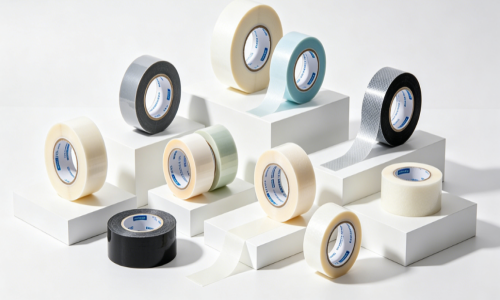
Selecting a reliable B2B partner for high-volume bonding solutions requires moving beyond basic product catalogs. Industrial applications demand strict adhesion tolerances, temperature resistance, and specific sheer strength parameters. Evaluating a manufacturing facility means analyzing their substrate processing, coating technologies, and material compliance. Delays in sampling or inconsistent batch quality can severely disrupt critical assembly lines. This guide explores the technical and commercial factors required to validate a customized tape production partner.
What Defines a Qualified OEM Adhesive Tape Manufacturer?
An elite OEM adhesive tape manufacturer operates with stringent quality control frameworks. Production facilities must evaluate raw adhesive dispersions and substrates under highly controlled environments. Without these standardized procedures, batch-to-batch consistency becomes impossible to guarantee.
Peel adhesion, tack, and shear resistance are strictly tested during production. Quality engineers rely on established industry frameworks to measure precise adhesive peel forces. Meeting international testing standards ensures the final tape withstands real-world mechanical stress.
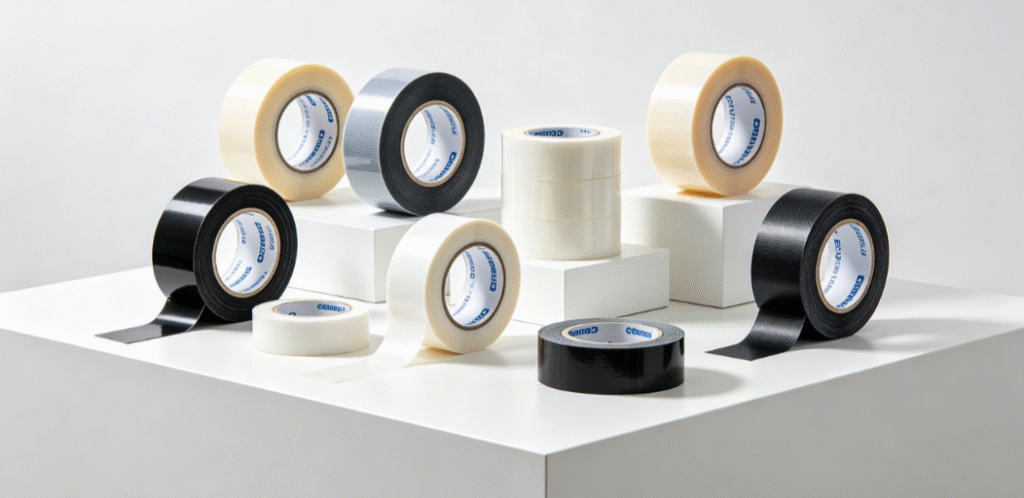
For large-volume production, a qualified factory maintains cleanroom coating environments. This sterile setup prevents particulate contamination from compromising the sensitive adhesive surface. Advanced coating heads dictate the precise thickness of the chemical adhesive layer.
Thickness tolerances must remain uniform across the entire jumbo master roll. Any microscopic deviation can cause structural failures during the end-user’s final assembly process. Reliable suppliers continuously monitor active coating weights using inline laser scanning equipment.
How to Evaluate Quality Control in Tape Manufacturing?
Validating a supplier requires a deep dive into their quality assurance protocols. An experienced B2B partner constantly monitors ambient temperature and humidity during the coating process. Minor environmental fluctuations can drastically alter the curing time of solvent-based chemicals.
Factories must utilize advanced testing equipment to measure immediate tack and ultimate shear strength. Measuring the release force of the backing liner is also a critical quality check. If the silicone liner strips away too easily, the tape may unroll prematurely.
Dynamic load testing ensures the adhesive bond survives sudden impact shocks. Engineers simulate long-term aging by exposing tape samples to artificial UV light chambers. These accelerated weathering tests prove the product’s lifespan in harsh exterior environments.
Core Substrates and Adhesive Material Trade-Offs
Industrial double-sided tapes rely on highly specific substrate and adhesive pairings. Tissue and non-woven tapes offer excellent conformability for irregular and textured surfaces. These flexible materials naturally lack high tensile strength for heavy structural loads.
PET and PVC double-sided tapes provide necessary rigidity and structural stability. These polymer films deliver exceptional dimensional stability and high-temperature resistance. They are ideal for precision stamping and electronic component bonding processes.
Acrylic foam tapes deliver exceptional shock absorption for heavy-duty mounting applications. The viscoelastic nature of the foam dissipates stress across the entire bond line. These high-performance tapes require longer curing times to reach their ultimate adhesion strength.
| Substrate Type | Key Strength | Common Application | Curing Speed |
| Tissue Tape | High conformability | Nameplate bonding | Immediate |
| PET / PVC Films | Dimensional stability | Electronics assembly | Immediate |
| Acrylic Foam | Shock absorption | Automotive mounting | Extended |
| Aluminum Foil | Heat reflectivity | HVAC insulation | Immediate |
High-Performance Scenarios: Automotive and Electronics Tapes
Automotive manufacturing environments typically require low-VOC and low-odor adhesive tapes. Adhesives used in vehicle interiors must pass rigorous chemical outgassing tests. This strict testing ensures compliance with global environmental and passenger health standards.
Under-hood automotive applications demand extreme heat resistance and chemical shielding properties. The tapes must maintain sheer strength despite constant thermal cycling and fluid exposure. Using standard packaging adhesives here often results in catastrophic mechanical bond failure.
Home appliances require moisture-resistant foam double-sided tapes for internal component mounting. Holding tapes used during transport must survive prolonged vibration without leaving sticky residue. The adhesive chemistry must perfectly balance high initial tack with clean removability.
Plate mounting tapes used in flexographic printing demand ultra-precise physical thickness. Even microscopic surface variations can severely distort the final commercial printed image. Matching the specific tape formulation to the end-use operational environment is mandatory.
Why Do Precision Die Cutting Tolerances Matter for OEM Tapes?
Converting jumbo tape rolls into usable formats directly impacts supply chain efficiency. Custom slitting requires precise tension control on the factory rewinding shafts. Poor tension causes severe telescoping or edge distortion on the finished tape rolls.
Complex die-cutting operations often introduce strict physical manufacturing tooling limitations. The minimum cutting radius heavily depends on the target tape’s overall thickness. The specific release liner type also dictates how cleanly the part can be extracted.
Highly aggressive industrial adhesives may cause sticky oozing during the die-cutting phase. This physical challenge requires specialized anti-stick cutting blades and slower machine operating speeds. These custom converting requirements often extend initial project sampling lead times.
Project procurement managers should account for these physical manufacturing speed constraints. Rushing the die-cutting process inevitably leads to out-of-tolerance custom parts. Clear communication regarding dimensional tolerances prevents expensive downstream assembly issues.
Troubleshooting Common Assembly Line Tape Failures
Adhesive tape failures during assembly often stem from poor chemical substrate matching. Applying rigid PET tapes to highly curved plastic surfaces creates constant mechanical stress. Eventually, the structural memory of the film overcomes the adhesive bond, causing lifting.
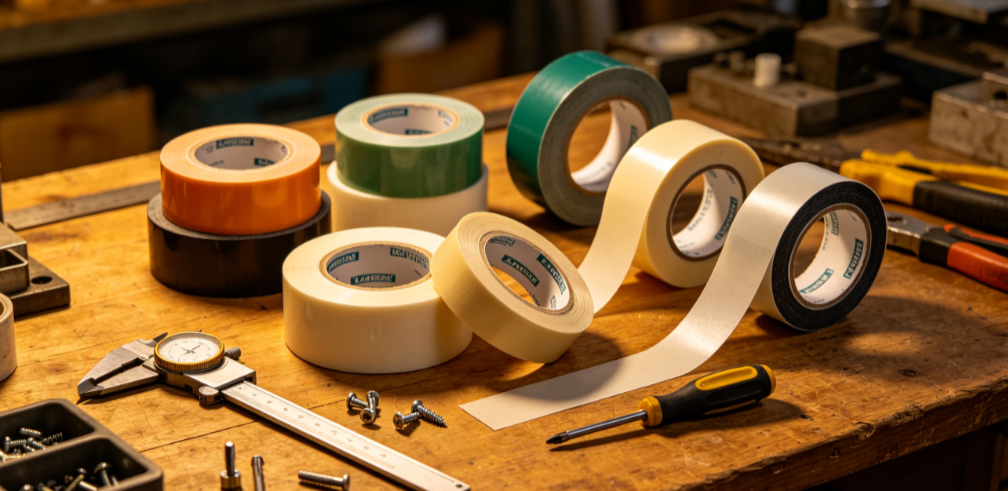
Surface energy dictates how well an adhesive wets out and grips the material. Low surface energy plastics like polypropylene require specially formulated tackifiers to stick correctly. Failing to specify the target surface during the RFQ process guarantees poor field performance.
Inadequate physical pressure during application is another leading cause of premature bond failure. Pressure-sensitive adhesives require mechanical force to push polymer chains into the substrate’s microscopic pores. Consulting your manufacturing partner about proper application tools prevents these common field defects.
Navigating the RFQ Workflow and MOQ Limitations
Procurement teams must provide detailed specifications during the initial RFQ process. Essential project details include substrate type, total thickness, and target application surfaces. Missing parameters will result in inaccurate pricing and incorrect chemical material suggestions.
Standard Custom Tape RFQ Workflow:
- Define the exact application surface and required thermal resistance limits.
- Specify total tape thickness and desired finished roll dimensions.
- Submit environmental compliance requirements like low-VOC or flame-retardancy.
- Request initial material samples for physical assembly line stress testing.
- Approve the final pilot production run before initiating mass production.
Most tape manufacturing facilities enforce a strict Minimum Order Quantity limit. This volume is usually based on the master jumbo roll size of the material. Custom chemical formulations typically carry much higher mandatory minimum order volumes.
Flame-retardant or ultra-viscosity adhesives require dedicated chemical factory mixing setups. Smaller custom runs are often economically unviable due to high equipment setup costs. Buyers should ask for stock material alternatives to bypass heavy volume commitments.
How We Support Your Custom Adhesive Tape Development
As a dedicated OEM adhesive tape manufacturer, we engineer precise industrial bonding solutions. Our production facility handles complex structural demands across multiple global manufacturing sectors. We specialize in transforming raw chemical adhesives into high-performance structural die-cut components.
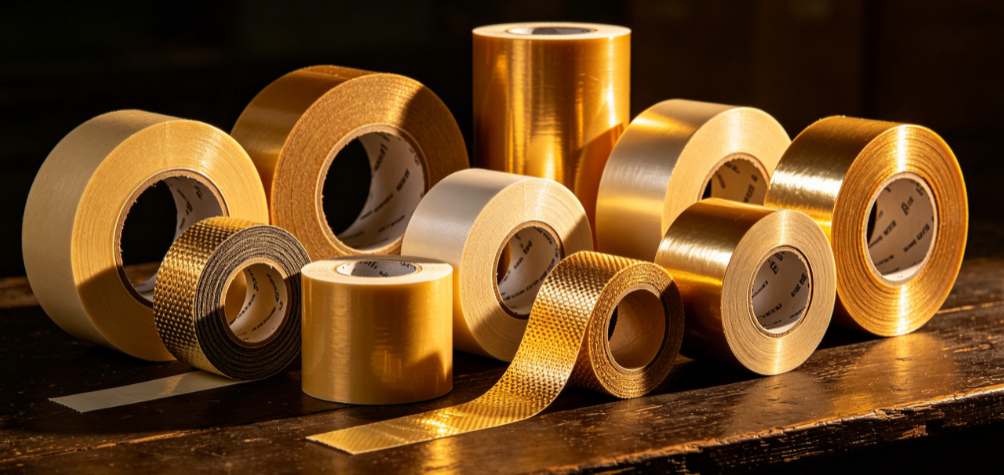
Our active production lines handle a diverse range of technical B2B products. We manufacture heat-resistant tissue tapes, acrylic foam tapes, and specialized electrical tapes. Every shipped roll undergoes strict quality inspection to ensure reliable field performance.
We actively support applications across the automotive, consumer electronics, and construction sectors. Our factory capabilities include highly customized slitting and precision die-cutting converting services. We continually optimize the final tape format to fit your exact automated assembly workflow.
Our dedicated engineering team prioritizes technical compliance and overall environmental safety. We offer low-VOC, water-based, and flame-retardant options backed by rigorous laboratory testing. Contact our support team to discuss material sampling and scalable contract manufacturing schedules.
FAQ
Q: What is the standard MOQ for custom die-cut adhesive tapes?
A: MOQ depends on the master roll dimensions and the specific adhesive formulation. Standard materials may require lower minimums, while custom-coated adhesives demand full-batch commitments.
Q: How long does the RFQ and sampling process take for OEM projects?
A: Initial technical evaluation and pricing usually take three to five business days. Physical sampling lead times extend up to three weeks depending on physical tooling requirements.
Q: Can you match the performance of specific name-brand industrial tapes?
A: Yes, our engineers analyze the performance specifications of existing commercial tapes. We then formulate and coat an equivalent adhesive system that meets or exceeds those parameters.
Q: Do custom adhesive formulations increase the standard production lead time?
A: Yes, custom chemical mixing and pilot coating trials add significant production time. Once the formulation is approved, mass production lead times return to standard industry averages.
Q: What testing standards are used to verify tape adhesion quality?
A: We evaluate peel strength, tack, and shear resistance using standardized testing methods. Factory testing aligns with international frameworks such as ASTM and PSTC laboratory guidelines.
Reference Sources
- Standard Test Method for Peel Adhesion of Tapes ASTM D3330.
https://www.astm.org/d3330_d3330m-04r18.html - PSTC Test Methods for Pressure Sensitive Adhesive Laboratory.
https://pstc.org/ - Pressure Sensitive Adhesives Chemistry and Testing Standards.
https://www.adhesives.org/