
 Canada
 USA
USA Japan
Japan


Industrial Adhesive Tape Manufacturer Selection Guide: How to Choose a Reliable Supplier

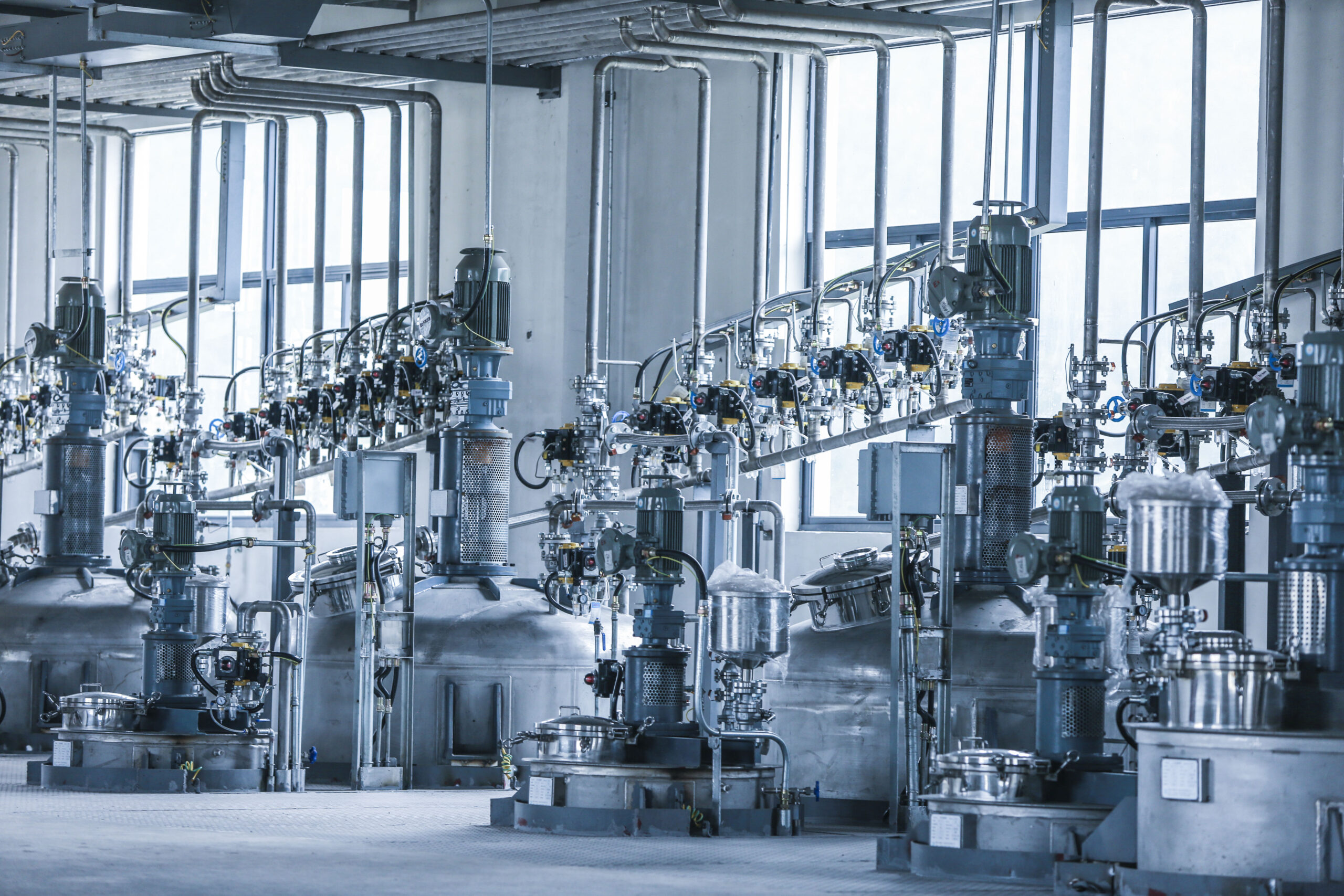
In high-volume industrial production, the choice of an adhesive tape supplier is as critical as the selection of raw materials. Whether for bonding structural components in the automotive sector or sealing moisture barriers in building and construction, the performance of adhesive tapes for manufacturing directly impacts product longevity and operational throughput.
For procurement managers and OEM project engineers, a transactional decision must be rooted in technical data. A failure in adhesive shear strength or a delay in customized slitting can halt a production line. This guide provides a professional framework for evaluating industrial tape suppliers and understanding the material science required for modern manufacturing environments.
The Material Science of Industrial Tapes
Selecting the right tape is not a generic task; it is an engineering challenge involving the chemistry of the adhesive and the physical properties of the carrier. In manufacturing, the “substrate energy” determines the success of the bond.
1. Adhesive Chemistries
- Acrylic Adhesives: These offer superior resistance to UV, oxidation, and temperature fluctuations. In the building and construction sector, acrylic tapes are often preferred for long-term outdoor exposure.
- Rubber-Based Adhesives: Known for high initial “tack” and quick stick. These are ideal for high-speed automated packaging and temporary holding in factory assembly.
- Silicone Adhesives: Utilized for extreme temperature environments (up to 260°C) and for bonding to low-surface-energy (LSE) materials where other adhesives fail.
2. Carrier/Backing Materials
The carrier provides the structural integrity of the tape. Common industrial backings include:
- Polyethylene (PE) and Polypropylene (BOPP): Durable and moisture-resistant.
- Cloth/Duct Backings: Essential for heavy-duty sealing and abrasion resistance.
- Foil Backings: Utilized for thermal conductivity and electromagnetic shielding.
- Double-Sided Foam: Crucial for gap filling and vibration dampening in appliance and electronics assembly.
Technical Performance Standards: Manufacturing Benchmarks
When evaluating a supplier, technical data sheets (TDS) must be scrutinized against industry-standard testing methods. Professional manufacturers typically reference the following:
| Metric | Testing Standard | Importance in Manufacturing |
| Peel Adhesion | ASTM D3330 / PSTC-101 | Measures the force required to remove the tape; critical for bond reliability. |
| Shear Strength | ASTM D3654 | Measures the adhesive’s resistance to “creep” under constant load; vital for structural bonding. |
| Tensile Strength | ASTM D3759 | The breaking point of the tape backing; important for automated machine tension. |
| Chemical Resistance | ISO 175 | Resistance to oils, solvents, and fuels; mandatory for automotive/industrial environments. |
Application Scenarios: Building, Construction, and Beyond
Industrial tapes must be suited to the specific rigors of the application environment. As highlighted by solutions from F6 Tape, specialized tapes serve diverse functions:
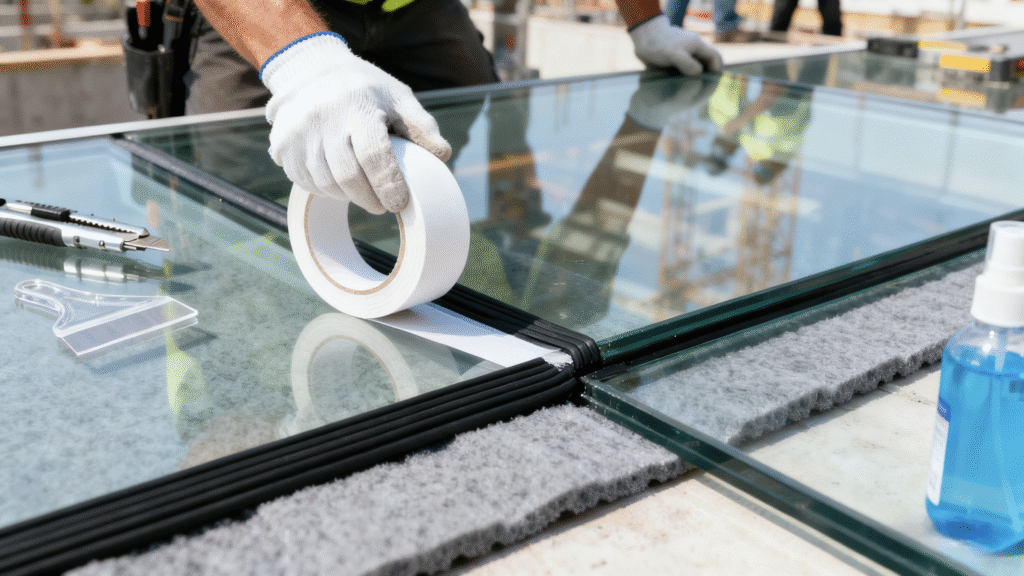
- Building & Construction: Tapes are used for window glazing, air-barrier sealing, and acoustic insulation. These require high UV stability and the ability to bond to irregular substrates like concrete or treated wood.
- HVAC and Insulation: Foil and scrim-reinforced tapes provide fire-retardant seals and moisture-vapor barriers for industrial ductwork.
- Automotive Assembly: Tapes replace mechanical fasteners to reduce weight and prevent galvanic corrosion between dissimilar metals.
- Electronics: Thermal management tapes and anti-static (ESD) films are used in PCB assembly to protect sensitive components.
Evaluating an Industrial Adhesive Tape Supplier
For B2B procurement, the supplier’s manufacturing capability is as important as the product itself. In a transactional context, the following factors are non-negotiable for manufacturing companies:
1. Customization and Converting Capabilities
Rarely does a standard 48mm roll fit every industrial application. A premium supplier should offer:
- Precision Slitting: Achieving specific widths to a tolerance of +/- 0.1mm.
- Custom Die-Cutting: Providing complex shapes for gaskets or decorative shielding.
- OEM Branding: Neutral or private-labeled packaging for large-scale distribution.
2. R&D and Sampling Workflow
In manufacturing, a “sampling delay” is a cost center. A reliable supplier must provide rapid prototyping. If you are bonding a new powder-coated metal, the supplier should conduct lab-based adhesion tests to identify the optimal adhesive formulation before mass production begins.
3. Quality Compliance and Certifications
Industrial manufacturing requires rigorous compliance documentation. Ensure your supplier holds:
- ISO 9001:2015: For quality management consistency.
- SGS / REACH / RoHS: Ensuring the absence of hazardous substances for international export.
- ASTM/ISO Lab Testing: Verifying that batch-to-batch performance remains consistent.
The Procurement Workflow: From RFQ to Production
Navigating the B2B purchase of adhesive tapes for manufacturing follows a structured technical workflow to minimize risk:
- Requirement Definition: Identifying the substrate (e.g., LSE plastic, metal), temperature range, and mechanical stress.
- RFQ and Technical Review: Submitting specific metrics to the supplier.
- Prototyping & Sampling: Receiving test rolls or die-cuts for line testing.
- MOQ and Lead Time Negotiation: Establishing “Just-In-Time” (JIT) delivery cycles to reduce on-site inventory.
- Quality Inspection: On-site validation of the first production batch against the approved sample.
Conclusion: Optimizing the Industrial Supply Chain
The strategic use of high-performance adhesive tapes allows manufacturers to improve cycle times, reduce weight, and lower assembly costs. However, these gains are only realized through partnership with a technically competent industrial tape supplier.
When selecting a partner like F6 Tape, focus on the synergy between their material science expertise and your specific production constraints. A transactional relationship built on technical transparency and reliable supply is the foundation of a successful manufacturing operation.

Why Choose F6 Tape as Your Industrial Adhesive Tape Manufacturer?
Selecting an adhesive tape supplier requires more than comparing product prices. Manufacturing companies need a partner who understands application requirements, production challenges, and long-term supply stability.
F6 Tape provides industrial adhesive tape solutions for manufacturing applications, including customized adhesive systems, precision converting, and OEM production support.
Our capabilities include:
- Customized adhesive tape solutions
- Stable manufacturing capacity
- Professional technical support
- Reliable quality control
- Flexible OEM and bulk production services
Whether you need adhesive tapes for automotive, electronics, industrial assembly, or other manufacturing applications, F6 Tape helps customers develop reliable bonding solutions.
FAQ
Q: What is the typical Minimum Order Quantity (MOQ) for custom-slit tapes?
A: MOQs vary by material type. For standard BOPP or PE tapes, MOQs might start at 10–20 master rolls. For specialized die-cuts or high-performance acrylics, MOQs may be calculated by the total square footage of the material.
Q: Can I get custom widths for my automated assembly line?
A: Yes. Professional suppliers provide precision slitting services. It is essential to specify your machine’s core diameter and maximum roll outer diameter (OD) to ensure compatibility with your automated dispensing equipment.
Q: How do I choose between a double-sided foam tape and a liquid adhesive?
A: Foam tapes offer immediate handling strength, consistent thickness, and vibration dampening. Liquid adhesives may offer higher structural strength but require curing time and clean-up, which can slow down manufacturing throughput.
Q: What is the average lead time for industrial-scale orders?
A: For stocked master rolls, slitting and shipping usually take 7–10 business days. For custom-coated or die-cut products, lead times generally range from 3 to 5 weeks, depending on the raw material availability.
Q: How does humidity affect tape storage in a factory?
A: Most industrial adhesives are sensitive to extreme humidity. Tapes should be stored in a “cool, dry place” (typically 21°C and 50% relative humidity) to prevent the adhesive from degrading or the core from warping.
Reference Sources
- ASTM International: Standard Test Methods for Pressure-Sensitive Tapes (ASTM D3330).
- PSTC (Pressure Sensitive Tape Council): Technical standards and manufacturing guides for industrial adhesives.
- ISO Standards: ISO 29862 – Self-adhesive tapes – Determination of peel adhesion properties.
- SGS Global: Testing, inspection, and certification for industrial manufacturing compliance.
- F6 Tape Solutions: Building and Construction Adhesive Performance Portfolio.