
 Canada
 USA
USA Japan
Japan


How to Choose the Right Tape for Metal, Glass and Plastic Bonding

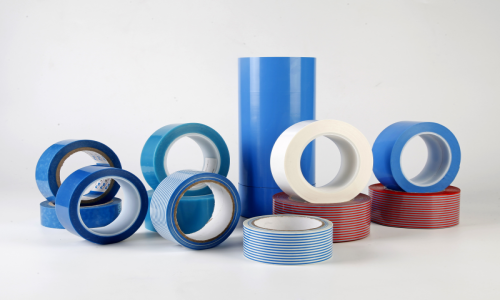
In the landscape of modern industrial assembly, the transition from mechanical fasteners to adhesive bonding is driven by the need for lightweighting, aesthetic perfection, and the ability to join dissimilar materials. Selecting the correct tape for metal glass plastic bonding is not a generic procurement task; it is a calculated engineering decision. Each substrate presents unique chemical and physical profiles—ranging from high-energy metals to low-energy plastics—that dictate the necessary adhesive chemistry.
For OEM project managers and manufacturing consultants, the primary challenge lies in the “Coefficient of Thermal Expansion” (CTE) mismatch. When a glass panel is bonded to an aluminum frame, or a plastic trim is fixed to stainless steel, these materials expand and contract at different rates under thermal stress. A high-performance industrial tape must provide the viscoelasticity to absorb this internal tension without compromising the structural integrity of the bond.
Industrial Tape Selection Guide
| Material | Recommended Tape | Key Benefits |
|---|---|---|
| Metal | Acrylic Foam Tape | High strength & vibration resistance |
| Glass | Clear Double Sided Tape | Clean appearance |
| Plastic | LSE Adhesive Tape | Better bonding performance |
| Painted Surface | Acrylic Adhesive Tape | Strong adhesion |
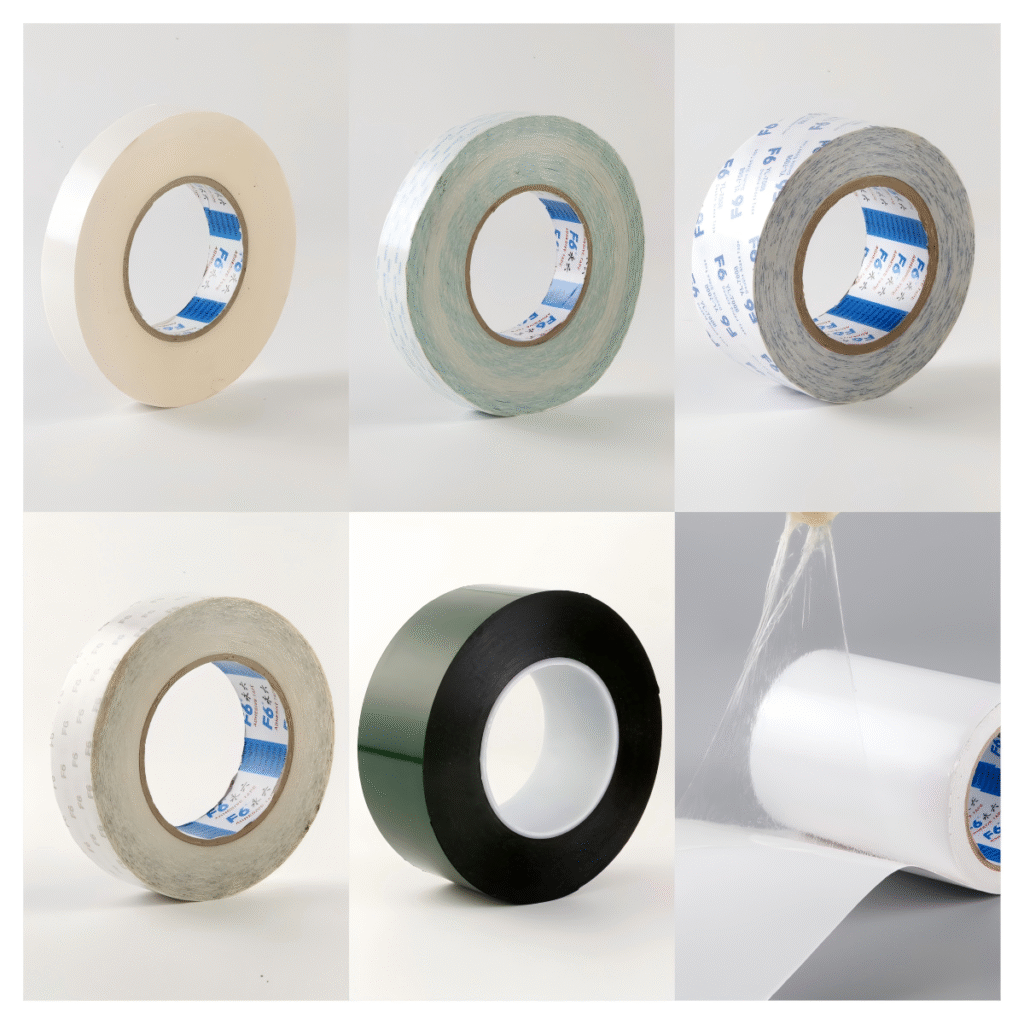
The Science of Surface Energy in Multi-Material Bonding
To specify the right tape for metal glass plastic bonding, engineers must first audit the surface energy of the substrates. Surface energy, measured in dynes/cm, determines how well an adhesive “wets out” or spreads across a surface.
- Metals (HSE): Stainless steel, aluminum, and copper are High Surface Energy (HSE) materials. They are relatively easy to bond because the high energy “pulls” the adhesive into the microscopic valleys of the surface.
- Glass (HSE): Glass is also high energy but presents a unique challenge: its surface is hydrophilic. Over time, moisture can wick into the bond line, leading to failure. Specialized silane primers or moisture-resistant acrylics are often required.
- Plastics (LSE/MSE): Plastics like Polypropylene (PP) or Polyethylene (PE) are Low Surface Energy (LSE). Standard adhesives will “bead up” like water on a waxed car. Bonding these requires modified acrylics designed specifically for LSE substrates to ensure molecular contact.
In large-volume production, failing to account for dyne levels leads to immediate batch failure. Utilizing a surface tension test pen is a standard industry practice to verify that parts are ready for the adhesive application.
Why Foam Carriers Outperform Thin Tapes for Industrial Use
When bonding rigid materials like metal and glass, thin transfer tapes often fail because they cannot account for “surface flatness tolerances.” No industrial surface is perfectly flat. A foam double-sided tape acts as a conformable bridge that compensates for these irregularities.
The foam carrier—typically Polyethylene (PE) or Acrylic—provides a three-dimensional volume that absorbs kinetic energy. In automotive environments, this is critical for managing “Noise, Vibration, and Harshness” (NVH). The foam dissipates the vibration that would otherwise cause a rigid mechanical fastener to loosen or a thin adhesive to crack. Furthermore, the thickness of the foam allows for “gap filling,” ensuring 100% contact even if the metal panel and the plastic housing have slightly different curvatures.
Substrate Comparison: Engineering Selection Matrix
Choosing a tape for metal glass plastic bonding requires matching the adhesive’s rheology to the mechanical demands of the project. The following table provides a B2B benchmark for selection.
| Substrate Pair | Primary Challenge | Recommended Tape Chemistry | Mechanical Benefit |
| Metal to Metal | Corrosion & High Stress | High-Density Acrylic Foam | Replaces rivets; prevents galvanic corrosion. |
| Metal to Glass | UV Exposure & Moisture | Silane-Modified Acrylic | Maintains transparency; resists environmental wicking. |
| Plastic to Metal | CTE Mismatch | Viscoelastic PE Foam | Absorbs different expansion rates; high initial tack. |
| LSE Plastic to Plastic | Surface Wetting | High-Tack Modified Acrylic | Bonds without the need for chemical primers. |
Automotive environments typically require tapes that can withstand extreme temperature cycles (from -40°C to 120°C). In these scenarios, cross-linked acrylic foams are favored for their ability to maintain “static shear” strength at elevated temperatures.
Overcoming Thermal Expansion in Large-Scale Assembly
One of the most significant advantages of using tape for metal glass plastic bonding over welding or screws is the management of thermal stress. When bonding dissimilar materials, the assembly effectively becomes a “bimetallic strip.” If the bond is too rigid, the part will buckle or warp as temperatures change.
High-performance tapes utilize a viscoelastic core. This means the material behaves both like a liquid (viscous) to flow into the surface and like a solid (elastic) to recover its shape. When the metal substrate expands faster than the plastic part, the tape core stretches internally. This internal elongation prevents the stress from being transferred to the bond line, effectively extending the lifespan of the product in outdoor or high-heat applications.
Manufacturing consultants often point to this “internal stress management” as the key driver for switching to tape in architectural cladding and solar panel assembly. It allows for cleaner lines and thinner substrates, reducing overall material costs.
Practical Application: Integrating Bonding Tapes into OEM Workflows
For project managers, the commercial value of an adhesive is found in the “Total Installed Cost.” While a roll of tape may have a higher unit price than a bag of screws, the elimination of drilling, grinding, and secondary finishing reduces labor hours and scrap rates.
Surface Preparation Protocol
Trustworthiness in industrial bonding is built on the cleaning process. Even the best tape for metal glass plastic bonding will fail if contaminants are present.
- Cleaning: A 50/50 Isopropyl Alcohol (IPA) and water mix is the standard. For heavy oils on metals, a heptane-based cleaner may be necessary.
- Abrasion: For some metals, a light scuffing with a Scotch-Brite™ pad increases the effective surface area.
- Pressure: Pressure-sensitive adhesives (PSAs) are activated by force. A minimum of 15 psi (100 kPa) is generally required to initiate the “wet-out” process.
Sampling delays may occur when transitioning to new LSE plastics. We recommend requesting technical data sheets (TDS) that specifically detail peel and shear values on your intended substrate before finalizing a bulk procurement order.
Why Choose F6 Tape for Industrial Bonding Solutions?
F6 Tape provides professional industrial adhesive tape solutions for manufacturers and businesses across different industries. With expertise in adhesive tape development and manufacturing, F6 Tape helps customers achieve reliable bonding performance, efficient assembly processes, and customized solutions for various material bonding applications.
Professional Adhesive Tape Manufacturer
F6 Tape specializes in the research, development, and production of industrial adhesive tapes. With professional manufacturing capabilities and quality control processes, F6 Tape provides reliable bonding solutions for applications involving metal, glass, plastic, and other materials.
Wide Range of Industrial Tape Solutions
F6 Tape offers various adhesive tape solutions designed for different industrial requirements, including:
- Double sided adhesive tape
- Foam mounting tape
- Industrial bonding tape
- Custom adhesive tape solutions
These products are developed to meet different requirements for bonding strength, durability, appearance, and application performance.
Customized Bonding Solutions
Different industries have different bonding challenges. F6 Tape provides customized solutions based on customer requirements, including:
- Tape thickness
- Adhesive strength
- Material compatibility
- Size and shape customization
- Application environment
This helps customers select suitable tape solutions for their specific production needs.
Stable Quality and Reliable Supply
Consistent quality and stable supply are essential for industrial applications. F6 Tape applies strict quality management processes to ensure reliable product performance and supports global customers with professional service and supply capabilities.
Partner with F6 Tape for Industrial Bonding Applications
Whether you need adhesive tape for metal bonding, glass bonding, plastic bonding, or other industrial applications, F6 Tape provides reliable products and customized solutions to support efficient manufacturing.
Looking for reliable industrial bonding tape? Contact F6 Tape for professional adhesive solutions tailored to your application requirements.
Applications of Industrial Bonding Tape
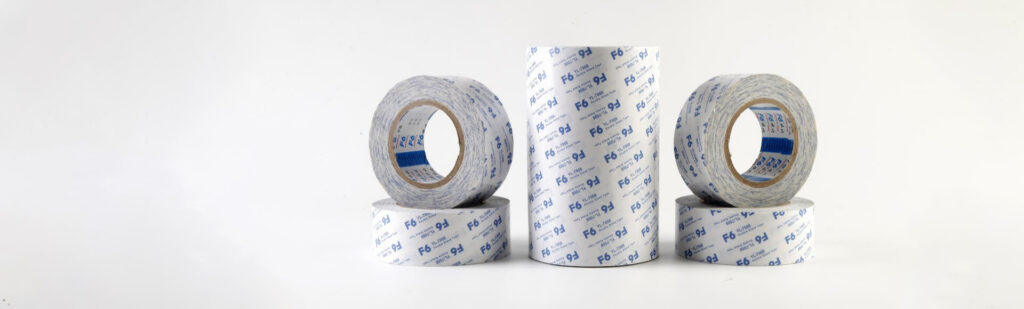
Industrial bonding tape is widely used across different industries where reliable adhesion, clean appearance, and efficient assembly are required. By replacing traditional mechanical fastening methods, adhesive tape solutions can help manufacturers improve production efficiency and maintain product quality.
Automotive Applications
In the automotive industry, industrial bonding tapes are commonly used for attaching interior and exterior components, such as trims, emblems, panels, and decorative parts. High-performance adhesive tapes provide strong bonding, vibration resistance, and long-term durability under different environmental conditions.
Electronics Manufacturing
Electronic products often require precise and clean assembly solutions. Industrial adhesive tapes are used for bonding displays, components, batteries, and other parts where thin design, strong adhesion, and reliable performance are important.
Appliance Manufacturing
In home appliances and industrial equipment, bonding tapes can be used for fixing panels, decorative materials, insulation components, and other parts. Tape bonding helps improve product appearance while reducing the need for screws or mechanical fasteners.
Glass and Display Applications
For glass products, displays, and signage, transparent adhesive tapes provide strong bonding while maintaining a clean and attractive appearance. These solutions are suitable for applications where visual quality and reliable adhesion are both important.
Industrial Equipment and General Assembly
Industrial bonding tapes are also widely used in machinery, equipment, and manufacturing processes. They provide solutions for mounting, fixing, sealing, and bonding different materials, including metal, glass, plastic, and composite surfaces.
Choosing the right industrial bonding tape based on application requirements, materials, and environmental conditions can help manufacturers achieve stronger bonding performance, improve assembly efficiency, and reduce production costs.
FAQ
How long does the bond take to reach full strength?
Most industrial acrylic tapes reach “handling strength” immediately. However, they typically require 20 minutes to reach 50% strength, and 72 hours to reach 100% strength as the adhesive continues to “flow” into the surface.
Can I bond powder-coated metal with standard tape?
Powder coatings are often Low Surface Energy (LSE) materials. Standard tapes may struggle to bond. You should specify a tape designed for “difficult-to-bond” surfaces or use a specialized primer.
What is the maximum temperature for glass-to-metal bonding?
Standard industrial foam tapes are rated for continuous use up to 90°C (194°F), with short-term peaks up to 150°C (302°F). For high-heat applications like industrial ovens, specialized polyimide or silicone-based tapes are required.
Does the tape provide a waterproof seal?
Yes. Closed-cell PE foam tapes act as a gasket. When compressed by 30%, they provide a hermetic seal against water, dust, and air, eliminating the need for secondary liquid sealants.
Why does the tape fail on certain plastics?
Failure on plastics is usually due to “plasticizer migration.” Some flexible PVCs or rubbers contain oils that can migrate into the adhesive and soften it over time. Always verify that your tape is “plasticizer resistant.”
What tape is suitable for glass bonding?
Clear double-sided adhesive tapes with strong adhesion and good appearance are commonly used for glass bonding.
How do I choose industrial bonding tape?
Consider bonding material, surface condition, temperature, load requirements, and application environment.
Can industrial tape replace screws and mechanical fasteners?
In many applications, high-performance adhesive tapes can replace screws or fasteners while improving appearance and assembly efficiency.
Reference Sources
- ISO 9001:2015: Quality management systems for industrial manufacturing and assembly. ISO.org
- ASTM D3330: Standard Test Method for Peel Adhesion of Pressure-Sensitive Tape. ASTM International
- PSTC (Pressure Sensitive Tape Council): Technical resources for adhesive selection and testing standards. PSTC.org
- SGS Certification: Independent validation of chemical compliance and material durability.
- Journal of Adhesion Science and Technology: Peer-reviewed research on surface energetics and polymer bonding.
Summary:
Select a foam double-sided tape for your metal, glass, and plastic bonding needs to ensure gap-filling, vibration damping, and compensation for thermal expansion. Success in large-scale manufacturing relies on matching adhesive chemistry to the specific dyne levels of your substrates.