
 Canada
 USA
USA Japan
Japan


How to Choose the Right Plate Mounting Tape for Flexographic Printing

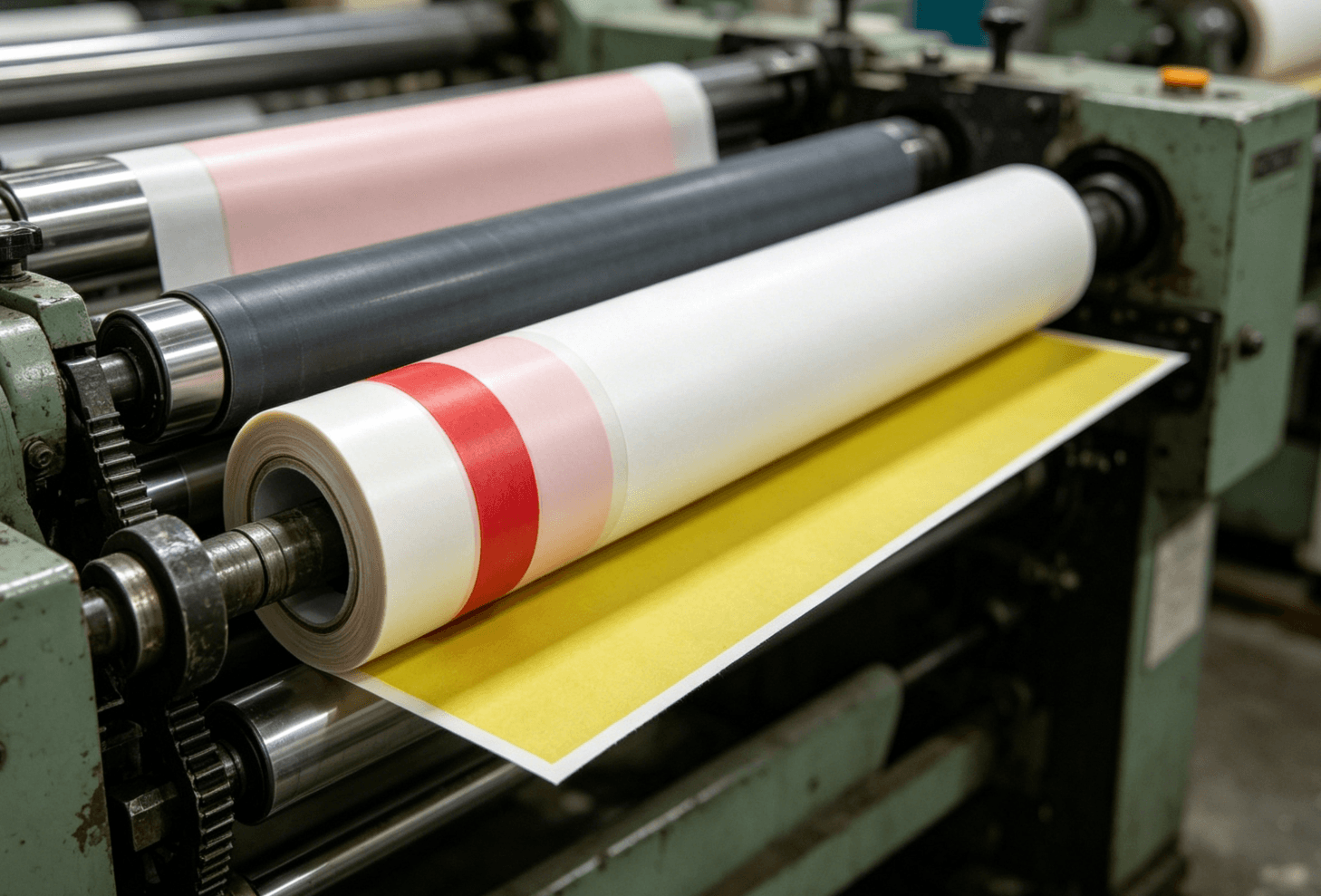
In the high-precision world of flexographic printing, the “bridge” between the mechanical cylinder and the photopolymer plate is often the most critical variable in print quality. Professional plate mounting tape for flexo printing is not merely an adhesive; it is a precision-engineered damping component designed to manage the kinetic energy of high-speed presses.
For production managers and OEM project managers, the selection of mounting tape directly impacts the bottom line through reduced scrap rates, faster press speeds, and the elimination of common print defects like gear streaks or excessive dot gain. This guide analyzes the technical and commercial advantages of utilizing high-performance mounting solutions in modern manufacturing workflows.
How Plate Mounting Tape Optimizes Flexo Printing
The primary function of mounting tape is to provide a stable, yet resilient, foundation for the printing plate. Mechanically, the tape must resist the shear forces generated during rotation while providing the necessary “bounce” to maintain consistent ink transfer.
From an engineering perspective, the viscoelastic properties of the foam core determine the print result. When a press operates at 400–600 meters per minute, the plate-to-substrate contact occurs in milliseconds. High-quality mounting tapes utilize closed-cell polyethylene (PE) foams that recover their shape instantly after each impression, ensuring that the “highlight” dots do not become distorted or “slurred.”
Critical Benefits for High-Speed Print Production
In large-volume production, the advantages of using specialized plate mounting tape manifest in both aesthetic output and mechanical efficiency.
1. Controlled Dot Gain
Dot gain is the mechanical expansion of an ink droplet upon contact with the substrate. Excessive dot gain results in muddy images and lost detail. Soft-density mounting tapes absorb the excess pressure of the impression, allowing for “fine-line” and “process” work where highlight dots remain crisp and defined.
2. Elimination of Air Bubbles (Air-Release Technology)
One of the most frequent bottlenecks in the mounting department is air entrapment. Professional tapes feature micro-structured air-release channels on the adhesive surface. This allows air to escape during the mounting process, preventing “bubbles” that cause localized print voids or plate lifting during long runs.
3. Vibration and Bounce Damping
At high speeds, mechanical vibrations can cause “gear streaks” or horizontal bands across the print. High-damping foam tapes act as a shock absorber for the entire cylinder assembly. This allows operators to push press speeds higher without sacrificing quality, effectively increasing the facility’s total throughput.
Technical Comparison: Density Selection Logic
Selecting the correct hardness is the most important decision a print engineer makes. The following table provides a B2B procurement benchmark for matching tape density to specific print requirements.
| Foam Density | Print Application | Mechanical Characteristic | ROI Impact |
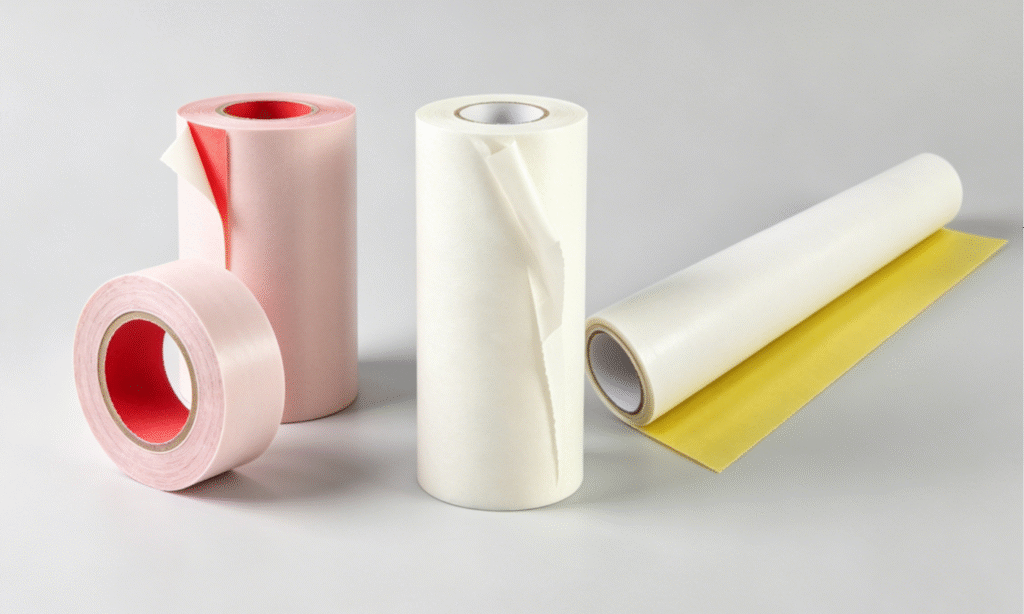
| Soft (Yellow/Pink) | Fine Process, High Screen | High Compressibility | Reduces dot gain in highlights. |
| Medium (White/Blue) | Combo Work (Solid + Tone) | Balanced Recovery | Versatile; reduces SKU inventory. |
| Hard (Green/Red) | Solid Bold Areas, Coating | Minimal Bounce | Ensures dense, uniform ink coverage. |
For facilities managing diverse projects, sourcing a range of specialized mounting solutions is essential for maintaining Topical Authority in high-end packaging or label production.
Applications of Plate Mounting Tape
Plate mounting tape plays an important role in various flexographic printing applications. Different printing industries require reliable tape performance to ensure accurate plate positioning, stable printing quality, and efficient production processes.
Flexible Packaging Printing
In flexible packaging production, plate mounting tape is widely used for printing on materials such as plastic films, laminates, and packaging substrates. The tape helps maintain stable plate positioning and supports consistent print quality during high-speed printing operations.
Label Printing
Label printing requires high precision and excellent registration control. Flexo mounting tape helps secure printing plates firmly while allowing clean removal and easy plate replacement, improving production efficiency for label manufacturers.
Corrugated Printing
Corrugated packaging printing often requires durable mounting solutions for large printing areas and continuous production. Suitable plate mounting tape helps maintain printing stability and reduce issues caused by plate movement.
Industrial and Specialty Printing
For industrial printing applications, manufacturers may require customized mounting tape solutions based on specific materials, printing speeds, and production conditions. Proper tape selection helps achieve better printing performance and reduce downtime.
Choosing the right plate mounting tape based on the printing application, machine requirements, and production environment can improve print quality, increase efficiency, and support more reliable flexographic printing operations.
Operational Advantages in Large-Volume Manufacturing
Beyond the print result, the commercial value of a mounting tape is found in its “demounting” performance. In large-scale manufacturing, time spent cleaning adhesive residue from cylinders is non-value-added labor.
Residue-Free Removal
High-tier tapes are engineered with differential adhesion. The “sleeve-side” adhesive is designed for a permanent-yet-removable hold, while the “plate-side” adhesive ensures the photopolymer plate does not shift. Upon job completion, the tape should peel away in one piece without leaving chemical residue. This protects the integrity of expensive carbon fiber sleeves and chrome cylinders.
Plate Protection
The cost of photopolymer plates is significant. Tapes with excessive adhesion can cause “plate tearing” during the removal process. Professional-grade tapes provide a secure hold during the run but release the plate with minimal stress, extending the lifespan of the plate for future re-runs.
Environmental Resistance
Automotive environments or industrial print shops often face fluctuations in humidity and temperature. A reliable tape must resist ink solvents (alcohol or water-based) and cleaning chemicals to prevent “edge lifting,” which is the primary cause of mid-run press stoppages.
Procurement Logic: Evaluating the Total Cost of Ownership
From a manufacturing consultant’s view, the “cheapest” tape often becomes the most expensive over a 12-month horizon. Sampling delays or mid-run failures can cost thousands in downtime.
When auditing a supplier, procurement managers should ask:
- Tolerance Consistency: Is the tape thickness (e.g., 0.38mm or 0.50mm) consistent across the entire 20-meter roll? Even a 5-micron variance can cause uneven ink density.
- Liner Quality: Does the liner peel away smoothly in automated mounting systems?
- Adhesive Stability: Does the adhesive maintain its “tack” in non-climate-controlled warehouses?
By standardizing on a high-performance plate mounting tape for flexo printing, companies move from a “reactive” maintenance model to a “proactive” quality model, ensuring that the press remains a profit center rather than a troubleshooting bottleneck.
Why Choose F6 Tape Plate Mounting Tape?
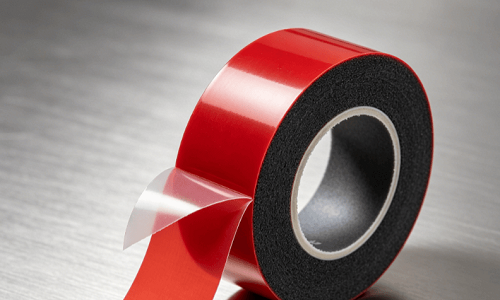
F6 Tape provides professional plate mounting tape solutions designed for flexographic printing applications. With expertise in adhesive tape manufacturing and industrial tape solutions, F6 Tape helps printing companies achieve stable plate mounting, consistent print quality, and efficient production performance.
Professional Adhesive Tape Manufacturer
F6 Tape specializes in the research, development, and manufacturing of industrial adhesive tapes. With advanced production capabilities and quality control processes, F6 Tape provides reliable tape solutions for different printing and industrial applications.
Designed for Flexographic Printing Applications
F6 Tape plate mounting tapes are developed to meet the requirements of flexographic printing, including stable adhesion, accurate plate positioning, and clean removal performance. These features help reduce printing errors and improve production efficiency.
Customized Tape Solutions
Different printing processes require different tape specifications. F6 Tape provides customized solutions based on customer requirements, including tape thickness, adhesive strength, foam type, size, and packaging options.
Stable Quality and Global Supply Support
For international printing companies and distributors, reliable supply and consistent product quality are essential. F6 Tape supports global customers with professional service, stable production capacity, and customized adhesive tape solutions.
Looking for reliable plate mounting tape for flexographic printing? Contact F6 Tape for professional adhesive tape solutions tailored to your printing needs.
FAQ
Why is foam density so important in flexo?
Foam density dictates how the plate reacts to pressure. Soft foam is used for delicate screens to prevent dots from squashing, while hard foam is used for large solids to ensure the ink is “pushed” into the substrate for full coverage.
Can I use the same tape for water-based and UV inks?
Generally, yes. Most modern plate mounting tapes feature solvent-resistant adhesives. However, always verify that the adhesive chemistry is compatible with the specific cleaning solvents used in your facility to avoid edge lifting.
How do I prevent air bubbles when mounting?
Ensure you are using a tape with structured air-release channels. Additionally, using a mounting roller rather than manual hand-pressure ensures even distribution and forces air out through the tape’s micro-channels.
What is the shelf life of flexo mounting tape?
Most industrial tapes have a shelf life of 12 months when stored at 21°C (70°F) and 50% relative humidity. Exposure to extreme heat can degrade the foam’s recovery memory.
Does the tape thickness affect the print circumference?
Yes. The total undercut of your cylinder or sleeve must account for both the plate thickness and the tape thickness. Standard industrial thicknesses are 0.38mm (0.015″) and 0.50mm (0.020″).
What is the difference between soft and hard foam mounting tape?
Soft foam tape is suitable for halftone printing, while hard foam tape is better for solid printing and sharper lines.
Can mounting tape affect print quality?
Yes. Tape properties can influence registration accuracy, dot reproduction, and printing consistency.
How to choose a plate mounting tape supplier?
Evaluate product quality, customization ability, manufacturing experience, and technical support.
Reference Sources
- ISO 12647-6: Graphic technology — Process control for the production of half-tone colour separations (Flexographic printing).
- ASTM D3330: Standard Test Method for Peel Adhesion of Pressure-Sensitive Tape. ASTM.org
- FTA (Flexographic Technical Association): Technical resources for pressroom optimization and mounting standards. Flexography.org
- PSTC (Pressure Sensitive Tape Council): Industry-standard testing protocols for industrial adhesives. PSTC.org
- SGS/UL Testing: Reliability and chemical compliance reports for industrial consumables.