
 Canada
 USA
USA Japan
Japan


Foam Tape for Automotive Trim: Professional Selection Guide

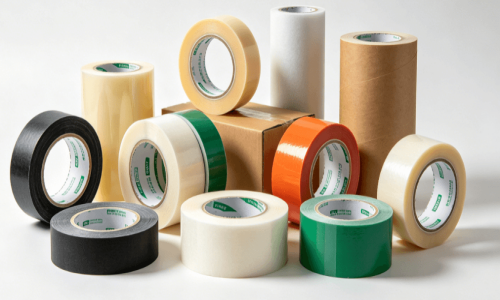
Modern vehicle assembly relies heavily on advanced bonding solutions to replace mechanical fasteners. For engineers and Tier 1 suppliers, selecting the right foam tape for automotive trim is not merely about adhesion; it is about managing thermal expansion, reducing NVH (Noise, Vibration, and Harshness), and ensuring long-term durability under extreme weather conditions.
In the automotive environment, exterior trim components like side moldings, spoilers, and emblems are subjected to high-speed wind loads, car washes, and temperature fluctuations ranging from -40°C to over 100°C. A failure in the adhesive bond leads to costly warranty claims and safety concerns.
Why is foam tape for automotive trim essential in modern manufacturing?
Foam tape provides a unique viscoelastic property that solid adhesives or mechanical clips cannot replicate. In automotive design, plastic trim components and metal body panels expand and contract at different rates when exposed to heat. The foam core acts as a buffer, absorbing these stresses and preventing the bond from shearing over time.
Additionally, foam tapes provide an airtight and watertight seal. This prevents moisture from entering the vehicle body, which is critical for corrosion resistance. By eliminating the need for drilled holes required by clips or screws, manufacturers preserve the structural integrity of the metal panels and simplify the assembly line process.
At F6Tape, we specialize in engineering these high-performance materials to meet rigorous automotive standards. Our products are designed to handle the specific surface energies of modern automotive paints and plastics. You can explore our full technical range on our product overview page.
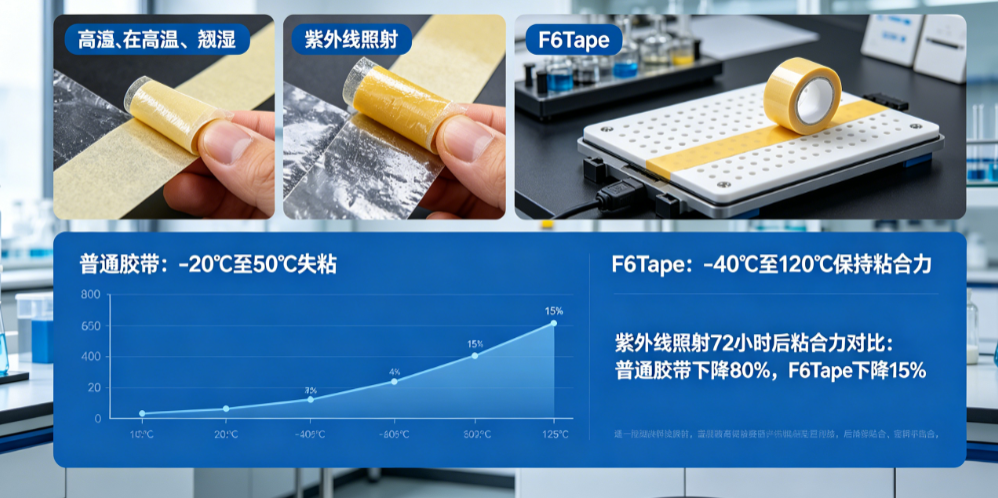
Comparing PE vs. Acrylic foam tape for automotive trim?
Choosing between Polyethylene (PE) and Acrylic foam is the most critical decision in the material selection process. Each material offers distinct advantages depending on whether the application is interior or exterior.
| Feature | PE Foam Tape | Acrylic Foam Tape (VHB Style) |
| Bond Strength | Moderate | High (Structural Grade) |
| Temperature Resistance | Up to 80°C | Up to 150°C+ |
| UV Resistance | Limited (Best for interior) | Excellent (Best for exterior) |
| Vibration Damping | Superior | Good |
| Common Use Case | Interior dashboard trim, gaskets | Exterior moldings, spoilers, emblems |
PE foam is highly effective for interior applications where vibration damping and cost-efficiency are priorities. However, for exterior components that face direct sunlight and chemical exposure (such as road salts and fuels), acrylic foam tape is the industry standard due to its superior aging properties.
Key performance metrics for high-tack adhesive tapes?
When evaluating a foam tape for automotive trim, engineers must look beyond initial “tack.” The long-term success of the bond depends on several technical factors that define how the adhesive interacts with the substrate.
- Surface Energy Compatibility: Many automotive plastics, such as Polypropylene (PP) or EPDM, have low surface energy (LSE). These require specialized adhesives or primers to achieve a permanent bond.
- Dynamic Shear Strength: This measures the tape’s ability to resist forces acting in a direction parallel to the bond. This is vital for trim pieces that experience wind resistance at high speeds.
- Plasticizer Resistance: Some vinyl trims contain plasticizers that can migrate into the adhesive and soften it over time. High-quality automotive tapes are engineered to resist this chemical degradation.
We understand that every OEM project has unique specifications. We offer customization in terms of thickness, width, and adhesive formulation to ensure the tape matches the specific surface geometry of your components.
Selecting the right foam tape for different automotive surfaces?
The application area dictates the foam density and adhesive chemistry required. For example, mounting a heavy wheel arch flare requires a different approach than a lightweight interior chrome accent.
Exterior emblems and nameplates typically require thin, high-density acrylic foam. These tapes are nearly invisible once applied but offer enough “wet-out” to fill the microscopic irregularities on the clear coat surface. The goal is to maximize the contact area between the adhesive and the vehicle body.
For larger components like side skirts or roof rails, thicker foam tapes are used to compensate for gaps caused by mismatched tolerances between the part and the body. These tapes must have a high internal cohesive strength to prevent the foam itself from splitting under the weight of the component.
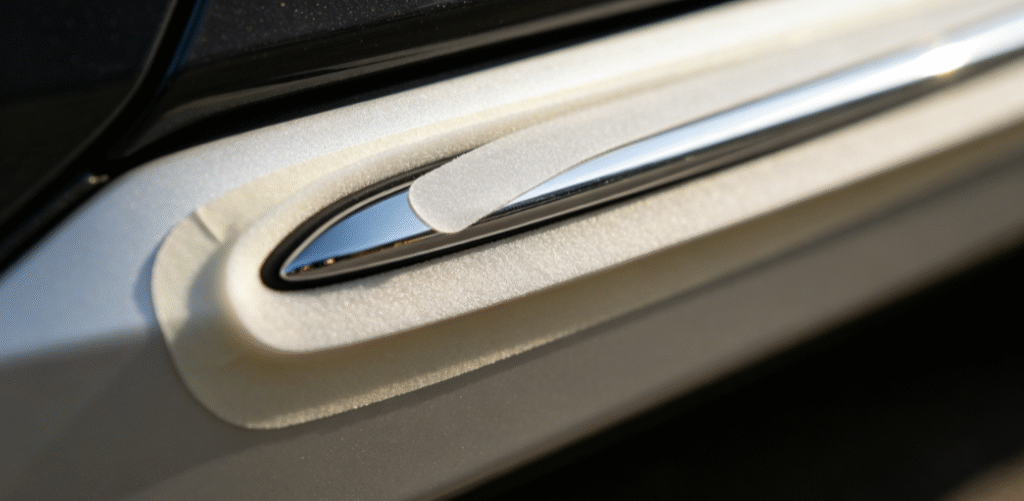
Technical considerations for OEM-grade trim mounting?
Achieving a professional-grade bond requires more than just a high-quality tape; it requires a controlled application process. Even the most advanced foam tape for automotive trim will fail if the surface is contaminated or if the application temperature is too low.
Automotive manufacturers often utilize automated pressure rollers to ensure consistent “wet-out.” Pressure-sensitive adhesives (PSA) require an initial force to flow into the surface pores of the substrate. Without adequate pressure, the bond remains superficial and prone to environmental ingress.
- Cleaning: Surfaces must be free of oils, mold release agents, and dust.
- Temperature: Application should ideally occur between 21°C and 38°C.
- Curing: While initial tack is high, most automotive tapes reach 100% bond strength after 72 hours.
At F6Tape, we provide technical support to help our clients optimize their assembly workflows. Our manufacturing capabilities allow us to provide die-cut shapes that perfectly match the footprint of your trim pieces, reducing waste and increasing installation speed.
Common challenges in automotive adhesive bonding?
One of the most frequent challenges we see in the field is adhesive failure due to improper surface preparation or the use of incompatible waxes on the vehicle body. Silicones and certain protective coatings used in transit can act as release agents, preventing the tape from “grabbing” the paint.
Another challenge is the use of non-original parts in the aftermarket. Aftermarket trim often has lower tolerances than OEM parts, leading to larger gaps. In these cases, selecting a “high-conformability” foam tape is essential to ensure the adhesive reaches both surfaces across the entire length of the part.
Our expertise allows us to troubleshoot these issues during the design phase. By analyzing the materials and environmental stressors involved, we help you select a tape that exceeds the lifecycle of the vehicle itself.
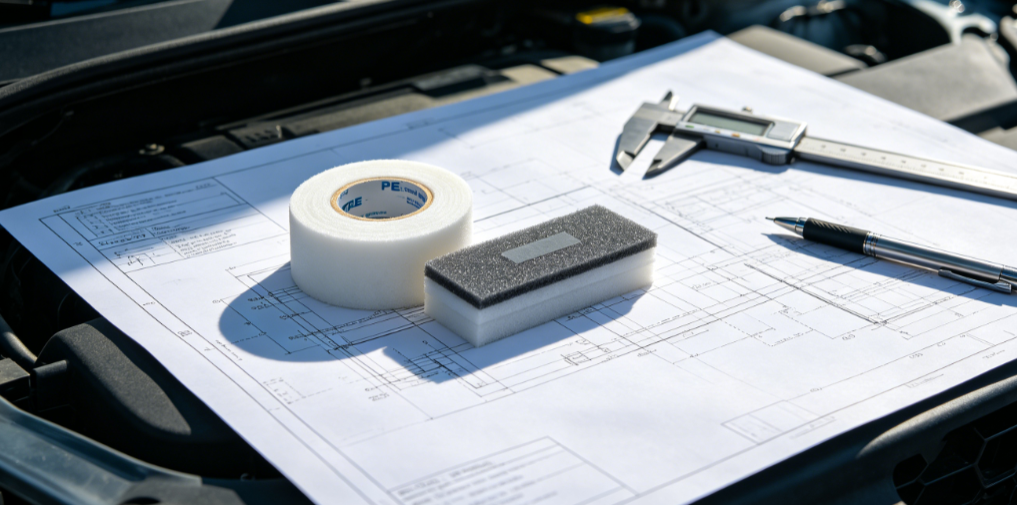
FAQ
Q: What is the ideal thickness for foam tape used in automotive trim mounting?
A: Most automotive applications use thicknesses between 0.4mm and 1.2mm. Thinner tapes (0.4mm-0.8mm) are used for small emblems, while thicker tapes (1.1mm-2.0mm) are used for large body moldings to account for surface irregularities and gaps.
Q: Can I use standard double-sided tape instead of dedicated automotive foam tape?
A: No. Standard office or craft tapes lack the UV resistance, temperature stability, and viscoelasticity required for automotive environments. They will likely fail within weeks when exposed to heat or rain.
Q: Does temperature affect the installation of automotive trim tape?
A: Yes, temperature is critical. If the surface is too cold (below 15°C), the adhesive becomes firm and cannot “wet” the surface properly. For cold-weather applications, the use of a heat gun or specialized low-temperature adhesives is necessary.
Q: Is a primer always necessary for mounting automotive trim?
A: Not always, but it is highly recommended for LSE plastics like Polypropylene or for applications where maximum bond strength is required. Primers act as a bridge between the substrate and the adhesive.
Q: How long does automotive foam tape last once applied?
A: High-quality acrylic foam tapes are designed for the life of the vehicle. When applied correctly to a clean surface, they are resistant to oxidation, UV light, and chemical exposure for 10 to 20 years.
Reference Sources
- ASTM D3330 Standard Test Method for Peel Adhesion of Pressure-Sensitive Tape
https://www.astm.org/d3330_d3330m-04r18.html - ISO 9001 Quality Management Systems for Automotive Suppliers
https://www.iso.org/iso-9001-quality-management.html