
 Canada
 USA
USA Japan
Japan


Why Electronics Use Double Sided PET Tape

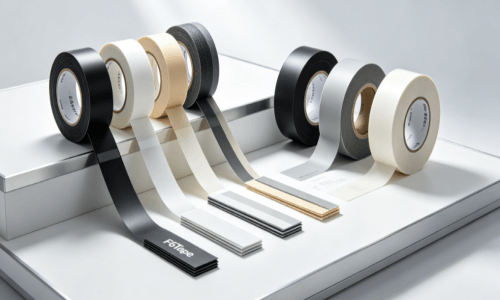
The electronics manufacturing landscape demands materials that provide high structural integrity within increasingly smaller footprints. As devices become thinner and more powerful, the role of specialized adhesives like double sided PET tape becomes critical. This material serves as more than just a fastener; it acts as a functional component in modern circuitry and housing.
Thin-film technology has revolutionized how components are layered. Polyethylene Terephthalate (PET) serves as a stable carrier material that maintains its shape even under mechanical stress. This stability ensures that the adhesive layers remain uniform during high-speed automated assembly processes.
For engineers, selecting the right bonding solution involves balancing adhesion strength with thermal endurance. Double sided PET tape offers a unique combination of high tensile strength and excellent dielectric properties. These characteristics make it indispensable for the high-density environments found in smartphones, wearables, and automotive control units.
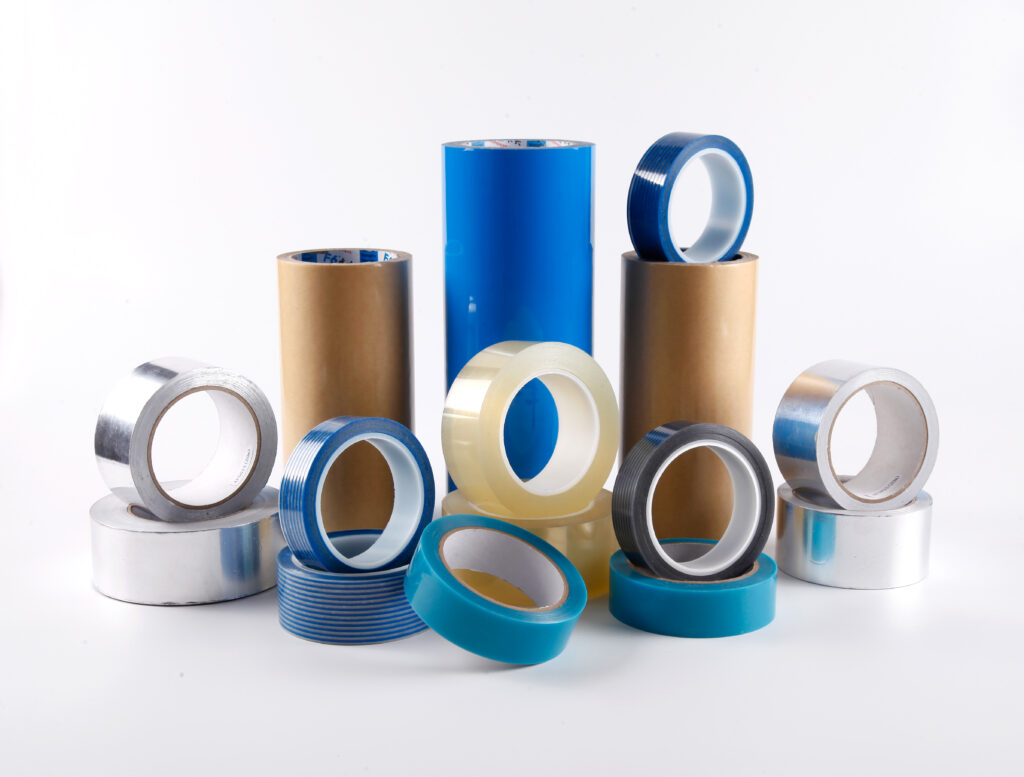
Why do engineers prefer double sided PET tape for electronics?
The primary reason for choosing PET tape for electronics is its exceptional dimensional stability. Unlike tissue or foam carriers, PET does not stretch or deform easily during application. This allows for precise die-cutting into complex shapes, which is essential for internal components where tolerances are measured in microns.
Electrical insulation is another decisive factor. Electronic assemblies are prone to short circuits if conductive paths are not properly isolated. PET is naturally non-conductive, providing a reliable barrier that prevents current leakage between sensitive components. This makes it ideal for mounting flexible printed circuits (FPCs) and insulating battery cells.
Furthermore, PET tapes are compatible with a wide range of adhesives, particularly high-performance acrylics. These adhesives bond effectively to low surface energy (LSE) plastics and metallic surfaces common in device housings. The combination of a strong carrier and aggressive adhesive ensures that components remain secure throughout the product’s lifecycle.
| Feature | Performance Benefit | Electronics Application |
| Thin Profile | Minimizes bond line thickness | Screen and display mounting |
| Dielectric Strength | Prevents electrical shorts | FPC and PCB insulation |
| Thermal Resistance | Withstands reflow temperatures | Components near heat sinks |
| Chemical Resistance | Protects against oils and sweat | Wearables and handheld devices |
| Die-cut Precision | Facilitates automated assembly | Internal gaskets and spacers |
Common applications in high-precision device assembly?
In smartphone manufacturing, we often see PET tape used for lens and screen bonding. The ultra-thin nature of the tape allows manufacturers to maximize screen-to-body ratios without sacrificing bond strength. It provides a permanent, dust-proof seal that protects internal sensors from environmental contamination.
Battery pack assembly relies heavily on these tapes for both structural mounting and safety. We provide specialized PET tapes that can withstand the slight swelling and thermal cycles of lithium-ion batteries. The tape ensures the battery remains fixed within the chassis while providing a layer of flame-retardant insulation.
Flexible electronics represent a growing sector where PET carriers excel. Because FPCs must bend and flex during installation and use, the adhesive must resist lifting at the edges. The high shear strength of double sided PET tape ensures that these flexible circuits stay anchored to rigid frames or curved surfaces.
- Mounting LCD and OLED display modules.
- Fixing heat sinks and thermal spreaders to processors.
- Securing nameplates and decorative trim.
- Insulating multilayered circuit boards.
- Bonding microphone and speaker meshes.
Technical performance: Thermal, electrical, and mechanical?
Temperature management is a significant challenge in modern electronics. Devices generate internal heat that can degrade standard adhesives. High-quality PET tape for electronics is engineered to perform at continuous temperatures of 100°C to 150°C. This ensures the bond remains intact even when the device is under heavy processing loads.
Mechanical shear resistance is critical for components subjected to vibration or impact. If a device is dropped, the internal tapes must absorb the energy without delaminating. PET tapes provide high cohesive strength, meaning the tape itself is unlikely to tear under the stress of sudden movement.
From an electrical perspective, the dielectric breakdown voltage of PET is remarkably high. This allows manufacturers to use thinner layers of tape without risking electrical arcing. In high-voltage applications or dense PCB layouts, this property allows for safer, more compact designs.
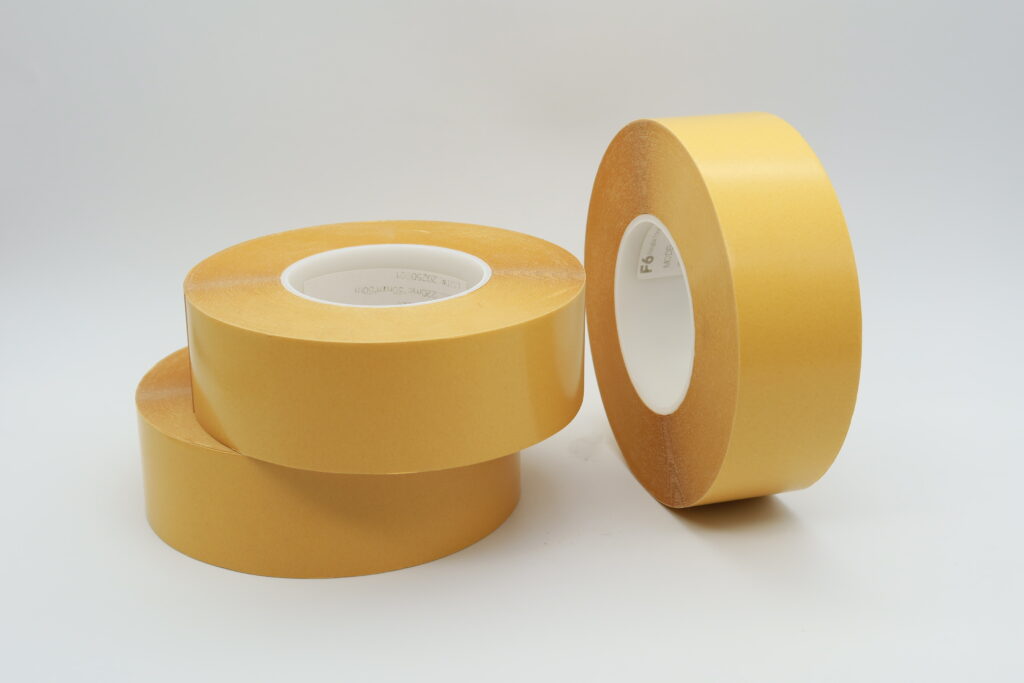
Choosing the right PET tape for your production line?
Selecting a tape requires a deep understanding of the surface energy of the substrates involved. For instance, bonding to powder-coated metals requires a different adhesive chemistry than bonding to glass. At F6 Tape, we analyze these surface interactions to recommend the optimal adhesive formulation for your specific housing material.
Thickness is another vital variable in the procurement process. We offer a diverse range of thicknesses, starting from as thin as 5 microns. Choosing the thinnest possible tape helps reduce the overall device profile, while thicker tapes might be necessary if the surfaces being joined are slightly uneven or textured.
- Identify the surface energy of both substrates (High, Medium, or Low).
- Determine the maximum operating temperature the device will face.
- Define the required bond line thickness for the mechanical design.
- Specify if the tape needs to be UL-listed or flame-retardant.
- Evaluate the die-cutting requirements for automated pick-and-place.
Manufacturing capabilities and customization at F6 Tape?
As a dedicated manufacturer, we understand that standard off-the-shelf solutions rarely meet the needs of advanced OEM projects. Our production facility is equipped to handle custom slitting, laminating, and precision die-cutting. We work closely with engineers to ensure the tape integrates seamlessly into their automated assembly lines.
We maintain a robust inventory of high-performance materials through our comprehensive product catalog. This allows us to provide rapid prototyping for R&D phases and scalable volume for mass production. Our quality control systems monitor thickness uniformity and adhesive coat weight to ensure consistency across every roll.
Our expertise extends beyond just providing a product; we offer technical consultation on material compatibility. Whether you are dealing with outgassing concerns in optical sensors or need chemical resistance for medical-grade electronics, our team provides the testing data required for validation. We focus on reducing your assembly scrap rates by providing easy-to-release liners and dimensionally stable tapes.
FAQ
Q: Can double sided PET tape withstand the high temperatures of lead-free reflow soldering?
A: While standard PET has a melting point around 250°C, it is generally used for post-reflow assembly. For components that must pass through an oven, we recommend specific high-heat versions or polyimide tapes.
Q: Is PET tape for electronics waterproof?
A: Yes, PET tape is inherently moisture-resistant and, when combined with the correct acrylic adhesive, can create a hermetic seal. It is frequently used to meet IP67 or IP68 water resistance standards in mobile devices.
Q: What is the shelf life of these industrial tapes?
A: Most of our double sided PET tapes have a shelf life of 12 to 24 months when stored in a cool, dry environment. Proper storage prevents the adhesive from cross-linking prematurely or losing tack.
Q: How does PET tape compare to transfer tape?
A: Transfer tape consists of only adhesive without a carrier, making it very thin but difficult to handle. PET tape includes a carrier film, which adds dimensional stability and makes die-cutting and automated application much easier.
Q: Can I get custom die-cut shapes for my specific device?
A: Absolutely. We specialize in converting tape into precise shapes based on your CAD drawings. This reduces waste and significantly speeds up the assembly process on the production floor.
Reference Sources
- ASTM D1000 Standard Test Methods for Pressure-Sensitive Adhesive-Coated Tapes used for Electrical and Electronic Applications.
https://www.astm.org/d1000-17.html - ISO 9001:2015 Quality management systems — Requirements for manufacturing.
https://www.iso.org/standard/62085.html - IPC-2221 Generic Standard on Printed Board Design for electrical insulation guidelines.
https://www.ipc.org/TOC/IPC-2221B.pdf