
 Canada
 USA
USA Japan
Japan


How to Choose an Adhesive Tape Supplier for OEM Projects

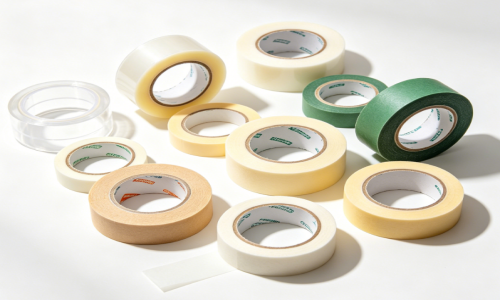
Scaling an OEM project from a prototype to full-scale production requires more than just a catalog of products. It demands a partner who understands the intersection of polymer science and mechanical engineering. In the world of industrial bonding, the adhesive is often a critical structural component, yet it is frequently the most overlooked.
Selecting the wrong adhesive tape supplier for OEM applications leads to more than just bond failure. It results in production delays, increased scrap rates, and potential product recalls. For project managers and engineers, the goal is to find a supplier capable of balancing high-performance bonding with cost-effective manufacturing workflows.
A strategic supplier does not just provide a roll of tape. They provide technical validation, material compatibility analysis, and custom-converting solutions that fit your specific assembly line requirements.
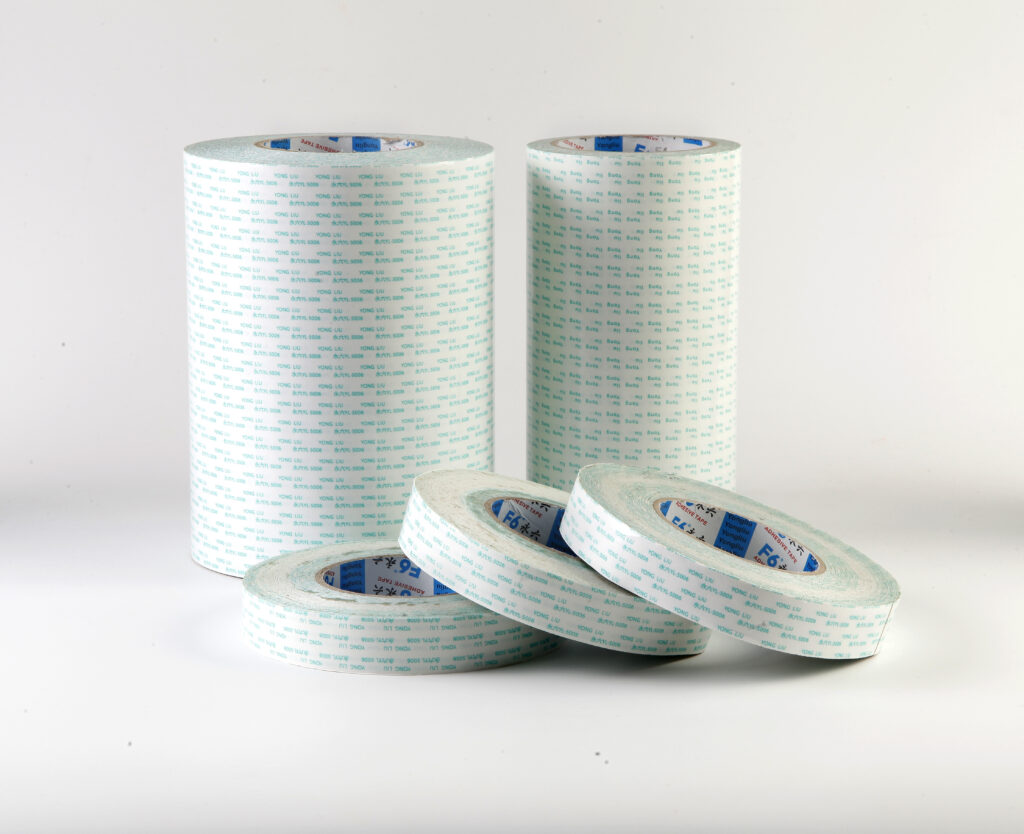
Why is selecting the right adhesive tape supplier for OEM projects critical?
The success of an OEM project often hinges on the reliability of the bonding agent under real-world stressors. Unlike standard consumer tapes, industrial-grade adhesives must withstand extreme temperatures, UV exposure, and chemical solvents. A dedicated supplier provides the necessary data to ensure these environmental factors do not compromise the product integrity.
The financial impact of a poor selection is significant. If a tape fails in the field, the cost of repair far exceeds the initial savings of a cheaper material. A professional supplier works with you during the Design for Manufacturing (DFM) phase to prevent these issues. This collaboration reduces the total cost of ownership by optimizing the assembly process.
Beyond the material itself, the supplier’s ability to provide consistent quality is paramount. In OEM manufacturing, variance in adhesive thickness or tackiness can disrupt automated application systems. Reliable suppliers maintain strict ISO-certified quality control measures to ensure every batch meets your exact specifications.
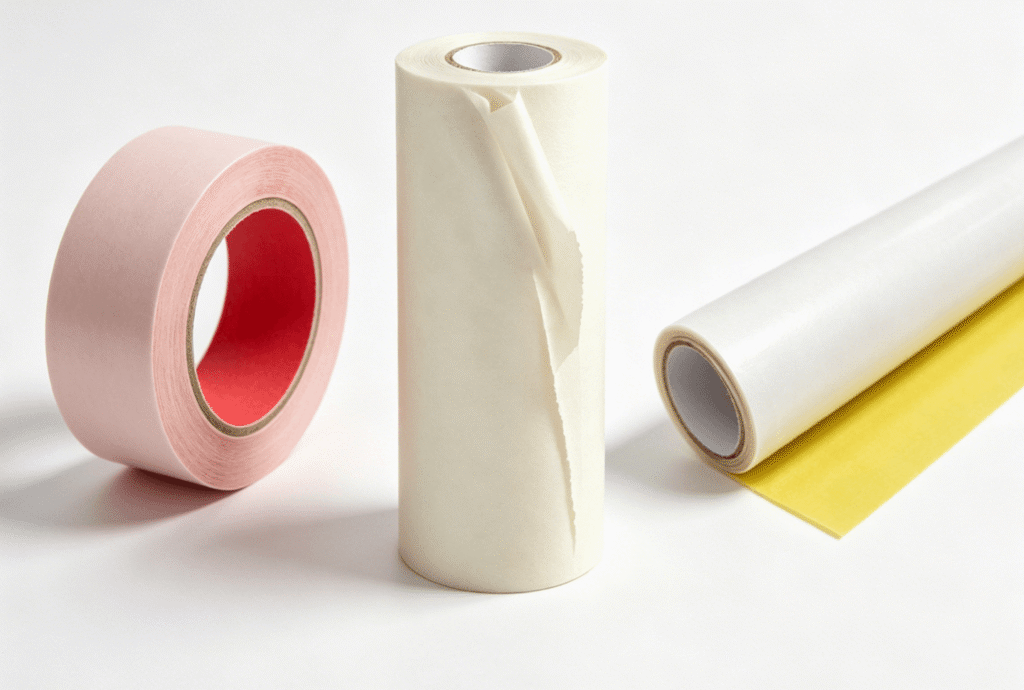
What are the technical criteria for evaluating tape performance?
Evaluating an adhesive tape supplier for OEM starts with technical data sheets (TDS). You must look beyond “high tack” and focus on quantifiable metrics. Key performance indicators include peel adhesion, shear strength, and tensile strength, often measured by ASTM standards.
Surface energy is another critical factor that a professional supplier must address. Bonding to low surface energy (LSE) plastics like polypropylene requires a completely different adhesive chemistry than bonding to high surface energy (HSE) metals like stainless steel. Your supplier should offer surface tension testing to recommend the correct primer or adhesive formulation.
Environmental resistance is the third pillar of technical evaluation. You must determine if the adhesive will be exposed to:
- Continuous thermal cycling or extreme high/low temperatures.
- Direct sunlight and long-term UV degradation.
- Moisture, humidity, or immersion in water.
- Industrial chemicals, oils, or fuels.
| Carrier Type | Temperature Resistance | Dimensional Stability | Best Application Use-Case |
| PET (Polyester) | High (up to 150°C) | Excellent | Precision die-cutting and electronic components. |
| PE Foam | Medium (up to 80°C) | Good (Gaps) | Automotive trim and irregular surface bonding. |
| Tissue/Non-woven | Medium | Fair | Laminating foams, papers, and lightweight plastics. |
| Transfer Tape | Varies by Adhesive | Minimal | Ultra-thin bonding where no carrier is required. |
How to assess manufacturing and conversion capabilities?
A Tier-1 adhesive tape supplier for OEM must be more than a distributor; they must be a converter. Most OEM projects require custom widths, lengths, or complex die-cut shapes to fit specific components. If a supplier lacks in-house converting, your lead times will increase, and your quality control will suffer.
Precision slitting is essential for automated assembly. If the tape edge is not perfectly clean, it can snag in dispensing machines, causing downtime. Ask your supplier about their slitting tolerances and if they can provide “finger-lift” liners that make manual application faster for your assembly team.
Die-cutting capability is where the most value is added. Complex geometries, such as gaskets or screen-bonding frames, require high-speed rotary die-cutting or flatbed presses. At our facility, we integrate these processes to ensure that the adhesive components delivered to your floor are ready for immediate integration without further modification.
Matching materials to specific industrial applications?
Every industry has a unique “adhesive language.” An adhesive tape supplier for OEM must speak that language fluently. For instance, in the electronics industry, outgassing and halogen-free requirements are standard. In the automotive sector, vibration damping and flame retardancy (FMVSS 302) are non-negotiable.
Medical-grade OEM projects require skin-friendly, biocompatible adhesives that meet ISO 10993 standards. Meanwhile, construction applications focus on long-term aging and load-bearing capacity. A supplier with broad industrial experience can cross-pollinate solutions, perhaps using a high-bond foam tape originally designed for aerospace to solve a heavy-duty signage mounting problem.
Before finalizing a material, request a “design review.” A skilled engineer from the supplier side should look at your assembly method. They might suggest changing a liner type to improve pick-and-place speed or recommending a specific tape thickness to compensate for gaps between mismatched parts.
Integrating F6 Tape solutions into your OEM workflow?
When you partner with us at F6 Tape, you gain access to a vertically integrated manufacturing process. We understand that OEM projects require flexibility, which is why we offer a comprehensive range of high-performance bonding solutions. Our Product Portfolio includes everything from industrial double-sided tapes to specialized foam and film carriers designed for the most demanding environments.
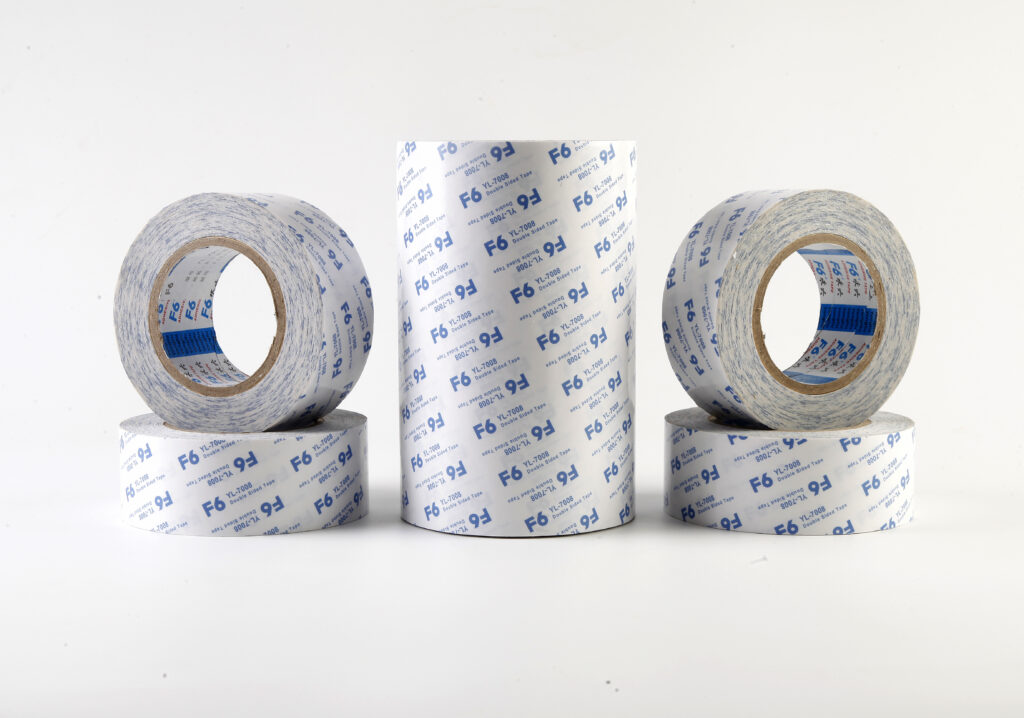
We take pride in being a proactive partner. For new OEM developments, we provide rapid prototyping services. This allows your engineering team to test various adhesive chemistries in real-world conditions before committing to high-volume production. Our facility is equipped to handle custom laminating, ensuring we can combine different adhesives and carriers to create a bespoke product unique to your application.
Our commitment to quality extends to our supply chain management. We maintain consistent stock of core raw materials to mitigate the risks of global shortages. When you choose us as your adhesive tape supplier for OEM, you are choosing a partner dedicated to your production uptime and product durability.
What documentation and compliance standards are mandatory?
Trust in a B2B relationship is built on documentation. For OEM projects, compliance is often a legal requirement. You should verify that your supplier can provide the following:
- ISO 9001:2015 Certification: Ensures a consistent quality management system is in place.
- RoHS and REACH Compliance: Critical for any products being sold in European or international markets to ensure no restricted hazardous substances are present.
- Certificate of Analysis (COA): Provides specific test data for the actual lot of material you receive.
- UL Recognition: Necessary for electrical components where flame retardancy and safety are audited.
A reliable supplier will have these documents readily available. They should also offer traceability, allowing you to track the raw material batch and production date for every roll or die-cut part delivered to your facility. This level of transparency is what separates a world-class OEM supplier from a local distributor.
FAQ
Q: What is the typical MOQ for custom OEM adhesive tape projects?
A: Minimum Order Quantities vary based on the material and conversion complexity. For standard slitting, MOQs can be low, but custom adhesive coatings or specialized die-cuts usually require a larger volume to offset setup costs and material waste.
Q: Can you provide samples for automated assembly testing?
A: Yes, we encourage testing. We can provide sample rolls or sheets that match the specific dimensions of your dispensing equipment to ensure there are no feeding or cutting issues during the pilot run.
Q: How do you handle lead times for large-scale OEM orders?
A: We utilize a rolling forecast system with our long-term OEM partners. By understanding your production schedule, we can maintain safety stock of converted parts or raw logs, reducing standard lead times from weeks to days.
Q: Do you offer technical support for surface preparation?
A: Absolutely. We provide guidance on cleaning protocols and can recommend specific primers or plasma treatments if your substrate is particularly difficult to bond, ensuring maximum adhesion.
Q: Can you help with tape selection for high-temperature powder coating processes?
A: Yes, we offer specialized silicone and polyimide tapes designed to withstand temperatures exceeding 200°C while leaving no adhesive residue after removal, which is a common requirement in metal finishing OEMs.
Reference Sources
- ASTM D3330 Standard Test Method for Peel Adhesion of Tape
https://www.astm.org/d3330_d3330m-04r18.html - ISO 9001:2015 Quality management systems requirements
https://www.iso.org/standard/62085.html