
 Canada
 USA
USA Japan
Japan


Guide to Custom Tape Slitting Service: Precision & Methods

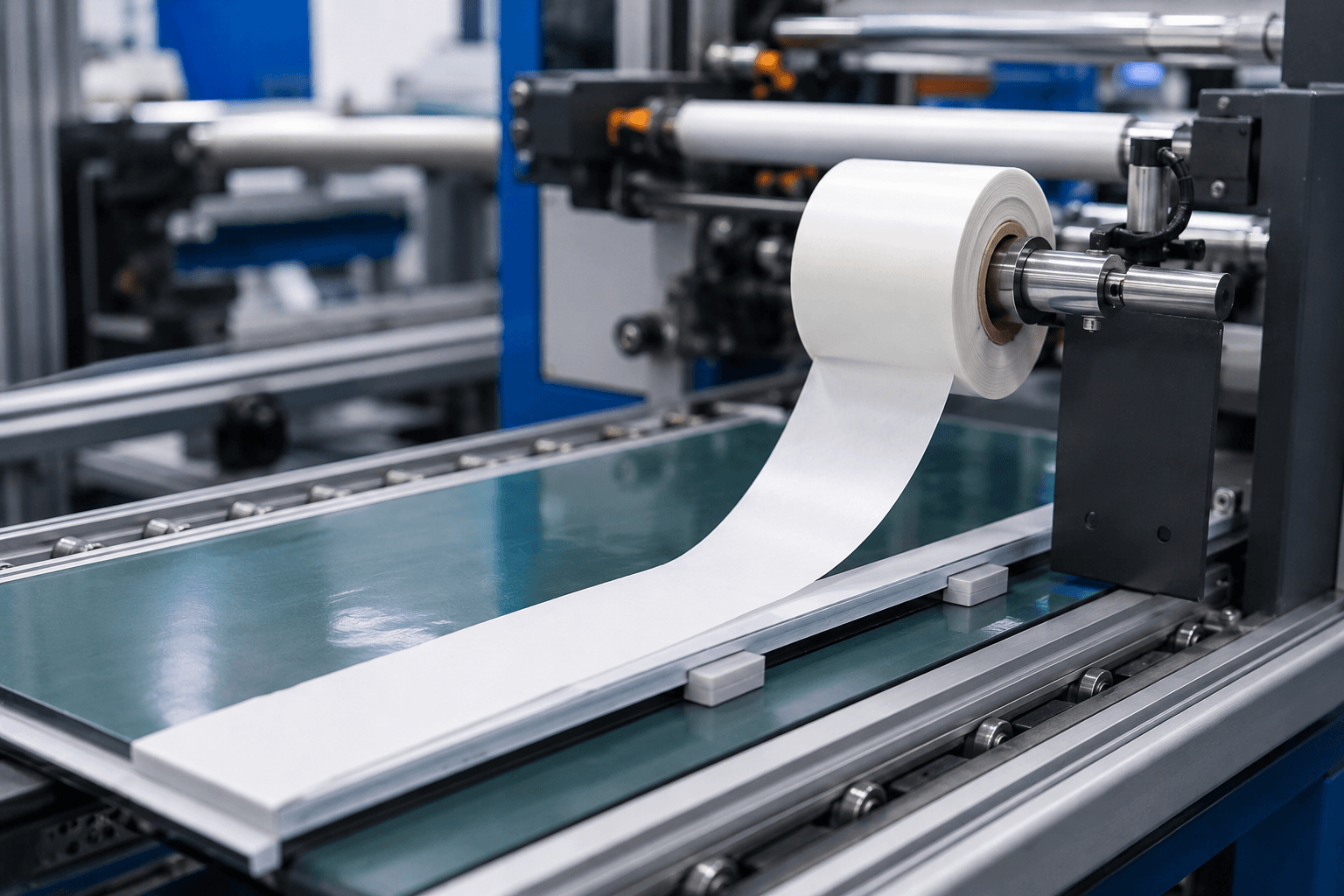
Standard adhesive roll sizes rarely meet the rigorous demands of specialized industrial assembly. Whether for electronics, automotive components, or construction, engineers often require widths that fall between off-the-shelf catalog dimensions. This gap is bridged by a custom tape slitting service, a precision conversion process that transforms large master rolls into functional, application-specific widths.
Understanding the Mechanics of Industrial Tape Slitting
Tape slitting is a core converting process where a wide master roll of adhesive material is cut into multiple narrower rolls. The goal is to achieve dimensional accuracy while maintaining the integrity of the adhesive and the carrier material. Unlike simple cutting, industrial slitting must account for blade heat, material tension, and adhesive “ooze” (the tendency of adhesive to migrate past the slit edge).
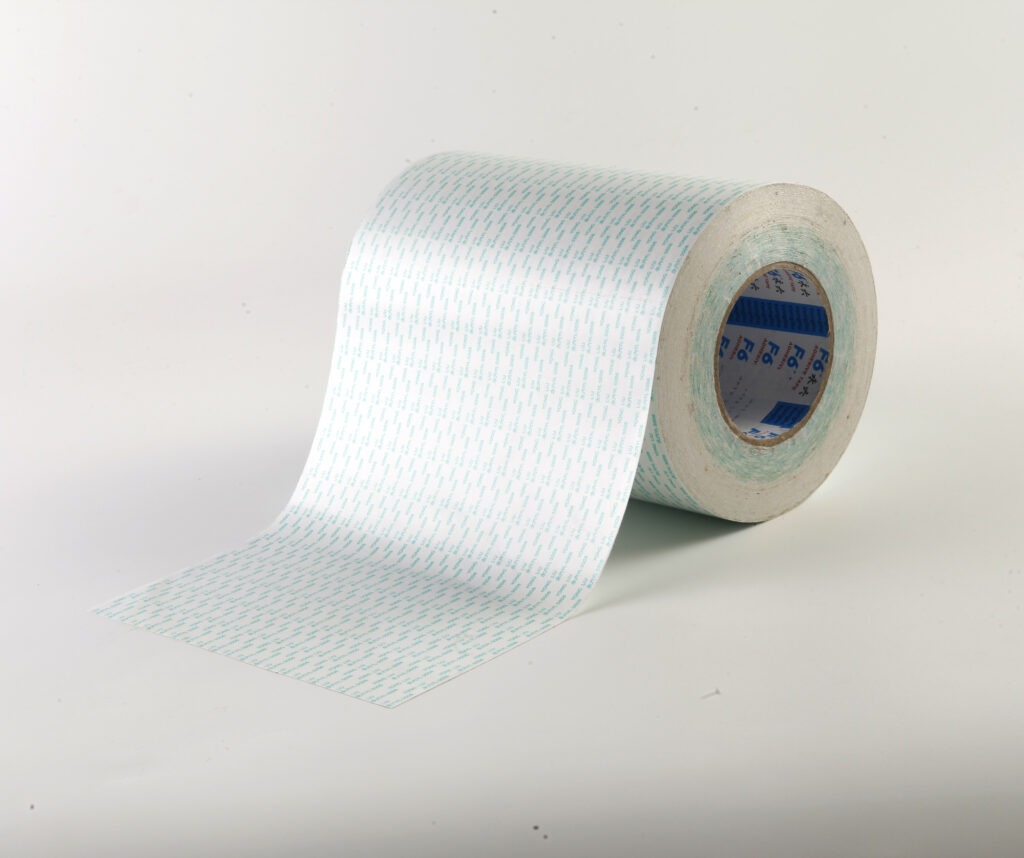
The process begins with the “Log” or “Master Roll,” which can be several feet wide. Specialized machinery then uses precise blade configurations to divide the material. This service is essential for high-performance products like industrial double-sided tapes, where the ratio of adhesive to carrier varies significantly by application.
Primary Methods of Tape Slitting
Different materials respond uniquely to mechanical stress. Selecting the correct slitting method is critical to ensuring the roll edges remain clean and the tape remains easy to unwind.
- Balancing/Lathe Slitting (Single Knife): A single circular blade rotates and penetrates a spinning log of tape. It is highly efficient for varying widths from a single master roll.
- Rewind Slitting: The material is unwound, passed through a series of blades, and then rewound onto individual cores. This method is superior for long-length rolls and allows for simultaneous inspection of the material.
- Razor Slitting: Ideal for thin, non-abrasive materials like PET or thin films. Razor blades are fixed in place, providing a cost-effective but highly precise cut.
- Shear Slitting: This utilizes two rotary knives that act like a pair of scissors. It is the preferred method for thicker materials, such as foam or heavy-duty VHB (Very High Bond) tapes, as it minimizes edge distortion.
Technical Comparison of Slitting Techniques
| Feature | Lathe Slitting | Rewind Slitting | Razor Slitting |
| Material Suitability | Most Adhesives | Films, Foams, Papers | Thin Films & Liners |
| Edge Quality | Good | Excellent | Cleanest (Thin Mat.) |
| Width Tolerance | ±0.015″ | ±0.005″ | ±0.010″ |
| Production Speed | Moderate | High | High |
| Best For | Prototyping & Small Batches | High-Volume Custom Widths | High-Speed Film Converting |
Critical Material Considerations in Custom Slitting
Material science dictates the success of a custom slitting project. Different carriers—such as Tissue, PET, Foam, or Transfer Tape—exhibit distinct behaviors when subjected to blade pressure.
1. Carrier Integrity and Elasticity
Materials with high elasticity, like PE or PU foams, tend to “compress” during the slitting process. If the tension is not perfectly calibrated, the roll may exhibit “telescoping” once removed from the machine. Precision converting ensures that the internal stresses of the roll are neutralized.
2. Adhesive “Edge Pick” and Migration
Aggressive acrylic adhesives found in double-sided PET tapes can become “gummy” if the blades generate excessive heat. Professional slitting services use chilled blades or specialized lubricants to prevent adhesive buildup. This prevents the rolls from sticking together on the sides (edge pick), which is a common cause of failure in automated applicators.
3. Core Specifications
Industrial applications often require specific core diameters (typically 1”, 3”, or 6”). The core must be strong enough to withstand the winding tension without collapsing, especially for heavy materials like high-density foam tapes.
Applications for Custom Slitted Tapes
Custom widths are not a luxury but a functional requirement in many sectors. By utilizing a custom tape slitting service, manufacturers can integrate adhesive rolls directly into automated production lines with zero waste.
- Automotive Gasketing: Custom-width foam tapes are used for weather-stripping and vibration dampening where exact fitment prevents moisture ingress.
- Electronics Assembly: Narrow-width PET or polyimide tapes (sometimes as thin as 1mm or 2mm) are required for internal component insulation.
- Construction & Glazing: High-bond double-sided tapes are slit to the exact width of window mullions to ensure a clean, structural aesthetic.
- Medical Device Manufacturing: Hypoallergenic tapes are slit under controlled conditions to ensure rolls are free from contamination and fit specialized dispensing tools.
Why Engineering Tolerances Matter
In the B2B procurement cycle, the term “custom” is often synonymous with “precision.” Standard commercial tolerances of ±1/16″ are usually unacceptable for industrial OEM projects. A professional converter typically works within tolerances of ±0.010″ (0.25mm) or even tighter for specialized electronic applications.
Achieving these tolerances requires sophisticated equipment and an understanding of the material’s “creep” after it is cut. For instance, when slitting tissue-based double-sided tapes, the fibrous nature of the carrier requires sharper shear blades than a standard film tape.
Optimizing Your Tape Converting Strategy
Selecting the right slitting partner involves more than just comparing prices. For project managers and engineers, the evaluation should focus on the converter’s ability to handle specific material chemistries and their quality control systems.
Effective tape conversion reduces material waste by optimizing the “yield” from a master roll. For example, if you need 24mm tape, slitting a 1000mm master roll allows for 41 precise rolls with minimal scrap. This efficiency is a primary driver in reducing the Total Cost of Ownership (TCO) for adhesive components in large-scale manufacturing.
FAQ: Common Questions About Custom Tape Slitting
1. What is the minimum width that can be slit?
Depending on the material and method, some converters can achieve widths as narrow as 1mm (approx. 0.040″). However, for most industrial tapes, 3mm to 6mm is the standard minimum for maintaining roll stability.
2. Does slitting affect the shelf life of the adhesive?
If performed correctly, slitting does not impact the chemical properties of the adhesive. However, exposing the edges of the adhesive to air can theoretically increase the risk of dust contamination, which is why slit rolls should be stored in original packaging.
3. What is “Log Slitting” vs. “Rewind Slitting”?
Log slitting (Lathe slitting) involves cutting a finished roll while it is on a single mandrel. Rewind slitting involves unwinding the tape, cutting it “in the air,” and rewinding it onto new cores. Rewind slitting is typically better for controlling tension in delicate materials.
4. Can you slit double-sided tapes with different liners?
Yes. Whether the tape has a paper liner, a film liner, or an extended liner (finger lift), slitting machines can be adjusted to cut through both the tape and the liner cleanly.
Reference Sources
- PSTC (Pressure Sensitive Tape Council): Standards for tape thickness and width tolerances (PSTC 133). pstc.org
- ASTM D3652/D3652M: Standard Test Method for Thickness of Pressure-Sensitive Tapes.
- ISO 9001:2015: Quality management systems for industrial converting and manufacturing.
- Adhesives & Sealants Industry (ASI) Magazine: Technical whitepapers on slitting and rewinding technology. adhesivesmag.com