
 Canada
 USA
USA Japan
Japan


Heavy Duty Double Sided Tape: Engineer’s Procurement Brief

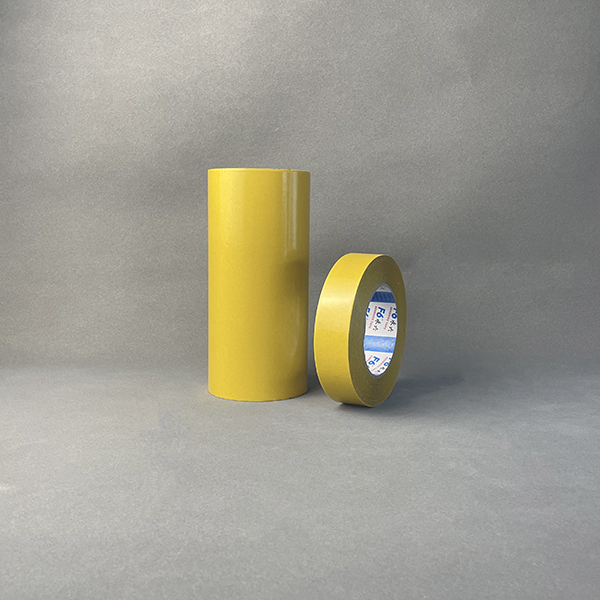
Selecting the right heavy-duty double-sided tape is rarely about advertisement claims—it is about verifying three things: whether the adhesive can sustain load under elevated temperature, whether the backing can resist tensile stress without stretching, and whether the tape bonds to your actual substrate, especially if that substrate is a low surface energy material such as untreated aluminum, stainless steel, or high-carbon steel. Our F203 Striped Fiberglass Double Sided Tape is engineered specifically around these three verification points, delivering strong viscosity, clean peelability, and wear resistance across demanding manufacturing environments.
Defining Heavy-Duty Double-Sided Tape
Heavy-duty double-sided tape is a pressure-sensitive adhesive product designed to replace mechanical fasteners in permanent bonding applications. The critical differentiator is the backing material. In standard foam or film tapes, the backing stretches under load, causing gradual creep and eventual bond failure. In a striped fiberglass double-sided tape, the reinforced fiberglass yarn provides the filament tape’s high tensile strength, preventing elongation and maintaining bond integrity over time.
The F203 uses a solvent-based pressure-sensitive adhesive coated on both sides of a yellow-striped fiberglass backing. At 0.14 mm total thickness with a 0.11 mm liner, it fits into tight assembly gaps while delivering permanent adhesion across signs, acrylic, woods, aluminum, laminates, stainless steel, and high carbon steel.
Why Holding Power Testing Matters for Procurement
For procurement engineers, the single most important specification is not initial tack—it is holding power under sustained load. GB/T 4851-1998, the Chinese national standard test method for holding power of pressure-sensitive adhesive tapes, established by the National Quality and Technical Supervision Bureau and drafted by the Shanghai Rubber Products Research Institute, defines exactly how this is measured.
The standard specifies that holding power is tested by hanging a 1000 g ± 10 g load on a vertically mounted tape sample under controlled conditions (23°C ± 2°C, 65% ± 5% relative humidity, 20-minute dwell time). The tape’s resistance to displacement—measured as either time-to-failure or distance moved within a set time—becomes the quantitative metric for bond durability.
The F203 is tested in accordance with GB/T 4851-1998 and achieves a holding power of up to 80°C for 60 minutes. This means the tape sustains a load at 80°C for a full hour without failure—a verifiable data point that procurement teams can specify into their supplier qualification checklist.
Commercial Comparison Table 1: Backing Structure & Load Performance
| Parameter | F203 Striped Fiberglass DST | Tesa ACXplus 7063 | Tesa ACXplus 7066 | Source |
|---|---|---|---|---|
| Backing type | Striped fiberglass (reinforced yarn) | Foamed acrylic | Foamed acrylic | F6 / tesa |
| Total thickness | 0.14 mm | 800 µm (0.8 mm) | 1500 µm (1.5 mm) | F6 / tesa |
| Peel adhesion (steel) | — | 40 N/cm | 54 N/cm | tea |
| Static shear @ 70°C | Tested per GB/T 4851-1998, 80°C/60 min | 250 g | 250 g | F6 / tesa |
| Short-term temp resistance | 80°C | 170°C | 170°C | F6 / tesa |
| Long-term temp resistance | 80°C continuous | 70°C | 70°C | F6 / tesa |
| Loop tack | ≥30# | Not disclosed | Not disclosed | F6 |
| Low surface energy suitability | Yes (explicitly rated) | Yes (LSE-rated acrylic) | Yes (LSE-rated acrylic) | F6 / tesa |
Sources: F203 product page; Tesa ACXplus performance characteristics
The comparison reveals a clear segmentation: Tesa 706x foamed acrylic tapes are engineered for thicker-bond, high-temperature (170°C short-term) applications where bond line thickness is acceptable. The F203, at 0.14 mm, targets thin-profile, high-tensile, low-surface-energy bonding where dimensional space is constrained and 80°C continuous service is the upper requirement.
Commercial Comparison Table 2: Application Fit & Commercial Terms
| Dimension | F203 Striped Fiberglass DST | 3M 9103 Splicing Tape | Tesa ACXplus 7065 | Source |
|---|---|---|---|---|
| Product nature | Double-sided, permanent bond | Single-sided, repulpable paper splicing | Double-sided, foamed acrylic | F6 / 3M / Tesa |
| Primary use case | Industrial assembly, sign/metal/acrylic bonding | Paper mill butt splicing | High-strength industrial mounting | F6 / 3M / Tesa |
| Max operating temperature | 80°C | 204°C (400°F) | 170°C short-term | F6 / 3M / Tesa |
| Roll length / size | Customized | 55 m (60 yds) | Log roll configurable | F6 / 3M / Tesa |
| Color | Yellow | Blue | Deep black | F6 / 3M / Tesa |
| Shelf life / storage | Cool, dark, original box, 20-40°C application | 12 months, 16-27°C storage | Per the above guidelines | F6 / 3M |
| Industry certifications | GB/T 4851-1998 tested | TAPPI UM-213, FDA 21 CFR 176.170/176.180 | Internal Tesa QC | F6 / 3M |
Sources: F203 product page; 3M 9103 Technical Data Sheet June 2017; Tesa ACXplus 706x series
Note: 3M 9103 is included for reference as an industrial-grade tape benchmark, though it is single-sided and serves a different application (paper splicing). For double-sided permanent bonding on low surface energy substrates, the F203 and TESA 706x are the relevant comparison sets.
Commercial Comparison Table 3: Total Cost of Ownership Factors
| Factor | F203 Striped Fiberglass DST | Tesa ACXplus 706x | Procurement Implication | Source |
|---|---|---|---|---|
| Bond line thickness | Ultra-thin (0.14mm) | Thick (0.5-3.6 mm) | F203 fits tight-tolerance assemblies. | F6 / tesa |
| Tensile reinforcement | Fiberglass yarn (high tensile) | Viscoelastic foam (stress compensation) | Different failure modes; F203 resists stretch. | F6 / tesa |
| Low surface energy bonding | Explicitly suitable | LSE-rated acrylic adhesive | Both qualified, F203 thinner profile | F6 / tesa |
| Suitability for metals | Aluminum, stainless, high-carbon steel | Steel, aluminum, dissimilar materials | Both qualified. | F6 / tesa |
| Customization | Size fully customized | Standard log roll sizes | F203 adapts to OEM spec. | F6 |
| Supplier model | Factory-direct from Ningbo, China | Global distributor network | F203 offers direct OEM pricing. | F6 |
| Application temperature window | 20-40°C (ideal) | Normal industrial conditions | Both require controlled application | F6 / tesa |
Sources: F203 product page; TESA ACXplus 706x technical data
How the F203 Delivers Measurable Value
For OEM project managers and B2B procurement advisors, the decision framework should be
- Define the bond line gap: If your assembly tolerance is under 0.5 mm, foam tapes (tesa 706x at 0.5-3.6 mm) will not fit. The F203 at 0.14 mm is the appropriate choice.
- Verify the substrate: For low surface energy materials, confirm the tape is explicitly rated. The F203 is suitable for low surface energy substrates by design.
- Confirm the thermal envelope: If continuous service is ≤80°C, the F203’s 80°C/60 min GB/T 4851-1998 tested holding power is sufficient. For higher temperatures, escalate to foamed acrylic or specialty constructions.
- Quantify the load: The loop tack of ≥30# and 80°C/60 min holding power provide the engineering data points needed for structural adhesive substitution decisions.
Application Scenarios
The F203 is ideally suited for permanent adhesion of:
- Signs and display fixtures—Mounting metal nameplates to stainless steel enclosures
- Acrylic fabrication — Bonding acrylic sheets to aluminum frames without visible fasteners
- Wood and laminate assemblies—Joining decorative panels to substrate structures
- Metal fabrication—Attaching aluminum or high-carbon steel brackets in light-industrial fixtures
- Electronics enclosures—Securing internal components where thin profile is critical
Storage and Application Best Practices
To preserve adhesive properties:
- Keep the tape in its original box when not in use
- Store in a cool, dark place away from direct sunlight
- Apply within the ideal temperature range of 20°C to 40°C
- Ensure substrate surfaces are clean and dry before application
- Apply firm, even pressure to activate initial tack
Why Low Surface Energy Bonding Demands Specialized Tapes
Low surface energy (LSE) substrates—such as untreated aluminum, stainless steel, high-carbon steel, and certain plastics—present a fundamental challenge for pressure-sensitive adhesives. The adhesive must sufficiently wet the substrate to form high adhesion forces. Tesa’s LSE mounting solutions documentation confirms that “the pressure-sensitive adhesive must be able to sufficiently wet the substrate to be bonded” and that LSE substrates are defined by low surface tension.
The F203’s solvent-based pressure-sensitive adhesive is specifically formulated to wet and bond LSE substrates, making it suitable for low surface energy applications where standard acrylic or rubber-based tapes would fail.
FAQ
Q1: What is heavy-duty double-sided tape in simple terms?
A: It is a pressure-sensitive adhesive tape coated on both sides of a reinforcing backing, engineered to replace mechanical fasteners in permanent bonding applications. The “heavy duty” designation means the tape can sustain structural loads without creeping or failing under sustained stress.
Q2: How is holding power tested, and why does it matter?
A: Holding power is measured per GB/T 4851-1998, the Chinese national standard drafted by the Shanghai Rubber Products Research Institute. A 1000 g ± 10 g load is hung on a vertically mounted tape sample under controlled temperature and humidity, and the tape’s resistance to displacement is recorded. The F203 achieves 80°C for 60 minutes per this standard—meaning it sustains load at 80°C for a full hour without failure. This is the quantitative metric procurement engineers should specify in supplier qualification.
Q3: When should I choose F203 over thicker foamed acrylic tapes like Tesa 706x?
A: Choose F203 when: (1) your bond line gap is under 0.5mm — tesa 706x ranges from 0.5-3.6mm thick; (2) you need high tensile resistance without stretch — the fiberglass yarn prevents elongation; (3) your service temperature is ≤80°C continuous; (4) you are bonding low surface energy substrates including aluminum, stainless steel, or high-carbon steel. For thicker bond lines or higher temperature requirements (up to 170°C short-term), foamed acrylic tapes are more appropriate.
Q4: Can the F203 be customized for my production line?
A: Yes. The F203 is available in customized sizes to match your production requirements. Contact our technical team with your substrate types, bond line dimensions, and expected load profile for a tailored specification.
Q5: What is the recommended storage and application protocol?
A: Store in the original box in a cool, dark place away from direct sunlight. Apply within 20-40°C ambient temperature. Ensure substrates are clean and dry. Firm, even pressure activates the adhesive for optimal bond formation.
Q6: How does F203 compare commercially to alternatives?
A: Compared to 3M 9103 (single-sided, paper splicing, 204°C rated but not for structural bonding) and tesa ACXplus 706x (double-sided, foamed acrylic, 0.5-3.6mm thick, 170°C short-term rated), the F203 occupies a distinct niche: ultra-thin (0.14mm), high-tensile fiberglass reinforcement, 80°C continuous service, and explicit low surface energy suitability — at a factory-direct price point from our Ningbo manufacturing facility.
Making the Procurement Case
For B2B buyers evaluating heavy-duty double-sided tape, the engineering rationale is clear: verify the backing structure, confirm the holding power test method and result, and match the thermal envelope to your application. The F203 Striped Fiberglass Double Sided Tape delivers on all three:
- Verified testing: GB/T 4851-1998 compliant, 80°C/60 min holding power
- Structural backing: Reinforced fiberglass yarn for high tensile strength without stretch
- Substrate versatility: Suitable for low surface energy materials, including aluminum, stainless steel, and high-carbon steel
- Precise profile: 0.14 mm total thickness fits tight-tolerance assemblies
- Customization: Available in customized sizes for OEM production lines
When your next assembly project requires reliable, permanent bonding without mechanical fasteners, understanding heavy-duty double-sided tape selection criteria is the first step. The next step is matching your specific substrates, bond line dimensions, and thermal requirements to the right product configuration.
To explore how F203 Striped Fiberglass Double Sided Tape would perform in your application, visit our product page at https://f6tape.com/product/f203-striped-fiberglass-double-sided-tape/. Our technical team can provide a detailed specification sheet, arrange sample evaluation, and deliver a customized quotation based on your production volume and dimensional requirements. Reach out today, and let us help you validate the right bonding solution for your manufacturing line.
References
- F203 Striped Fiberglass Double Sided Tape product specifications and technical data. F6 Tapes. https://f6tape.com/product/f203-striped-fiberglass-double-sided-tape/
- GB/T 4851-1998, Test method for holding power of pressure-sensitive adhesive tapes. National Standard of the People’s Republic of China, issued by the National Quality and Technical Supervision Bureau, drafted by Shanghai Rubber Products Research Institute, effective 1999. Full text PDF: http://www.servtek.cn/down/d/02.pdf: https://www.chem17.com/tech_news/detail/2352827.html
- Tesa ACXplus 706x series performance characteristics and technical data. Tesa. https://www.tesa.cn/files/download/11282300,15,properties-and-performance-characteristics.pdf
- Tesa LSE Mounting Solutions for difficult-to-bond substrates. tesa. https://tesa.com/en-sg/industry/markets/industrial-converter-partners/industrial-converting-partners-tape-technology/lse-mounting-solutions
- 3M Printable Repulpable Single Coated Splicing Tape 9103, Technical Data Sheet. 3M, June 2017. https://multimedia.3m.com/mws/mediawebserver?mwsId=66666UF6EVsSyXTtlXTcMXf2EVtQEVs6EVs6EVs6E666666–&fn=70070325819.pdf
- 3M Printable Repulpable Single Coated Splicing Tape 9103 product page. 3M. https://www.3m.com/3M/en_US/p/dc/v000197583/