
 Canada
 USA
USA Japan
Japan


Industrial Adhesive Tape Manufacturer for OEM Production

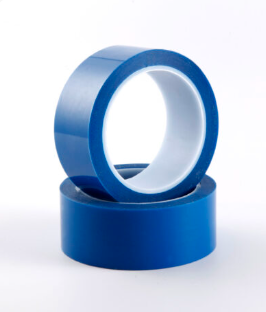
Choosing an industrial adhesive tape manufacturer is an important step for OEM production. The right supplier needs to provide more than a suitable tape grade. Manufacturing capability, adhesive formulation, converting accuracy, testing, and supply consistency can all affect how well a tape performs on the production line.
For OEM buyers, the goal is not simply to find an industrial tape factory with a competitive price. It is to identify a manufacturer that can match the tape construction to the application and support the project from sampling through volume production.
What to Check When Choosing an Industrial Adhesive Tape Manufacturer
A useful supplier evaluation starts with several practical questions: Can the manufacturer provide the required tape construction? Can it support custom sizes or converting? Does it have appropriate testing capabilities? And can production remain consistent when the order moves from samples to larger volumes?
1. Manufacturing and R&D Capability
Start by reviewing the manufacturer’s production equipment, laboratory resources, and experience with different adhesive constructions.
F6 Tape provides a range of industrial adhesive tape solutions and operates production facilities with coating, slitting, and related manufacturing processes. Its website also describes laboratory and production capabilities that support product development and quality control. For OEM buyers, these capabilities are relevant when a project requires more than a standard stock tape.
You can learn more about the company’s background and manufacturing capabilities through the F6 Tape About Us page.
2. Tape Construction and Product Range
Industrial applications can require very different combinations of backing, adhesive, thickness, and release liner. A supplier with several tape families can give OEM engineers more options during product qualification.
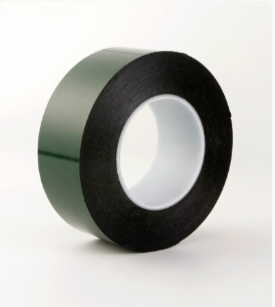
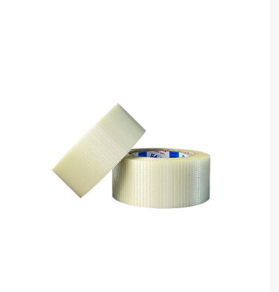
F6’s industrial adhesive tape product range includes industrial double-sided tapes, foam double-sided tapes, holding tapes, duct tapes, plate mounting tapes, masking tapes, electrical tapes, and single-sided tapes. The industrial double-sided tape category also includes tissue, non-woven, transfer, PET, PVC, mesh fiber, and cloth constructions.
For example, industrial double-sided tape may be considered for component bonding, while foam double-sided tape can be useful where gap filling or conformability is part of the application requirement.
Technical Factors to Discuss With an Adhesive Tape OEM Supplier
A tape that works well in one application may not perform the same way on another substrate or production process. Before selecting a grade, provide the manufacturer with as much application information as possible.
Substrate and Surface Condition
Identify the materials being bonded, such as metal, glass, painted surfaces, plastics, or coated substrates. Surface energy, texture, cleanliness, and surface treatment can influence wetting and adhesion.
For low-surface-energy plastics or coated materials, the adhesive formulation may need additional evaluation. Sample testing on the actual substrate is preferable to relying only on a general product description.
Temperature and Environmental Conditions
Define both the expected application temperature and the service environment.
Temperature cycling, humidity, UV exposure, chemicals, and outdoor conditions may affect adhesive performance over time. If the tape will be used in an automotive, electronics, appliance, construction, or industrial application, these conditions should be included in the supplier’s technical review.
Load and Bonding Conditions
Consider how the tape will be loaded after assembly.
Peel, shear, tensile, vibration, and thermal expansion can place different stresses on a bonded joint. Application pressure and dwell time can also influence the development of adhesion.
For automated production, the supplier should also understand line speed, application equipment, roll dimensions, and any feeding or dispensing requirements.
Converting and Die-Cutting Requirements
OEM projects often require more than jumbo rolls. Slitting, rewinding, die-cutting, and custom shapes may be needed for automated or semi-automated assembly.
Discuss:
- Required tape width and length
- Die-cut dimensions and tolerances
- Roll diameter and core size
- Liner configuration
- Extended liner or finger-lift requirements
- Packaging and labeling requirements
These details can affect material utilization and assembly efficiency, so they are worth confirming before production begins.
How to Qualify an Industrial Adhesive Tape Manufacturer
A practical qualification process can help reduce problems when an OEM project moves from development to mass production.
Step 1: Define the Application
Provide the supplier with the substrate, bonding area, expected load, temperature range, environmental exposure, and application process.
The more specific the requirements, the easier it is to compare suitable tape constructions.
Step 2: Request Samples
Ask for representative samples rather than selecting a grade based only on a product name.
For example, F6’s product range includes different tissue, PET, foam, and reinforced tape constructions, allowing buyers to compare alternatives according to their application requirements.
Step 3: Test on the Actual Substrate
Laboratory testing should reflect the real production conditions whenever practical.
Peel adhesion is commonly evaluated using ASTM D3330/D3330M, while shear adhesion can be evaluated using ASTM D3654/D3654M. These standards provide test methods for pressure-sensitive tapes, but the test setup and acceptance criteria should be selected according to the intended application.
This distinction matters because a test result on a standard steel panel does not necessarily represent performance on the actual production substrate.
Step 4: Confirm Converting and Production Requirements
Once the tape grade has passed initial testing, confirm the production format.
For OEM projects, details such as slitting width, die-cut shape, liner configuration, packaging, and labeling can become important when the tape is integrated into the assembly process.
Step 5: Establish Quality Criteria
Before volume production, agree on the main quality parameters and inspection methods.
Depending on the product, these may include:
- Tape thickness
- Adhesive coating consistency
- Peel adhesion
- Shear performance
- Roll dimensions
- Appearance
- Liner performance
- Packaging specifications
The approved sample and technical specification can then provide a reference for subsequent production batches.
Manufacturer vs. Distributor: What Should OEM Buyers Consider?
An OEM buyer may encounter both manufacturers and distributors during sourcing. The right choice depends on the project.
A manufacturer may be more suitable when the project requires custom constructions, specific converting formats, technical communication, or long-term production support. A distributor can be useful when the requirement is for readily available standard products or smaller quantities.
For custom industrial tape projects, it is useful to ask whether the supplier controls the relevant manufacturing and converting processes or sources them from another factory.
Questions to Ask an Industrial Tape Factory
Before placing an OEM order, procurement and engineering teams can ask:
- Which adhesive and backing options are available for my substrate?
- Can you provide samples for application testing?
- Can the tape be slit or die-cut to our specifications?
- What quality parameters are checked during production?
- Can you support pilot production before volume orders?
- What information is required for a custom tape quotation?
- How will the approved sample be used as a production reference?
These questions help move the supplier discussion from product pricing toward technical suitability and production requirements.
Choosing the Right Industrial Adhesive Tape Manufacturer
The selection process should connect three areas: technical performance, manufacturing capability, and production requirements.
A suitable supplier should be able to discuss the tape construction, understand the application conditions, provide samples for qualification, and support the converting and quality requirements of the final product.
For OEM buyers comparing potential suppliers, F6 Tape’s industrial adhesive tape products provide a starting point for reviewing available tape families and constructions.
If you already know the substrate, tape size, thickness, application temperature, and expected order volume, these details can also help the supplier recommend a more appropriate solution and prepare an OEM quotation.
FAQ
What should I look for in an industrial adhesive tape manufacturer?
Look at adhesive and backing options, production capability, converting services, quality control, testing support, sample development, and experience with your application.
Can industrial adhesive tape be customized for OEM production?
Many industrial tapes can be customized in areas such as width, length, adhesive construction, liner configuration, slitting, and die-cut shape. The available options depend on the supplier and application.
How should I test an industrial adhesive tape?
Testing should use the actual substrate and representative application conditions where possible. Peel and shear tests can provide useful comparative data, while environmental and aging tests may be appropriate for demanding applications.
What information should I provide when requesting a custom tape quotation?
Provide the bonding materials, required tape dimensions, thickness, application temperature, environmental conditions, bonding method, expected quantity, and any converting or packaging requirements.
Is the cheapest industrial tape supplier always the best option?
Not necessarily. Material price is only one part of the procurement decision. Compatibility, converting accuracy, quality consistency, testing, lead time, and technical support can also affect the total production cost.
Conclusion
Selecting an industrial adhesive tape manufacturer for OEM production requires more than comparing product catalogs or unit prices. Start with the application, identify the required tape construction, test samples on representative substrates, and confirm converting and quality requirements before moving into volume production.
A structured qualification process gives procurement and engineering teams a clearer basis for comparing suppliers and selecting an adhesive tape solution that fits the production process.