
 Canada
 USA
USA Japan
Japan


Industrial Adhesive Tape: Types, Applications, and Selection Guide (with F202 Mesh Fiberglass Double-Sided Tape as a Case Study)

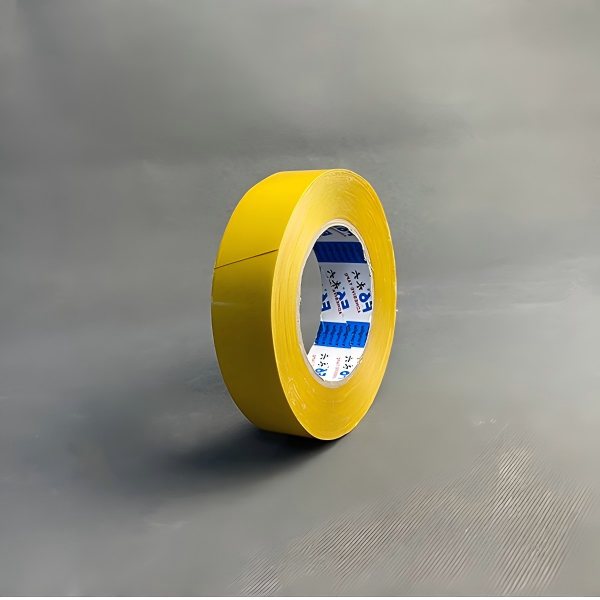
In modern manufacturing, assembly lines no longer rely only on screws, rivets, and liquid glue. The industrial adhesive tape has become a quiet workhorse—mounting nameplates, laminating dissimilar materials, replacing mechanical fasteners, and absorbing stress in metal, plastic, wood, and composite joints. Choosing the right tape is not a catalog exercise; it is a specification task that connects backing material, adhesive chemistry, substrate surface energy, and service environment.
This guide walks through the major types of industrial adhesive tape, where they are used, how to select one, and then zooms in on a reinforced option—the F202 Mesh Fiberglass Double Sided Tape—to show how a single product maps onto the selection logic.
1. Major Types of Industrial Adhesive Tape
Industrial tapes are usually classified by carrier (backing) and adhesive system.
- Single-sided tapes – Adhesive on one face only. Used for masking, bundling, surface protection, sealing, and packaging.
- Double-sided tapes – Bond two substrates. Carriers include tissue, PET film, non-woven, foam, cloth, and mesh fiberglass.
- Tissue / non-woven: thin, conformable, light mounting and splicing.
- PET film: dimensionally stable, good for die-cutting and precision parts.
- Acrylic foam (VHB-class): structural bonding, gap filling, vibration damping.
- Mesh fiberglass: reinforced with glass yarn for high tensile strength and stress distribution—ideal when a thin bond line must still resist tearing or shear.
- Specialty tapes – Kapton/polyimide (high heat), aluminum foil (HVAC/EMI), PVC fine-line (masking), conductive/EMI tapes (electronics), glass-cloth tapes (insulation and wrapping).
Adhesive chemistry matters as much as the carrier:
- Solvent-based acrylic PSA: builds permanent strength, good heat/UV/chemical resistance.
- Rubber PSA: high initial tack, friendly to low-surface-energy plastics, moderate heat limit.
- Hot melt: fast grab, poor high-temperature hold.
- Silicone: extreme temperature, bonds to silicone/rubber where nothing else sticks.
2. Typical Applications by Industry
| Industry | Common tape type | Representative use |
| Automotive | Acrylic foam, PVC, cloth | Trim mounting, emblem bonding, wire harness, NVH damping |
| Electronics | PET double-sided, polyimide, conductive | LCD overlays, battery pack insulation, gasket die-cuts |
| Appliances | Tissue/PET double-sided, foam | Nameplates, control-panel laminates, filter frames |
| Metal fabrication | Mesh fiberglass, acrylic foam, aluminum foil | Nameplate to stainless steel, steel-to-aluminum assembly, edge protection |
| Wood & furniture | Mesh fiberglass, hot melt, non-woven | Wood-to-laminate bonding, decorative trim, permanent fixing |
| Signage & display | PET, acrylic foam, mesh fiberglass | Acrylic panel bonding, metal badge mounting |
| Packaging & logistics | BOPP, filament, glass-cloth | Carton sealing, heavy bundling, steel coil edge wrap |
3. How to Select the Right Industrial Adhesive Tape
A defensible selection sequence beats “strongest tape wins”:
- Define the joint – Permanent or removable? Replacing fasteners or just positioning? Peel, shear, tensile, or compression load?
- Audit both substrates – Metal (high surface energy), acrylic/glass (high but moisture-sensitive), PP/PE/powder coat (low surface energy), wood (porous), laminate (mixed). Low-energy surfaces need LSE-rated adhesive or primer.
- Match carrier to geometry – Flat, smooth metal → thin PET or tissue. Textured/uneven → foam. Needs reinforcement against tear or thermal stress → mesh fiberglass.
- Check process window – Application temperature, roller pressure, dwell time, liner release. Most PSAs want 20–40 °C and clean, dry surfaces.
- Service environment – Continuous temperature, humidity, UV, solvent splash, vibration. F202, for example, is rated to 80 °C hold for 60 min, so it fits indoor/light-industrial thermal cycles, not under-hood automotive.
- Validate, don’t assume – Run loop tack, holding power, and peel on the actual substrate. F202 is tested per GB/T 4851-1998 holding-power method, which is a starting point, not a substitute for a production coupon test.
4. Case Study: F202 Mesh Fiberglass Double Sided Tape
F202 is a good illustration of a reinforced industrial adhesive tape built to replace mechanical fasteners in permanent bonding.
Construction
- Backing: Mesh fiberglass (glass yarn grid reinforces the bond line in two directions)
- Adhesive: Solvent-based pressure-sensitive adhesive (PSA)
- Color: Yellow
- Total thickness: 0.22 mm; Liner thickness: 0.11 mm
- Temperature resistance: 80 °C; Holding power: up to 80 °C for 60 min
- Loop tack: ≥30#
- Size: Customized slit widths/lengths
Performance character
- High adhesion with easy-release liner handling.
- Reinforced fiberglass yarn gives the ribbon high tensile strength—resists stretching and tearing where a tissue or film tape would break.
- Outstanding stress distribution along the bond line.
- Suitable for low surface energy substrates as well as standard metals.
- Wear-resistant, durable for permanent interior/light-industrial assembly.
Where it fits
F202 is ideal for permanent bonding of nameplates, acrylic, wood, aluminum, laminates, stainless steel, and high-carbon steel. Typical jobs:
- Mounting metal nameplates to stainless-steel enclosures
- Fixing acrylic signs to aluminum frames
- Laminating wood to decorative laminate without visible fasteners
- Bonding high-carbon steel tags in equipment manufacturing
- Replacing small screws/rivets in appliance and electrical cabinet assembly
Storage and application rules
- Keep in original box when not in use.
- Store cool, dark, away from direct sunlight.
- Ideal application temperature: 20–40 °C; below that, PSA firmness drops wet-out and final strength.
- Surface must be clean, dry, oil-free; isopropyl alcohol wipe recommended for metal.
- Roll or press firmly; allow dwell time before peak load.
Why specify F202 over a generic double-sided tape?
If the joint is thin (0.22 mm bond line), the substrates are rigid (metal/acrylic/laminate), the load is mostly shear/static rather than heavy dynamic vibration, and you want to kill screw holes and rivet corrosion—F202’s fiberglass mesh stops the tape from stretching or tearing while the solvent acrylic PSA builds a permanent grip on both HSE and some LSE surfaces. It is not a VHB substitute for thick gap filling, but it is leaner, thinner, and often cheaper where gap fill is not needed.
5. Quick Selection Cheat Sheet
- Bonding metal nameplate to stainless steel, indoor, thin bond line → F202 mesh fiberglass or PET acrylic double-sided.
- Bonding metal to glass with outdoor UV → silicone-modified acrylic or VHB-class foam.
- PP/PE/powder coat → LSE-rated acrylic (primer if structural).
- Uneven/textured surfaces → acrylic foam tape for gap fill.
- High heat (>150 °C) → polyimide or glass-cloth silicone tape.
- Temporary hold / fast line speed → rubber or hot-melt PSA.
- Permanent, stress-distributing, anti-tear, thin → mesh fiberglass double-sided (F202-type).
Closing
The right industrial adhesive tape is the one whose backing, adhesive, thickness, and temperature rating match the joint—not the one with the loudest “heavy duty” label. For permanent thin-line bonding of metal, acrylic, wood, and laminates where tensile reinforcement and clean appearance matter, a mesh fiberglass double-sided tape like F202 is a precise answer: 0.22 mm thin, fiberglass-reinforced, solvent-acrylic permanent, 80 °C capable, and fastener-replacing.
If you want, I can next prepare a side-by-side comparison of F202 vs. PET double-sided vs. VHB foam in table form, or draft a BOM-ready specification line (carrier, adhesive, thickness, temperature class, substrate prep) so your procurement team can issue it directly to suppliers.