Canada
 USA
USA Japan
Japan


Industrial Adhesive Tape: Types, Applications & Selection

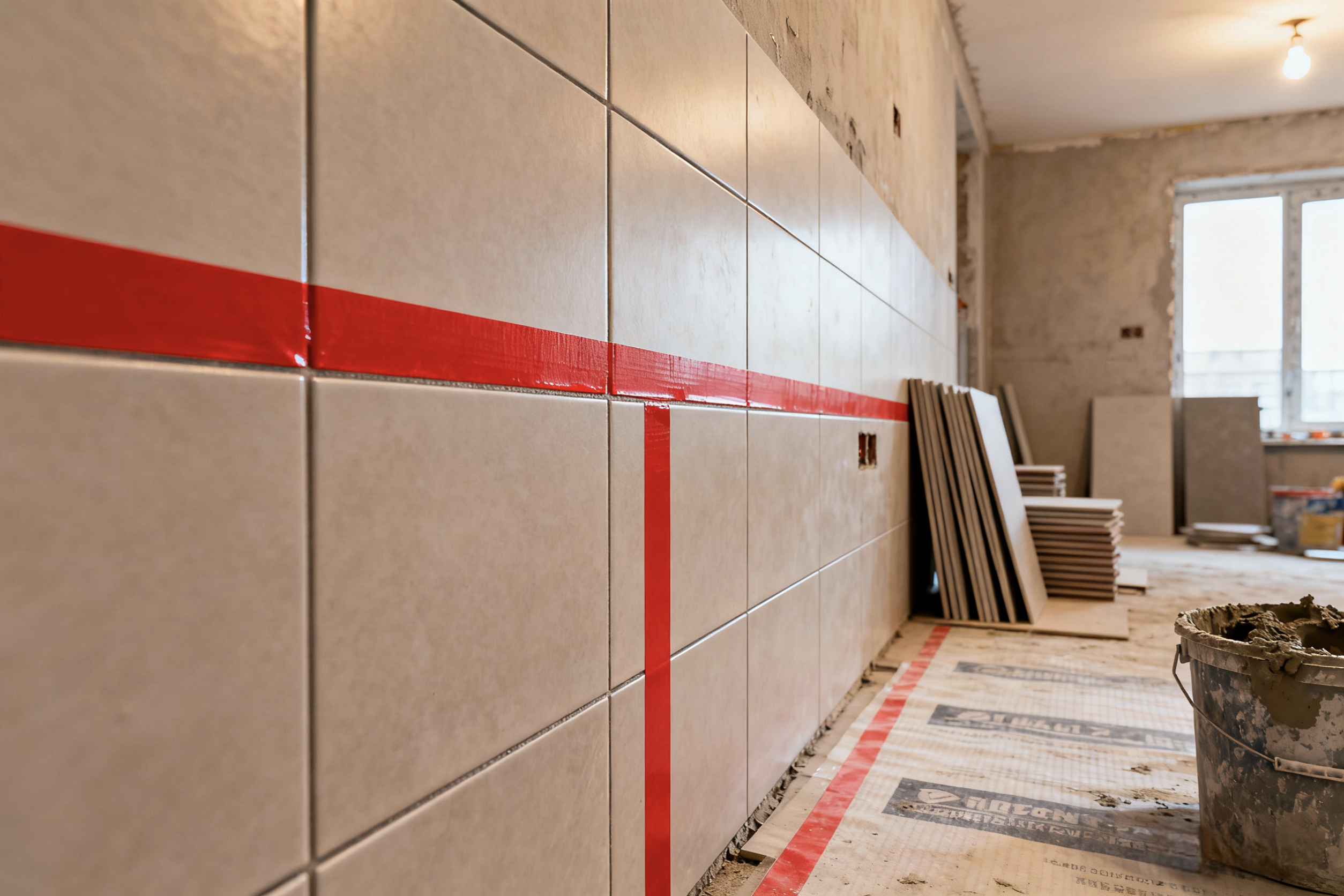
Choosing an industrial adhesive tape is not simply a question of finding the highest initial peel number. For B2B buyers, the practical choice depends on the two materials being joined, their surface condition, how the part will be converted and applied, and the environment the finished assembly will encounter. A tape that bonds well in a clean, flat laboratory coupon test may perform very differently on a rough powder coat, a low-surface-energy polymer, a curved component, or a heat-exposed production assembly.
For commercial evaluation, start by separating tape construction from application requirements. Construction determines whether the product has a carrier, how it handles during converting, and how it conforms. The actual bond depends on adhesive chemistry, adhesive mass, wet-out, pressure, dwell time, and the complete service environment. The objective is therefore not to select a generic “strong tape,” but to define a testable tape-and-process combination.
Industrial adhesive tape types at a glance
The product family should be matched to both the assembly design and the manufacturing route. F6 Tape’s industrial double-sided tape range lists tissue, non-woven, transfer, PET, PVC, mesh-fiber, cloth and foam double-sided tape categories. The table below explains the general role each construction can play; it is a selection framework rather than a promise that any specific product is suitable for a given assembly.
| Construction | General buying rationale | Typical manufacturing considerations | RFQ checkpoint |
|---|---|---|---|
| Tissue double-sided tape | A thin, flexible carrier can suit lamination and general bonding where conformability matters. | Assess handling, die-cut behavior and whether the carrier is appropriate for the finished part. | Substrates, thickness window, short- and long-term exposure. |
| Transfer tape | Uses adhesive without a permanent carrier, which can place more adhesive mass into contact with a rough or textured surface. | Release-liner handling and placement accuracy are central to converting. | Surface texture, adhesive mass, liner and application method. |
| PET film tape | A film carrier can add handling and dimensional stability for converted parts. | Useful questions include transparency needs, die-cut geometry and liner release. | Carrier thickness, optical need, substrate and temperature profile. |
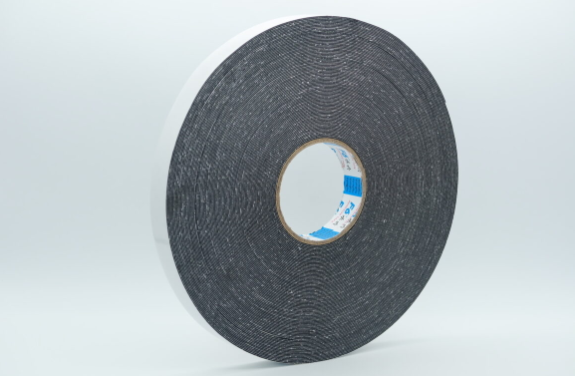
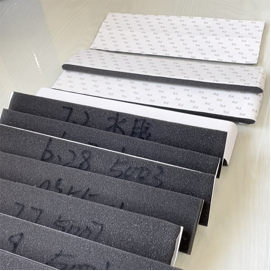
| Foam double-sided tape | The foam layer can help accommodate gaps, unevenness or differential movement where the joint design allows it. | Compression, recovery, edge geometry and long-term environmental exposure require validation. | Gap, load direction, compression limits and outdoor conditions. |
| Reinforced / mesh-fiber tape | Reinforcement may be considered where the assembly requires a particular handling or support characteristic. | Confirm whether reinforcement affects conformability, cut quality or the end-use appearance. | Joint geometry, conversion method and functional requirement. |
Industry guidance distinguishes transfer, single-coated, double-coated and differential constructions. It notes that construction selection can affect convertibility as well as performance; for example, a carrier can support dimensional stability in certain die-cut foam applications, while a transfer construction may be useful when the goal is to maximize adhesive contact on a textured surface.[2]
Where double-sided tapes are evaluated in industrial assemblies
Industrial applications often combine bonding, protection and efficient part handling. Supplier-published examples illustrate the breadth of questions that can arise. The F501 product page describes a tissue-backed, acrylic-adhesive tape for foam bonding, rubber-strip and plastic bonding, automotive wrap/protection, and panel combination in electronics, office equipment and electrical appliances. Review the published F501 tissue double-sided tape details when assessing whether this construction is relevant to an RFQ.
For film-supported requirements, F6 Tape’s F6965 page describes transparent PET backing with solvent-based adhesive, including applications such as display-related assemblies, mounting on ABS and PP plates, decorative trims and PVC banners. The page also describes support for full and half die-cutting; procurement teams can review the F6965 transparent PET double-sided tape details alongside their own conversion drawings. These are supplier-published examples, not a substitute for an application-specific qualification.
The difference matters because a tape used behind a display, beneath a trim, or between foam and a rigid panel sees different stress modes. The engineering question is whether the joint will be exposed primarily to peel, shear, tensile load, vibration, heat cycling, moisture, chemicals or ultraviolet light. End-use conditions such as temperature, humidity, UV exposure and chemical contact should be defined before a final tape construction is chosen.[2]
A practical selection workflow
1. Identify both bonding surfaces. Record the actual material grade, coating, paint, release-agent risk and surface cleanliness—not only the part’s generic name. Surface energy affects adhesive wet-out. High-surface-energy materials generally enable easier wet-out, while low-surface-energy materials such as polyethylene and polypropylene can be harder to bond. The Adhesives and Sealants Council also emphasizes that tape choice depends on the substrate pair and operating environment.[1]
2. Map texture, contour and gap. Smooth, flat panels are not equivalent to textured, porous or curved parts. For irregular surfaces, a thicker, softer viscoelastic adhesive may improve contact by flowing into surface valleys when given sufficient dwell time. Increased contour also raises the need to evaluate flexibility and edge-lift risk.[1] This is a general principle, so a proposed thickness must be verified through representative trials.
3. Define the service envelope. Specify the application temperature, operating temperature, expected duration at elevated temperature, humidity, UV exposure, chemical contact, vibration and indoor/outdoor use. Do not convert a short-duration test figure into a continuous-service rating. On the F501 page, the temperature entries and a separate holding-power entry should be clarified with the manufacturer before they are used as a design requirement. Likewise, F6965’s published table may guide initial discussion, but final suitability depends on the complete assembly and test method.
4. Specify conversion and application. Tell the supplier whether the tape will be roll-applied, laminated, kiss-cut, fully die-cut, hand-applied or automated. Include liner preference, part size, narrow-web requirements, application pressure, dwell time and rework needs. These process details can change the optimal carrier, liner and construction even when the substrates are the same.
5. Validate the assembled joint. Request samples and agree a test plan that uses production-representative materials, cleaning steps, pressure, dwell time and environmental conditioning. Record the failure mode as well as the result. A cohesive failure, adhesive failure and substrate failure do not indicate the same corrective action. Final grades, tolerances, test methods, certifications, availability, MOQ, pricing and lead time are all RFQ confirmation required.
RFQ checklist for industrial tape sourcing
A complete RFQ reduces the chance that the first quote is based on assumptions. Provide the following information in a drawing, application sheet or sample-request form.
| RFQ item | What to provide | Why it matters |
|---|---|---|
| Bonded materials | Material grade, coating, finish and whether each surface is high-, medium- or low-surface-energy if known. | Supports adhesive and surface-preparation evaluation. |
| Joint and load | Bond area, gap, contour, load direction, vibration and allowable edge lift. | Connects construction choice to real mechanical demands. |
| Service conditions | Temperature profile, humidity, UV, chemical contact, cleaning agents and target life. | Defines qualification conditions rather than a generic “heat resistant” request. |
| Manufacturing process | Roll lamination, die-cutting, automation, application pressure, dwell time and rework needs. | Helps select carrier, liner and converting format. |
| Commercial requirements | Target width/length, annual volume, documentation, sampling, timing and destination market. | Enables an actionable quotation and compliance discussion. |
Frequently asked questions
Is tissue tape or PET tape better for an industrial assembly?
Neither is universally better. Tissue constructions are often considered where flexibility and lamination are relevant, while a PET carrier can be evaluated where converted-part handling or dimensional stability is important. The correct choice depends on the substrates, geometry, process and service conditions. Request samples against the actual assembly rather than selecting by backing material alone.
Can double-sided tape bond polypropylene or polyethylene?
These low-surface-energy plastics are typically more difficult to bond because they can limit adhesive wet-out.[1] State the exact polymer, any molding additives, the cleaning process and the expected environment in the RFQ. A supplier should then recommend a candidate construction and a validation plan; compatibility is not assumed.
What should “temperature resistance” mean in a tape RFQ?
It should specify a temperature profile and duration, not merely a single temperature. Clarify application temperature, peak exposure, continuous exposure, dwell time, loading and the test method. Product-page figures are useful starting points, but the meaning and relevance of each performance value must be confirmed for the proposed assembly.
Do I need to test a tape if the specification appears to match?
Yes. Published figures may be measured on defined test panels and under specified conditions. Representative assembly testing is needed to account for your material grade, surface condition, conversion process, pressure, dwell time, load and environmental exposure.
Move from comparison to a qualified RFQ
Use the table and checklist to narrow the right industrial adhesive tape construction, then submit the actual substrate stack-up and process details for technical review. Begin with F6 Tape’s industrial double-sided tape portfolio to compare the available product families. For every production project, request RFQ confirmation of grade, dimensions, documentation, pricing, lead time, performance limits and sample-validation requirements before approval.
References
[1] Adhesives and Sealants Council. “Pressure Sensitive Adhesive (PSA) Tape Selection Considerations.” Accessed 15 August 2026.
[2] Adhesives & Sealants Industry. “Selecting the Correct Type of Pressure-Sensitive Adhesive Tape.” 7 June 2023. Accessed 15 August 2026.