
 Canada
 USA
 Japan



Peel Adhesion Test for Pressure Sensitive Tape

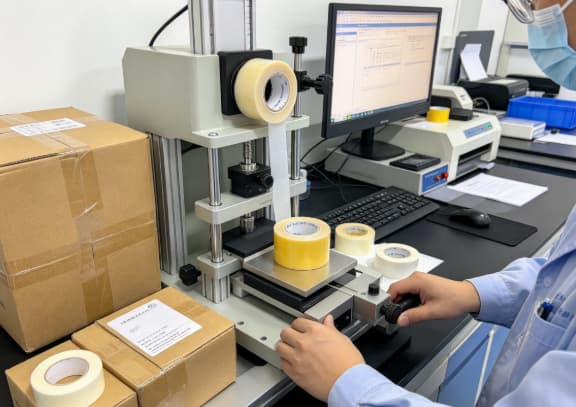
A peel adhesion test for tape helps buyers and quality teams compare how strongly a pressure sensitive tape adheres to a defined surface under controlled conditions. It is useful for technical evaluation, supplier comparison and quality control, but it should not be treated as the only proof that a tape will work in every application.
F6Tape provides industrial adhesive tape productsfor packaging, bonding, holding and mounting applications. For technical projects, peel adhesion data should be reviewed together with real application testing.
What peel adhesion testing measures
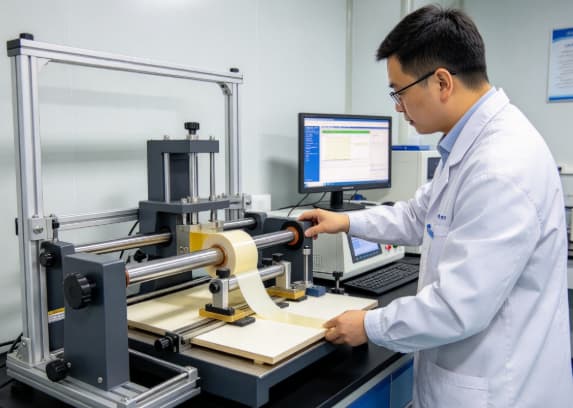
Peel adhesion testing measures the force required to peel tape from a test surface at a defined angle and speed. The result helps compare tapes under controlled conditions. However, actual performance can still change depending on substrate, pressure, temperature, dwell time and contamination.
ASTM’s D3330 / D3330M standard covers peel adhesion testing methods for pressure sensitive tapes, including methods for single-coated tape, double-coated tape and liner-related measurements. ISO also provides ISO 29862 for determining peel adhesion properties of self adhesive tapes.
Why buyers should understand test conditions
A peel value is only meaningful when the test method is clear. Buyers should check:
- Test standard or method
- Peel angle
- Test panel material
- Dwell time
- Tape width
- Test speed
- Environmental condition
Without these details, two peel adhesion numbers may not be directly comparable.
How peel testing supports purchasing
For B2B buyers, peel adhesion testing can help compare samples, confirm batch consistency or evaluate a new tape against an existing material. For example, an assembly buyer comparingindustrial double sided tapemay use peel data as one part of the selection process. A packaging buyer may combine peel data with carton sealing tests and transport simulation.
Peel adhesion does not replace application testing. A tape with a higher peel value may still be unsuitable if it leaves residue, damages the surface, is too hard to remove, or fails under shear load.
Practical test review checklist
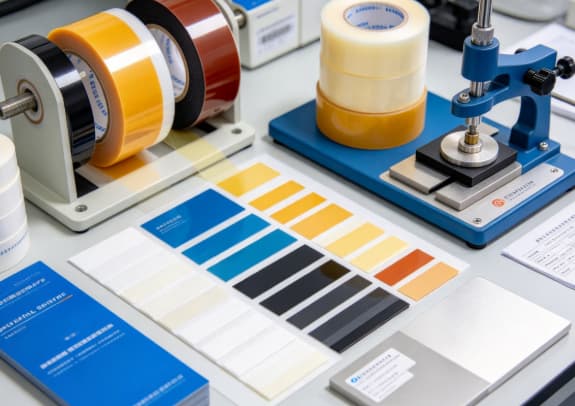
When reviewing a tape test report, confirm that the test method, surface and units are clearly listed. If the tape will be used on plastic, painted metal, foam or carton, test on that actual substrate when possible.
For broader technical learning, the Afera technical centre provides adhesive tape industry resources that can help buyers understand performance testing and tape behavior.
FAQ
Is higher peel adhesion always better?
No. Higher peel adhesion may be useful for permanent bonding, but it may cause removal problems or surface damage in temporary applications.
Is ASTM D3330 the same as real application testing?
No. ASTM D3330 provides controlled test methods. Real application testing is still needed because surfaces and conditions vary.
What should a tape test report include?
It should include test method, surface, angle, speed, dwell time, sample size, units and test conditions.