
 Canada
 USA
USA Japan
Japan


Best Tape for Metal Nameplate Mounting: An Industrial Guide

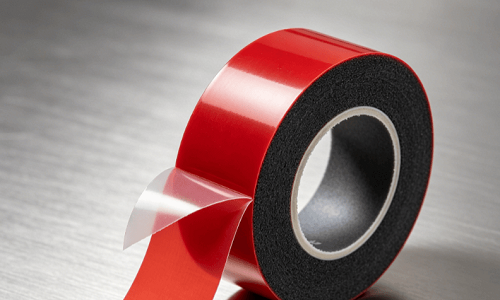
Selecting the high-performance tape for nameplate mounting is more than a simple procurement task; it is a critical engineering decision that impacts product longevity, brand perception, and safety compliance. Metal nameplates—whether stainless steel, aluminum, or brass—often serve as the “identity card” for machinery, vehicles, and industrial equipment. If the adhesive fails, the asset loses its traceability and branding.
In industrial environments, nameplates must withstand extreme temperatures, chemical exposure, and constant vibration. Traditional mechanical fasteners like rivets or screws are increasingly being replaced by high-strength pressure-sensitive adhesives (PSAs). This shift is driven by the need for cleaner aesthetics, reduced assembly time, and the prevention of galvanic corrosion caused by drilling holes into metal substrates.
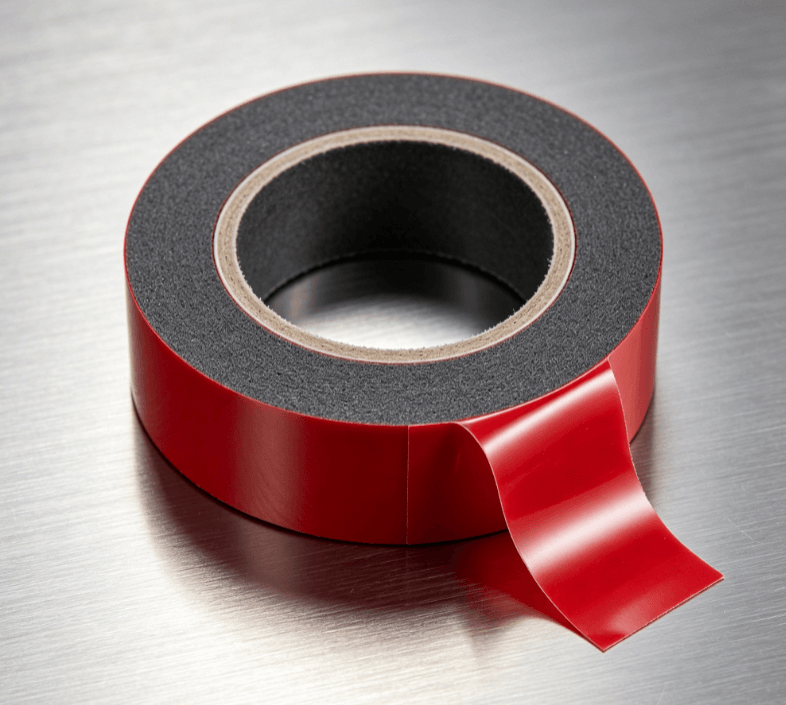
Understanding Surface Energy in Nameplate Bonding
The first technical hurdle in selecting a tape for nameplate mounting is understanding the surface energy of the metal substrate. While most metals are High Surface Energy (HSE) materials—meaning they are relatively easy to bond to—modern manufacturing often involves coatings that change these properties.
If a metal nameplate is being applied to a powder-coated cabinet or a plastic-molded housing, the surface energy drops significantly. In these cases, a standard industrial tape may “bead up” like water on a waxed car, leading to premature delamination. Engineers must match the adhesive’s “wetting” capability to the specific surface energy of both the nameplate and the mounting surface.
Technical Comparison: Tape Carriers and Their Use Cases
Not all double-sided tapes are engineered for the same load-bearing or environmental stresses. For nameplate applications, the choice usually falls between three primary categories found in professional inventories, such as the F6 Industrial Tape collection.
1. Acrylic Foam Tapes (High-Bond)
Often referred to as VHB (Very High Bond) equivalents, these are the gold standard for heavy-duty metal nameplates.
- Structure: A solid core of viscoelastic acrylic foam.
- Best For: Heavy embossed nameplates, outdoor equipment, and environments with high thermal expansion.
- Why it works: The foam core absorbs stress and compensates for the different rates of thermal expansion between the metal plate and the substrate.
2. PET (Polyester) Double-Sided Tapes
PET tapes feature a thin polyester film carrier coated on both sides with acrylic adhesive.
- Structure: Thin, dimensionally stable film.
- Best For: Flat, thin aluminum nameplates and electronic overlays.
- Why it works: It provides excellent die-cutting precision and high shear strength with a very low profile (typically 0.1mm to 0.2mm).
3. Tissue/Non-Woven Tapes
These use a lightweight tissue carrier that conforms well to slightly irregular surfaces.
- Structure: Porous tissue carrier.
- Best For: Lightweight interior signage or temporary identification.
- Why it works: High initial tack (grab) and cost-effectiveness for high-volume, low-stress applications.
Engineering Selection Matrix for Nameplate Mounting
| Requirement | Recommended Tape Type | Key Specification to Check |
| Outdoor Durability | Acrylic Foam (Grey/Clear) | UV & Weather Resistance (ASTM G154) |
| High Temperature (>150°C) | High-Temp Acrylic Transfer Tape | Heat Resistance (Short term vs. Long term) |
| Thin Profile | PET Film Tape | Thickness (mils or mm) |
| Powder-Coated Surfaces | Modified Acrylic Adhesive | LSE (Low Surface Energy) Compatibility |
| Vibration Dampening | Thick Acrylic Foam (1.1mm+) | Dynamic Shear & Peel Adhesion |
Environmental Factors and Performance Limits
When specifying a tape for nameplate mounting, the “Big Three” environmental stressors must be evaluated:
1. Temperature Cycles:
Industrial nameplates on motors or engines may reach temperatures exceeding 100°C (212°F). Conversely, outdoor signage in northern climates must remain flexible at -40°C. Standard rubber-based adhesives will oxidize and become brittle in heat; therefore, high-performance acrylic adhesives are mandatory for these ranges.
2. Chemical and Solvent Exposure:
In manufacturing plants, nameplates are often exposed to cleaning agents, hydraulic oils, or fuels. A PET-based tape with a cross-linked acrylic adhesive offers superior resistance to chemical ingress compared to general-purpose mounting tapes.
3. Static and Dynamic Shear:
Shear refers to the tape’s ability to resist “sliding” forces. For heavy metal plates mounted vertically, high static shear is required to prevent the plate from sagging over time, especially in high-heat environments where adhesives naturally soften.
Application Best Practices for Maximum Bond
Even the highest quality tape for nameplate mounting will fail if the application process is flawed. Industrial bond strength is achieved through a specific molecular interaction.
- Surface Preparation: Surfaces must be free of oils, dust, and oxidation. A 50:50 Isopropyl Alcohol (IPA) and water mix is the industry standard for cleaning.
- Pressure: Pressure-sensitive adhesives (PSAs) require pressure to “wet” the surface. Using a J-roller ensures uniform contact and removes trapped air pockets.
- Dwell Time: Acrylic adhesives do not reach 100% bond strength instantly. Typically, it takes 20 minutes to reach 50%, and 72 hours to reach full cross-linked strength. Avoid load-testing or shipping the product immediately after assembly.
Commercial Considerations for B2B Procurement
For OEM and industrial manufacturers, the “best” tape is also one that fits the production workflow. When evaluating suppliers like F6 Industrial Tape, consider the following:
- Custom Die-Cutting: Can the tape be supplied in pre-cut shapes that match your nameplate dimensions? This reduces waste and labor costs.
- Liner Options: For automated assembly, a heavy-duty polycoated kraft paper liner or a film liner is often preferred to prevent tearing during high-speed application.
- Compliance: Ensure the adhesive meets industry-specific standards such as UL 969 (Marking and Labeling Systems) for safety-related nameplates.
Summary of Material Matching
If you are mounting a 0.5mm aluminum nameplate to a flat stainless steel surface in a temperature-controlled warehouse, a high-tack PET tape is your most efficient choice.
However, if you are mounting a heavy brass serial plate to a textured, powder-coated generator housing that will sit outdoors, an acrylic foam tape is non-negotiable. The extra thickness and viscoelastic properties are the only way to ensure the bond survives the life cycle of the equipment.
FAQ: Technical and Procurement Insights
Q: Can I use double-sided tape on curved metal surfaces?
A: Yes, but you must use a tape with high conformability. Thicker acrylic foam tapes are ideal for slight curves. For tighter radii, ensure the nameplate itself is pre-formed to the curve to prevent “spring-back” forces from pulling the tape away from the substrate.
Q: What is the difference between “Initial Tack” and “Ultimate Bond”?
A: Initial tack is the “stickiness” you feel immediately. Some of the strongest industrial tapes actually have low initial tack; they require pressure and time (dwell time) to flow into the microscopic valleys of the metal surface to create a permanent bond.
Q: How do I determine the right tape thickness?
A: For perfectly flat surfaces, thin tapes (0.1mm – 0.2mm) are best. If one or both surfaces are textured, embossed, or slightly warped, use a thicker foam tape (0.5mm – 1.1mm) to fill the gaps and ensure 100% surface contact.
Q: Is tape cheaper than rivets for nameplate mounting?
A: While the unit cost of tape may be higher than a rivet, the “total cost of assembly” is often lower. Tape eliminates the need for drilling, deburring, and liquid adhesives, significantly reducing labor time and equipment wear.
Reference Sources
- ASTM D3330: Standard Test Method for Peel Adhesion of Pressure-Sensitive Tape. astm.org
- UL 969: Standard for Marking and Labeling Systems. ul.com
- ISO 29862: Self-adhesive tapes – Determination of peel adhesion properties. iso.org
- Pressure Sensitive Tape Council (PSTC): Technical resources for adhesive selection. pstc.org