
 Canada
 USA
USA Japan
Japan

Eco-Friendly Water-Based Adhesive Tape Selection Guide

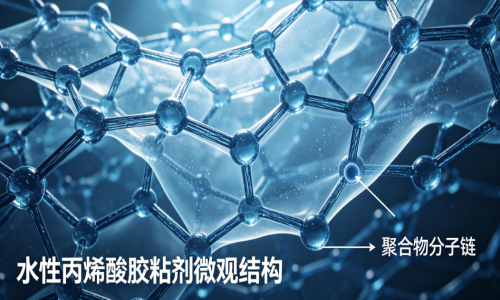
Global manufacturing standards are pivoting toward Low-VOC (Volatile Organic Compound) requirements. This shift is driven by both environmental regulations and workplace safety protocols. Water-based adhesive tapes have emerged as the primary alternative to traditional solvent-based systems. They offer high-performance bonding without the heavy chemical footprint.
For OEM project managers and procurement specialists, the transition to eco-friendly adhesives is no longer optional. Understanding the technical nuances of these materials is essential for maintaining product integrity. This guide examines the engineering logic behind water-based acrylic systems and how to select the correct construction for your specific assembly needs.
How Does Water-Based Adhesive Technology Benefit Industrial Applications?
Water-based adhesives, often referred to as emulsion adhesives, use water as the carrier medium for acrylic polymers. Unlike solvent adhesives, they do not release harmful toxins during the drying process. This makes them ideal for indoor environments, electronics, and automotive interiors where outgassing is a concern.
From a performance standpoint, modern water-based acrylics offer excellent resistance to UV light and aging. They maintain their bond strength over long periods without yellowing or becoming brittle. In large-volume production, these tapes provide a cost-effective solution that aligns with corporate sustainability goals.
Environmental Compliance and VOC Reduction
Traditional solvent adhesives require complex recovery systems to manage chemical emissions. Water-based systems simplify the manufacturing workflow by eliminating these requirements. They comply with REACH and RoHS standards, making them suitable for global distribution.
For industries like medical device packaging or food-contact labeling, the “clean” profile of water-based adhesives is a critical safety feature. They provide a high-tack bond while ensuring that no residual solvents migrate into sensitive components.
Technical Comparison: Transfer Tape vs. Tissue Tape
When selecting a water-based solution, the carrier material—or lack thereof—determines the tape’s mechanical properties. We categorize these into two primary types: transfer tapes and supported tapes. Both utilize eco-friendly emulsions but serve different structural purposes.
1. Water-Based Transfer Tapes (Carrier-Free)
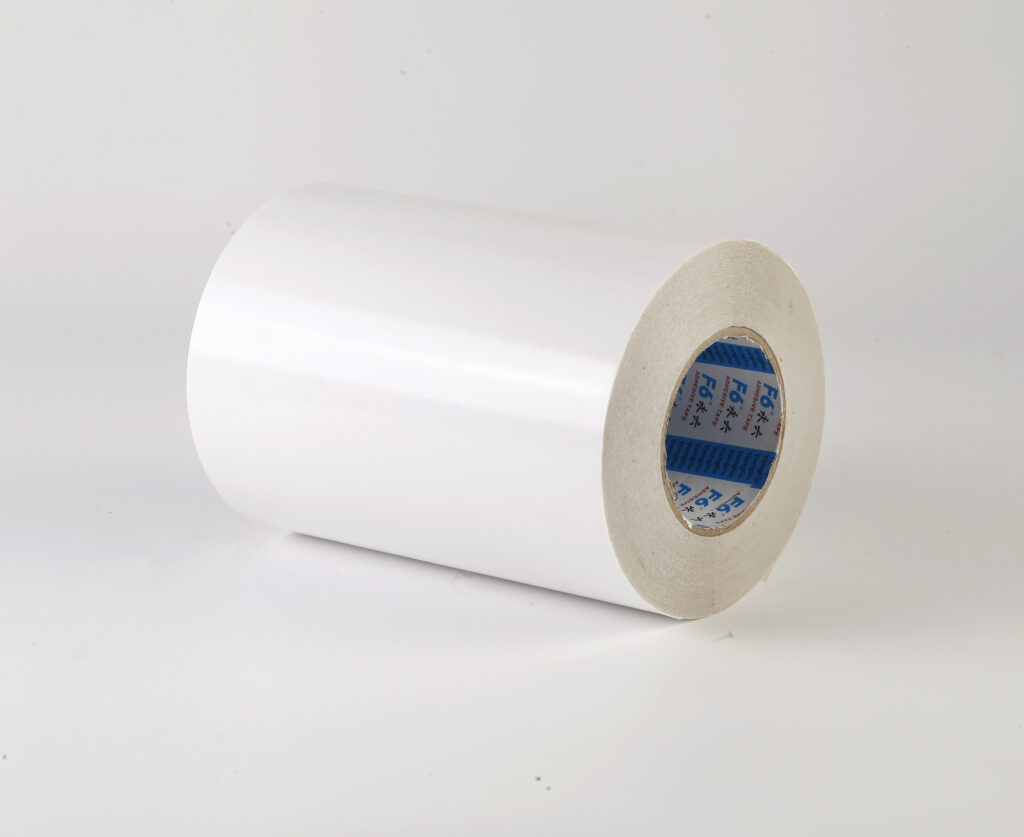
Transfer tapes consist of a clean film of adhesive coated directly onto a release liner. Because there is no carrier, the tape is highly conformable and thin. It is the preferred choice for laminating foams, gaskets, and decorative overlays.
Our F805A Transfer Double-Sided Tape exemplifies this technology. It features high transparency and excellent initial tack. Because it lacks a carrier, it can “flow” into microscopic surface irregularities. This creates a superior bond on low-energy plastics and smooth metallic surfaces.
2. Water-Based Tissue Tapes (Supported)
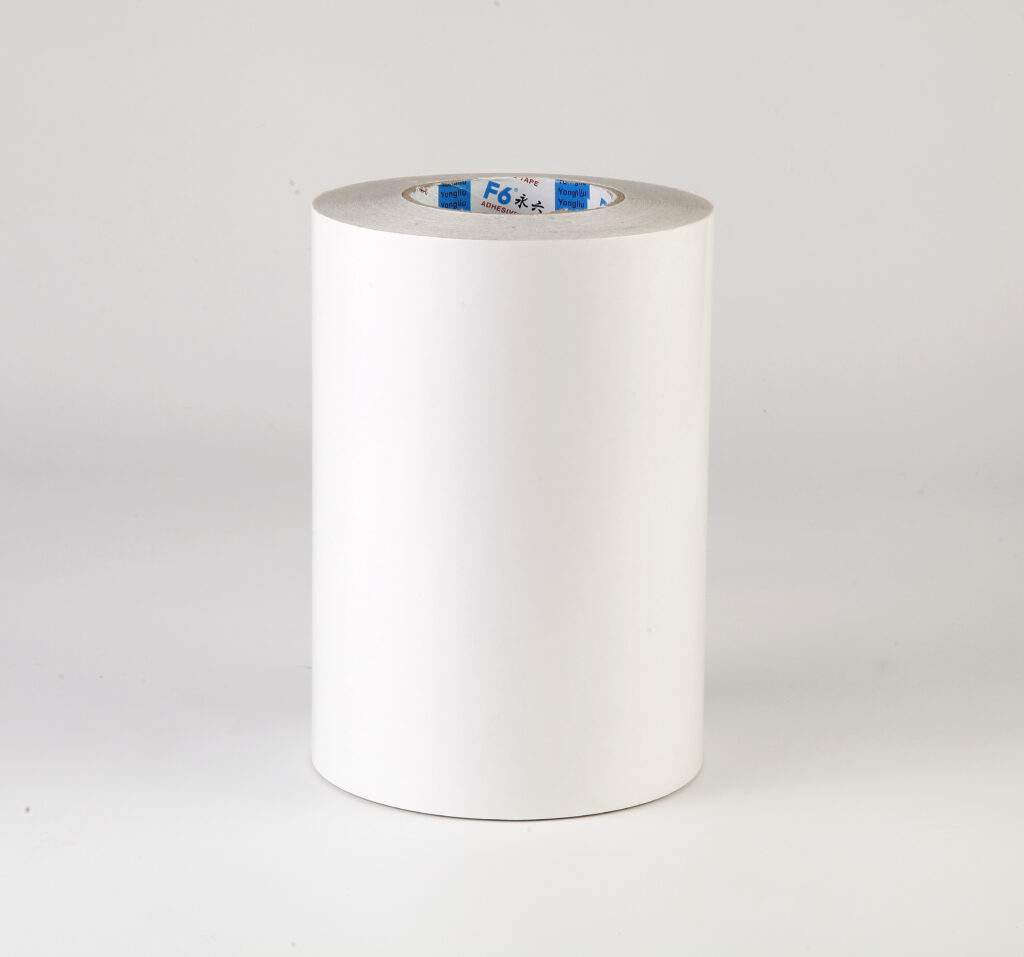
Supported tapes use a thin non-woven tissue as a core. This carrier adds dimensional stability, making the tape easier to handle during die-cutting and manual application. The tissue core also prevents the adhesive from over-stretching during high-speed assembly.
The F501A Water-Based Tissue Double-Sided Tape is designed for applications requiring extra stability. It is widely used in paper splicing, leather bonding, and lightweight foam lamination. The tissue carrier acts as a bridge, ensuring a consistent adhesive thickness across the entire bond line.
| Feature | Water-Based Transfer Tape (F805A) | Water-Based Tissue Tape (F501A) |
| Carrier Material | None (Adhesive Film) | Non-woven Tissue |
| Thickness | Generally Thinner (0.05mm – 0.13mm) | Slightly Thicker (0.08mm – 0.16mm) |
| Conformability | Excellent for curved surfaces | Moderate; better for flat surfaces |
| Die-Cutting Ease | Requires precision tension control | High; tissue prevents stretching |
| Initial Tack | High | High |
| Key Use Case | Graphic overlays, foam bonding | Splicing, nameplates, general assembly |
Performance Factors for Commercial Selection
Selecting an eco-friendly tape requires more than just checking “green” boxes. Engineers must evaluate the mechanical load and environmental exposure the bond will face. Water-based acrylics perform differently than rubber or solvent-based alternatives under specific stressors.
1.Temperature Resistance and Thermal Cycling
Water-based acrylics generally handle moderate temperature ranges effectively. They are stable from -20°C to roughly +100°C, depending on the specific formulation. If your application involves extreme automotive engine bay heat, you must verify the shear strength at peak temperatures.
For most consumer electronics and household appliances, the thermal stability of water-based emulsions is more than sufficient. They do not soften or “ooze” as easily as rubber-based adhesives when exposed to seasonal temperature shifts.
2.Surface Energy and Wetting
The “wetting” ability of an adhesive determines how well it spreads across a substrate. Water-based adhesives have a higher surface tension than solvents. This means they sometimes require a longer “dwell time” to reach maximum bond strength on low-surface-energy (LSE) plastics like polypropylene.
- Clean the surface with isopropyl alcohol to remove oils.
- Apply firm pressure (15-30 psi) to initiate the bond.
- Allow 24 to 72 hours for the adhesive to reach full cross-linking.
Why Choose Water-Based Solutions for OEM Projects?
From a B2B procurement perspective, water-based tapes offer a strategic advantage. They reduce the regulatory burden associated with hazardous material handling. This translates to lower insurance costs and simplified shipping logistics.
Furthermore, these tapes are often more cost-stable than solvent-based versions. Solvent prices fluctuate with global petroleum markets. Water-based emulsions provide a more predictable pricing structure for long-term manufacturing contracts.
1.Customization and Scalability
At F6 Tape, we understand that OEM requirements vary by industry. Whether you need a specific roll width or a custom die-cut shape, water-based tapes are highly adaptable. Our manufacturing process allows for precise coat-weight adjustments to meet specific peel-strength targets.
If your project requires high-clarity bonding for touchscreens, the F805A transfer tape provides the necessary optical path. For high-speed splicing in printing plants, the F501A tissue tape offers the tensile strength needed to prevent web breaks.
2.Engineering Best Practices for Tape Application
To ensure the success of eco-friendly bonding, follow standardized application protocols. Environmental factors during assembly can significantly impact the final performance of the adhesive.
3.Managing Humidity and Moisture
Since these adhesives are water-borne during manufacturing, they are sensitive to extreme humidity during the application phase. Ideally, assembly should occur in a controlled environment with 40% to 60% relative humidity. Excessive moisture on the substrate can prevent the adhesive from achieving intimate contact.
4.Pressure-Sensitive Mechanics
All water-based acrylics are Pressure-Sensitive Adhesives (PSA). The bond is mechanical, not chemical. Using a weighted roller or automated press ensures that the adhesive “micro-flows” into the texture of the material. Inadequate pressure is the leading cause of premature bond failure in industrial settings.
Summary of Eco-Friendly Tape Advantages
Switching to water-based adhesive tape is a functional upgrade, not just a sustainability gesture. You gain a product that is safer for workers and more stable over time. By selecting between transfer and tissue constructions, you can tailor the tape’s behavior to your production line’s mechanical needs.
Whether you are laminating automotive trim or assembling high-end packaging, water-based solutions provide the reliability required for professional applications. They represent the future of industrial bonding—efficient, clean, and high-performing.
FAQ
Q:Is water-based adhesive tape as strong as solvent-based tape?
A:Modern water-based acrylics match or exceed solvent performance in most indoor and moderate outdoor applications. They offer superior UV resistance and long-term aging properties. However, solvent-based tapes may still be preferred for extreme chemical exposure or sub-zero application temperatures.
Q:What is the shelf life of water-based double-sided tapes?
A:Typically, these tapes have a shelf life of 12 to 24 months when stored in original packaging. It is best to keep them at room temperature (21°C) and 50% relative humidity. Avoid direct sunlight or proximity to heat sources to prevent premature cross-linking.
Q:Can water-based tapes be used on low-surface-energy (LSE) plastics?
A:Yes, but they may require a higher coat weight or a longer dwell time. Products like the F805A are designed with high initial tack to help wet out LSE surfaces more effectively than standard emulsions.
Q: Are these tapes biodegradable?
A:While the adhesive is “eco-friendly” due to the lack of solvents and VOCs, the acrylic polymer itself is usually not biodegradable. However, they are much easier to process in recycling streams than solvent-heavy alternatives.
Q:What is the MOQ for custom water-based tape orders?
A:Minimum Order Quantities vary based on the specific width and construction required. For standard logs, the MOQ is low, but custom die-cuts or specialized liners may require higher volumes to optimize production efficiency.
Reference Sources
- ASTM D3330 Standard Test Method for Peel Adhesion of Pressure-Sensitive Tape
https://www.astm.org/d3330_d3330m-04r18.html - ISO 14001 Environmental Management Systems and VOC Regulations
https://www.iso.org/iso-14001-environmental-management.html - FINAT Technical Handbook for Pressure Sensitive Labeling Performance
https://www.finat.com/knowledge-center/technical-handbook - PSTC (Pressure Sensitive Tape Council) Adhesive Properties and Testing
https://pstc.org/test-methods/