
 Canada
 USA
USA Japan
Japan


Foam Mounting Tape: Industrial Applications & Selection Guide

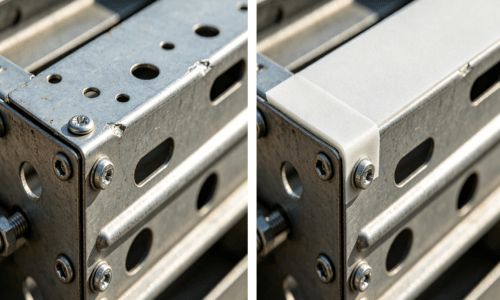
Double-sided foam tape is far more than a simple adhesive strip; in the world of industrial manufacturing and product assembly, it is a versatile engineering component. Unlike thin film tapes, foam mounting tape utilizes a compressible, resilient carrier that provides structural benefits beyond basic adhesion.
Engineers and procurement managers specify foam mounting tape when a project requires gap-filling, vibration damping, or the joining of irregular surfaces. By distributing stress across the entire bond area, these tapes eliminate the need for mechanical fasteners like screws or rivets, which can compromise material integrity and aesthetic finish.
Core Mechanics: Why the Foam Carrier Matters
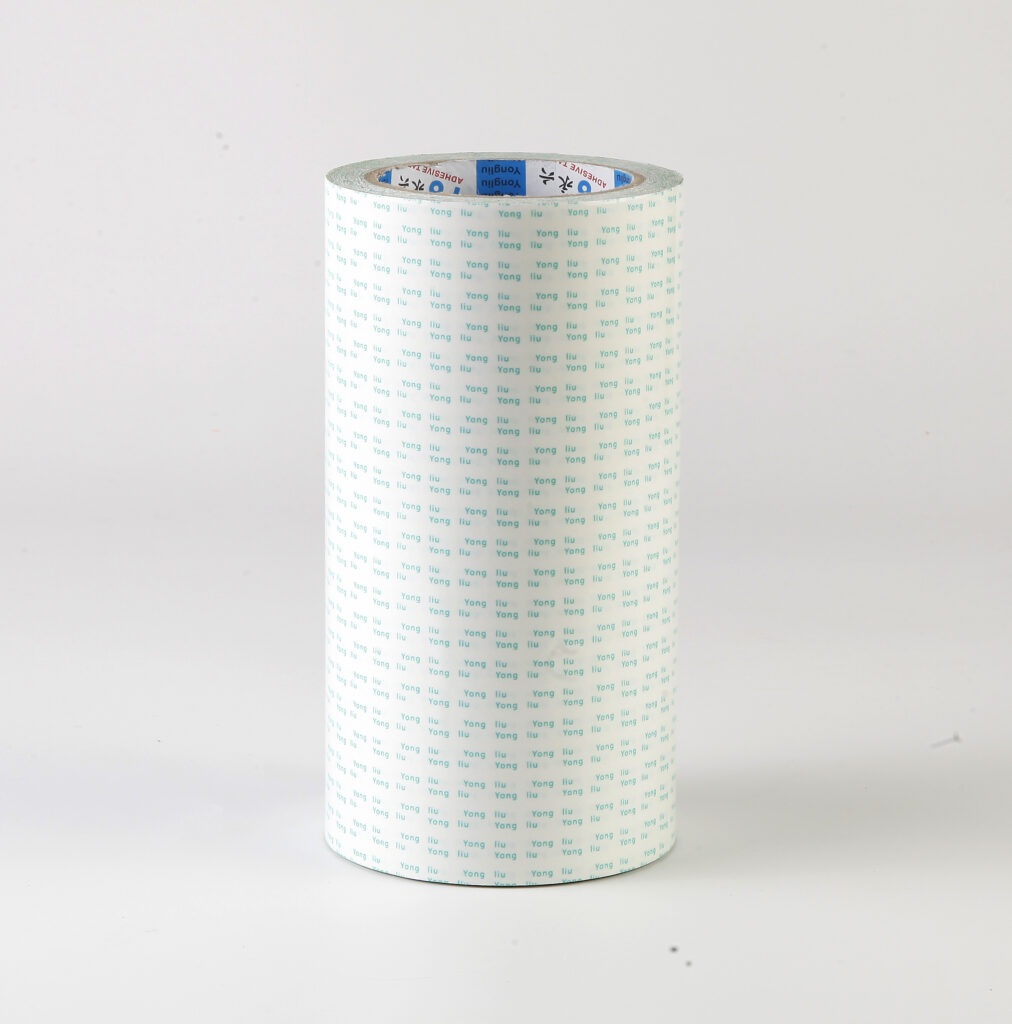
The effectiveness of foam mounting tape stems from its three-dimensional structure. The “foam” part of the tape is typically made from Polyethylene (PE), EVA, PVC, or Acrylic. This carrier acts as a buffer, allowing the adhesive to maintain 100% contact even if the two mating surfaces are not perfectly flush.
From a technical standpoint, the foam carrier provides:
- Stress Distribution: It absorbs internal stresses caused by thermal expansion and contraction.
- Vibration Damping: The viscoelastic nature of the foam dissipates mechanical energy, reducing noise and wear.
- Sealing Properties: High-density, closed-cell foams create an airtight and watertight seal, preventing moisture ingress and corrosion.
Critical Industrial Applications of Foam Mounting Tape
In high-volume manufacturing, foam mounting tape is selected based on the specific environmental stressors of the application.
1. Automotive and Transportation
Automotive OEM projects rely heavily on acrylic foam tapes for exterior trim, emblems, and sensor mounting. The tape must withstand “thermal cycling”—the constant shift from freezing nights to high-temperature engine heat—without losing peel strength. Foam tapes are also used inside the cabin to prevent “Squeak and Rattle” (BSR) by isolating plastic components.
2. Construction and Architecture
In the glazing and facade industry, double-sided foam tape (often high-density PE) serves as a thermal break and a mounting solution for decorative panels and mirrors. Because it provides immediate “green strength” (initial grab), it allows for faster assembly without the long cure times required by liquid silicones.
3. Electronics and Appliance Assembly
For smartphones, tablets, and household appliances, thin-gauge foam mounting tape is used to bond screens and gaskets. These tapes must be precision die-cut to fit complex internal geometries. Beyond holding parts together, they protect sensitive internal circuitry from impact shock and dust.
4. Signage and Point-of-Purchase (POP)
In the commercial sector, foam tape is the standard for mounting permanent signage and retail displays. Its ability to bond to low-surface energy (LSE) plastics and powder-coated metals makes it a more efficient alternative to drilling.
Material Comparison: Selecting the Right Foam Base
Choosing the wrong foam carrier can lead to bond failure, especially in outdoor or high-load environments. The following table highlights the primary materials used in F6 Tape’s professional-grade inventory:
| Foam Type | Primary Characteristics | Best Use Case |
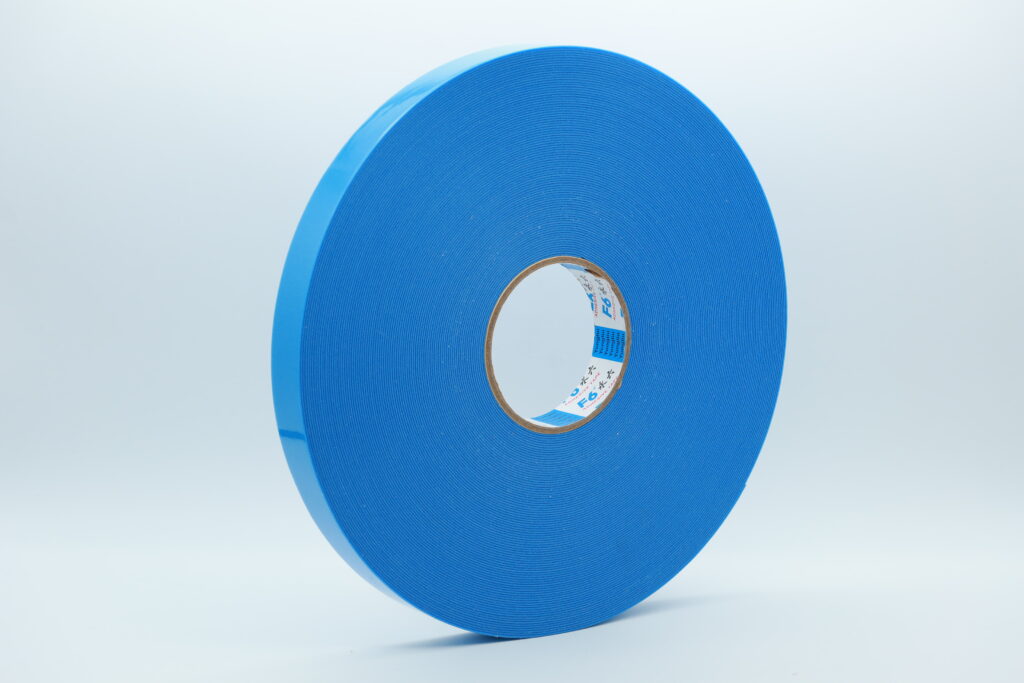
| PE (Polyethylene) | Economical, excellent conformability, closed-cell. | General mounting, indoor signs, gap filling. |
| EVA (Ethylene-vinyl acetate) | Superior impact resistance and cushioning. | Packaging, sports equipment, lightweight gaskets. |
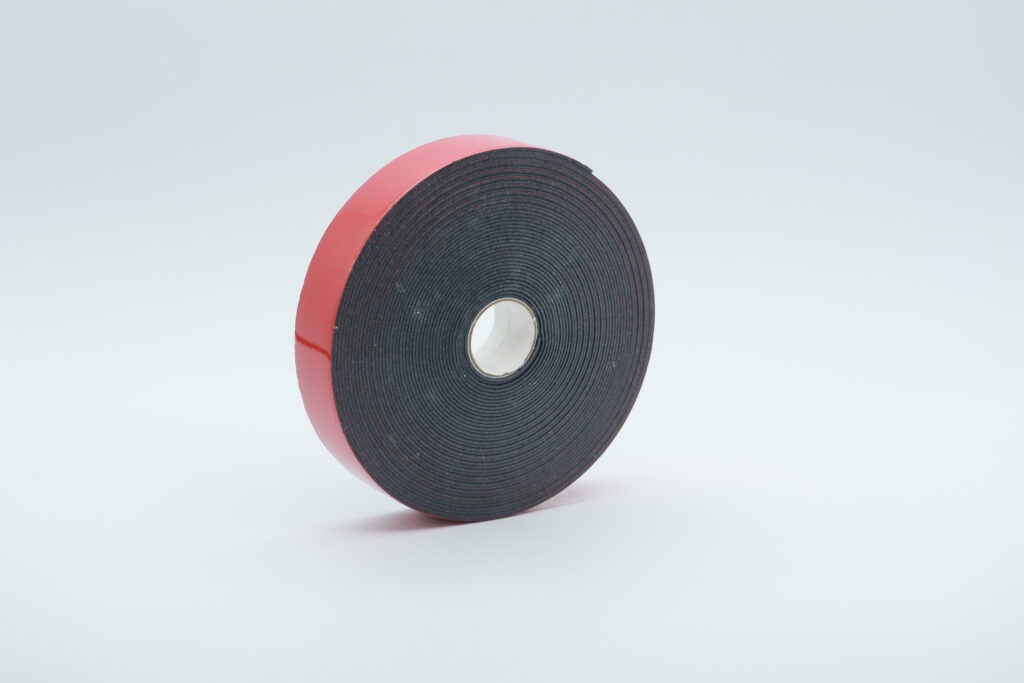
| Acrylic Foam (VHB Style) | Extremely high shear strength, UV and temp resistant. | Structural bonding, automotive trim, outdoor glazing. |
| PVC Foam | Excellent weatherability and flame retardance. | Construction seals, HVAC gaskets, heavy-duty outdoor use. |
Technical Evaluation: Performance Drivers in B2B Procurement
When evaluating foam mounting tape for an OEM or large-scale project, “stickiness” is only one part of the equation. Engineering consultants focus on these four performance metrics:
- Sheer Strength: The ability of the tape to resist “sliding” forces. This is critical for vertical mounting (e.g., heavy mirrors or wall panels).
- Peel Adhesion: The force required to “peel” the tape back. This determines how well the tape wets out on the substrate.
- Surface Energy Compatibility: Tapes behave differently on “high energy” surfaces (stainless steel, glass) versus “low energy” surfaces (polyethylene, Teflon). Some foam tapes require primers to achieve a permanent bond on LSE plastics.
- Compressibility: The “C-Factor” determines how much pressure is needed to achieve a full seal. High-density foams provide more structural support, while low-density foams offer better gap-filling for highly irregular surfaces.
Customization and Manufacturing Efficiency
For industrial buyers, the format of the tape is as important as the adhesive chemistry. Working with a specialized manufacturer like F6 Tape allows for tailored solutions that streamline the assembly line:
- Custom Die-Cutting: Precision-cut shapes that match the exact footprint of your component, reducing material waste and labor time.
- Varying Thicknesses: Standard thicknesses range from 0.5mm to 3.0mm, but custom builds can address specific tolerances in electronic housing.
- Spooling and Long-Length Rolls: For automated application systems, jumbo spools reduce the frequency of roll changes, increasing “up-time” on the production line.
If your project involves outdoor exposure, specialized UV-resistant liners and high-performance acrylic adhesives are necessary to prevent yellowing and embrittlement over time.
Practical Implementation: The “Three-Step” Bond Rule
Even the highest quality foam mounting tape will fail if the application process is flawed. To ensure a permanent bond in industrial settings, engineers follow these steps:
- Surface Preparation: Surfaces must be free of oils, dust, and plasticizers. An Isopropyl Alcohol (IPA) wipe is the industry standard.
- Pressure Application: Foam adhesives are “pressure-sensitive” (PSA). Achieving a structural bond requires significant dwell pressure (often 15 psi or more) to ensure the adhesive “flows” into the microscopic valleys of the substrate.
- Temperature Control: Ideal application temperature is between 21°C and 38°C. Applying tape in cold environments can prevent the adhesive from wetting out, leading to premature failure.
FAQ
Q:Can foam mounting tape be used on textured walls?
A:Yes, provided the foam is thick enough to conform to the texture. However, the effective bond area is reduced on highly irregular surfaces, so a higher safety factor (more tape) should be used.
Q:How does humidity affect foam tape performance?
A:High humidity can affect the liner release during application. Once applied, closed-cell PE and Acrylic foam tapes are generally moisture-resistant, but the bond must be established in dry conditions.
Q:What is the shelf life of industrial foam tape?
A:Most professional-grade foam tapes have a shelf life of 12 to 24 months when stored in cool, dry conditions (approx. 21°C and 50% relative humidity).
Q:Is foam tape permanent or removable?
A:Most foam mounting tapes are designed for permanent “structural” bonding. While they can be removed with high heat or chemical solvents, they typically leave residue or may damage the substrate if not specified as a “removable” grade.
Reference Sources
- ASTM D3330: Standard Test Method for Peel Adhesion of Pressure-Sensitive Tape.
- ISO 9001:2015: Quality management systems for adhesive manufacturing.
- PSTC (Pressure Sensitive Tape Council): Technical technical guides on tape thickness and shear strength evaluation.
- AFERA (The European Adhesive Tape Association): Standards for classification and terminology in adhesive technologies.