
 Canada
 USA
USA Japan
Japan


How to Evaluate an Adhesive Tape Coating Manufacturer

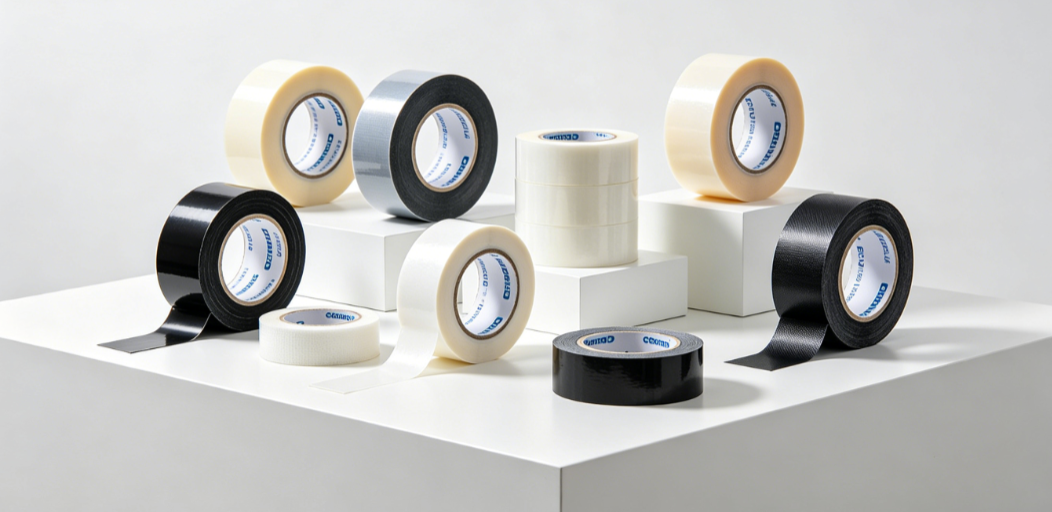
Selecting an adhesive tape coating manufacturer is one of the most consequential decisions for a product engineer or procurement manager. In high-stakes sectors like automotive, electronics, or industrial fabrication, the adhesive bond is a structural component. A failure in coating consistency or material compatibility doesn’t just result in a rejected lot—it can lead to catastrophic field failures and costly recalls.
The “coating” process is where chemical engineering meets mechanical precision. It involves applying a liquid adhesive—whether solvent-based, water-based, or hot melt—onto a carrier substrate with micron-level accuracy. For a partnership to be viable, a manufacturer must demonstrate more than just “stickiness”; they must prove mastery over rheology, curing speeds, and surface energy.
Why Coating Precision Dictates Product Performance
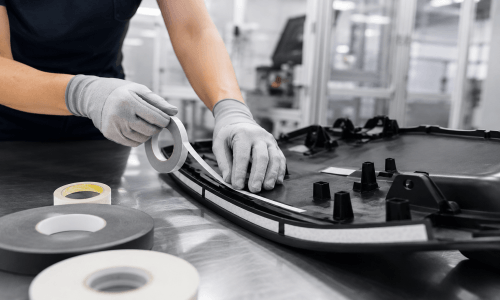
In the world of pressure-sensitive adhesives (PSA), consistency is the ultimate metric. A reliable manufacturer must manage the “coat weight” (the amount of adhesive applied per square meter) with extreme rigor. If the coating is too thin, the tape lacks sufficient wet-out and peel strength. If it is too thick, you risk “oozing” during die-cutting or adhesive transfer during application.
Advanced manufacturers utilize automated gauging systems, such as beta or gamma backscatter, to monitor coating thickness in real-time. This ensures that the first foot of a 5,000-foot master roll is identical to the last.
When auditing a potential partner, ask about their tolerance levels for dry coat weight. For critical industrial applications, a tolerance of ±5% is often the benchmark for high-performance fabrication. Consistency here directly impacts the mechanical reliability of the final assembly.
Evaluating Technical Coating Technologies
Not all adhesive chemistries are compatible with all coating lines. A versatile adhesive tape coating manufacturer should offer several distinct technologies to match your specific application requirements.
- Solvent-Based Coating: Preferred for high-durability applications. These adhesives offer superior resistance to chemicals, UV, and extreme temperatures. However, they require sophisticated environmental controls (RTOs) to manage volatile organic compounds (VOCs).
- Emulsion (Water-Based) Coating: A more environmentally friendly option often used for general-purpose packaging or medical tapes. They offer excellent clarity but may have lower moisture resistance than solvents.
- Hot Melt Coating: Ideal for high-tack, immediate-bond applications. Since there are no carriers to evaporate, hot melt lines often have higher throughput, which can reduce costs for high-volume orders.
Understanding which technology a manufacturer specializes in helps determine if they can meet the environmental demands of your end-use case, such as the rigorous requirements found in mechanical and industrial fabrication environments.
Substrate Expertise in Industrial Fabrication
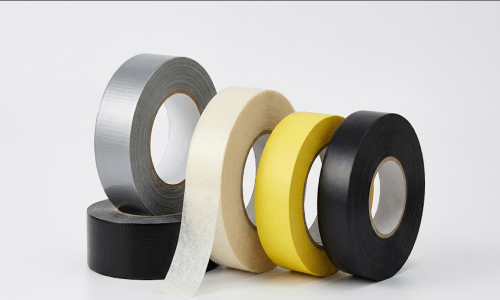
The adhesive is only half of the equation; the carrier (the substrate) is the other. A reliable manufacturer must have extensive experience coating various materials, including PET films, foils, foams, and non-wovens.
In industrial fabrication, tapes often need to bond to “low surface energy” (LSE) plastics or oily metals. This requires the manufacturer to perform surface treatments, such as Corona or Flame treatment, during the coating process to increase the bond’s polar strength.
If your project involves complex fabrication—such as EMI shielding or thermal management—your supplier must understand how the coating process affects the physical properties of the carrier. For example, excessive heat in the drying oven can shrink thin plastic films or degrade the elasticity of a foam carrier.
The Role of Lab Testing and Compliance (EEAT Signals)
Expertise is validated through data. You should never rely on a manufacturer’s “standard datasheet” alone. A trustworthy partner will have an in-house laboratory equipped to perform standardized testing according to industry benchmarks like ASTM or PSTC (Pressure Sensitive Tape Council).
Critical tests to look for in a manufacturer’s quality report include:
- PSTC-101 (Peel Adhesion): Measuring the force required to remove the tape from a stainless steel plate.
- PSTC-107 (Shear Strength): Assessing the adhesive’s ability to resist internal cohesive failure under a constant load.
- SAFT (Shear Adhesion Failure Temperature): Determining the upper limit of the tape’s temperature resistance.
Furthermore, ensure the manufacturer holds relevant certifications such as ISO 9001:2015. For specific industries, you may also require IATF 16949 (Automotive) or UL recognition for flame retardancy. These certifications prove that the factory operates under a systematic quality management system rather than an ad-hoc production logic.
R&D and Customization Workflow
A commercial-grade manufacturer should not just be a “converter.” They should act as an extension of your R&D team. The “commercial” value of a supplier lies in their ability to develop custom formulations when off-the-shelf products fail.
The ideal workflow for a custom project should look like this:
- Application Analysis: Understanding the surface energy, temperature range, and mechanical stress of the bond.
- Lab-Scale Sampling: Coating a small “hand-sample” for initial validation.
- Pilot Runs: Using a narrow-web coater to produce 100–500 meters for real-world prototyping.
- Full Production: Scaling to master rolls once all parameters are verified.
Avoid manufacturers who push you toward a catalog item without asking about your “failure modes.” A manufacturer focused on your success will prioritize the “solutions” approach, ensuring the adhesive chemistry is tailored to the specific mechanical stresses of your fabrication process.
FAQ: Selecting a Tape Coating Partner
What is the typical Minimum Order Quantity (MOQ) for custom coating?
MOQs vary significantly based on the substrate and adhesive chemistry. For custom solvent-based coatings, MOQs often start at 1,000 to 3,000 square meters. However, some manufacturers offer “pilot line” services for smaller development batches at a premium price.
How do lead times differ between standard and custom tapes?
Standard catalog items may ship in 1–2 weeks. Custom-coated tapes generally require 4–8 weeks, accounting for raw material sourcing (adhesive and liners), lab validation, and production scheduling.
Can a manufacturer coat my proprietary adhesive onto their carrier?
Yes, this is known as “toll coating.” Many manufacturers provide the equipment and expertise to coat a client’s specific chemical formulation onto various substrates, provided the chemistry is compatible with their drying and filtration systems.
Does a cleanroom environment matter for all tape coating?
It depends on the application. For electronics, optics, or medical devices, a Class 10,000 (ISO 7) or Class 1,000 (ISO 6) cleanroom is essential to prevent “fish-eyes” or inclusions in the adhesive layer caused by airborne particulates.
Reference Sources
- PSTC (Pressure Sensitive Tape Council): Test Methods for Pressure Sensitive Tapes.
- ASTM D3330: Standard Test Method for Peel Adhesion of Pressure-Sensitive Tape.
- ISO 9001: Quality Management Systems Requirements for Manufacturing.
- Adhesives & Sealants Industry (ASI) Magazine: Technical whitepapers on coating rheology and PSA developments.