
 Canada
 USA
USA Japan
Japan


Top Applications of Automotive Bonding Tape in Manufacturing


Automotive manufacturing is currently undergoing a structural shift toward lightweighting and aerodynamic efficiency. As engineers replace traditional heavy steel with composites and thin-gauge aluminum, mechanical fasteners like rivets and screws are increasingly being phased out. In their place, high-performance automotive bonding tape has become a primary joining method for both structural and aesthetic components.
Unlike mechanical fasteners that create localized stress points, bonding tape distributes the load across the entire surface area. This redistribution of stress prevents material fatigue and cracking, which is essential for components subjected to constant road vibration. For OEM project managers, the transition to tape-based assembly also reduces labor hours and eliminates the risk of corrosion associated with drilled holes.
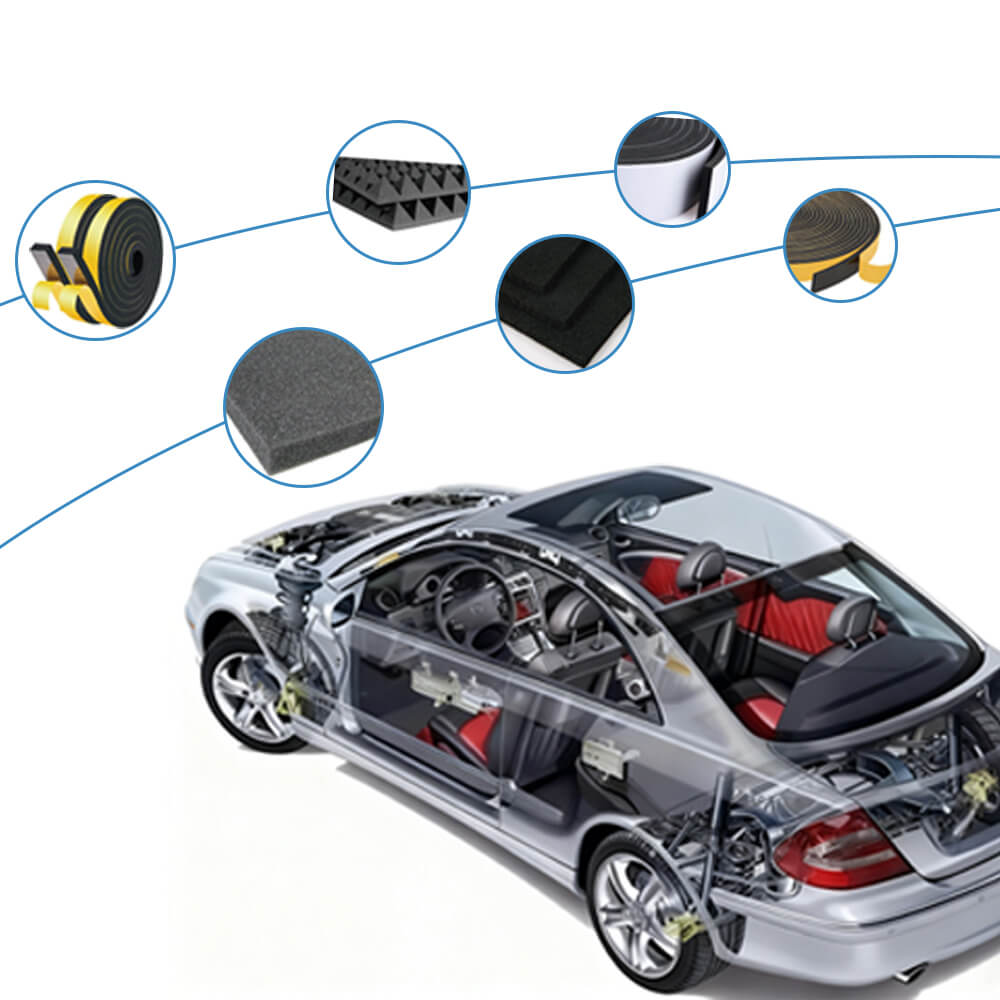
Exterior Component Mounting and Weatherproofing
The most visible applications of automotive bonding tape are found on the vehicle’s exterior. These components must withstand extreme environmental stressors, including UV radiation, car wash chemicals, and temperature fluctuations ranging from -40°C to 120°C.
Exterior applications typically prioritize Acrylic Foam Tapes (AFT) due to their viscoelastic properties. Key scenarios include:
- Body Side Moldings: Tape provides a permanent bond that compensates for the different thermal expansion rates of the plastic molding and the metal door panel.
- Spoilers and Shark Fin Antennas: High-bond tapes ensure these aerodynamic components remain attached at high speeds without requiring visible hardware.
- Emblems and Nameplates: Die-cut tapes allow for high-precision, flush-mounting that enhances the vehicle’s “fit and finish” quality.
Interior Cabin Assembly and NVH Management
In the interior, the focus shifts toward aesthetics and the reduction of Noise, Vibration, and Harshness (NVH). Modern cabins feature an array of electronic displays and soft-touch materials that cannot be joined with aggressive mechanical clips.
OEMs utilize specialized automotive bonding solutions to achieve “silent” cabins. For example, thin PE foam tapes are used to bond instrument panel components, effectively acting as a gasket that prevents “buzz, squeak, and rattle” (BSR). Furthermore, as vehicles move toward autonomous driving, the mounting of interior sensors and cameras requires tapes that offer high dimensional stability and minimal outgassing to prevent lens fogging.
Technical Comparison: Bonding Tape vs. Mechanical Fasteners
For procurement consultants evaluating assembly methods, the following table outlines the commercial and technical trade-offs between traditional joining and adhesive bonding.
| Feature | Mechanical Fasteners (Rivets/Screws) | Automotive Bonding Tape |
| Weight Impact | High (Adds mass) | Minimal (Lightweighting benefit) |
| Stress Distribution | Point-load (High risk of fatigue) | Uniform (Continuous bond line) |
| Corrosion Risk | High (Due to drilled holes) | Zero (Protects substrate integrity) |
| Aesthetics | Visible heads/covers | Invisible bond lines |
| Assembly Speed | Labor intensive | Rapid / Automation friendly |
| Sealing | Requires secondary gaskets | Integrated seal against moisture |
Substrate Compatibility: Bonding to LSE Plastics
A significant challenge in automotive assembly is the use of Low Surface Energy (LSE) plastics, such as Polypropylene (PP) or EPDM rubber. Standard adhesives often struggle to “wet out” these surfaces, leading to bond failure.
Experienced manufacturing consultants recommend utilizing modified acrylic adhesives designed specifically for LSE substrates. These tapes are engineered to migrate into the microscopic pores of the plastic, creating a structural bond without the need for expensive chemical primers or corona treatments. In large-volume production, eliminating the priming step can save thousands of hours in cycle time and reduce VOC emissions on the factory floor.
Engineering Considerations for OEM Projects
When specifying an automotive bonding tape, project managers must account for “dwell time”—the interval required for the adhesive to reach 100% bond strength. While many tapes provide “finger-tack” immediately, structural integrity is typically achieved after 24 to 72 hours as the viscoelastic core flows into the surface irregularities.
Furthermore, customized widths and die-cut shapes are essential for integrating tape into automated assembly lines. Manufacturers like F6Tape provide technical support for these precision requirements, ensuring that the tape’s liner release force is calibrated for robotic applicators. This level of technical alignment is what separates a generic adhesive supplier from an automotive-grade partner.

FAQ
Why is acrylic foam tape preferred over PE foam for exterior parts?
Acrylic foam is 100% solid adhesive, offering superior internal strength and resistance to UV and heat compared to PE foam. It is designed for “permanent” outdoor applications where the tape itself acts as a structural component.
Can bonding tape replace welding in automotive frames?
Currently, tape is primarily used for “secondary” structural bonding (panels, trims, brackets). While it can replace rivets and welds in many areas, primary structural frames still rely on advanced welding or liquid structural adhesives, often supplemented by tape for positioning.
How does temperature affect automotive bonding tape?
Standard automotive tapes are rated for a wide range. However, during the application phase, the substrate should be at room temperature (approx. 21°C) to ensure the adhesive achieves proper wetting. Once cured, the bond remains stable across extreme seasonal temperatures.
Does bonding tape require surface preparation?
Yes. To ensure trustworthiness in the bond, surfaces must be free of oils, mold release agents, and dust. A 50/50 Isopropyl Alcohol (IPA) and water mix is the industry standard for cleaning before tape application.
What is the shelf life of automotive-grade tapes?
Most industrial bonding tapes have a shelf life of 12 to 24 months when stored in a cool, dry environment (approx. 21°C and 50% relative humidity).
Reference Sources
- ISO 9001:2015: Quality management systems for automotive component manufacturing.
- ASTM D3330: Standard Test Method for Peel Adhesion of Pressure-Sensitive Tape. ASTM.org
- SAE International: Technical papers on adhesive bonding for lightweight vehicle structures. SAE.org
- PSTC (Pressure Sensitive Tape Council): Industry-standard testing and selection guides. PSTC.org
- SGS / UL Certifications: For environmental resistance and chemical compliance in automotive materials.
Summary:
Select automotive bonding tape to improve NVH, reduce vehicle weight, and enhance aesthetic finish. OEMs prioritize modified acrylics for LSE plastics to ensure long-term durability in harsh environments.