
 Canada
 USA
USA Japan
Japan


Industrial Masking Tape Buying Guide: Selecting the Best Supplier

In precision manufacturing, the cost of an adhesive failure often far exceeds the cost of the tape itself. Whether you are navigating the high-heat environment of an automotive paint shop or the delicate masking requirements of printed circuit board (PCB) assembly, the choice of tape defines the quality of the finish and the efficiency of the workflow. For B2B procurement managers and project engineers, selecting a qualified industrial masking tape supplier is a strategic decision that impacts yield rates and operational downtime.
Industrial-grade masking tapes are engineered to perform under stresses that consumer-grade products cannot withstand. These include extreme thermal cycling, exposure to harsh chemical solvents, and the requirement for high-tensile strength to prevent slippage during automated applications. This guide examines the technical and commercial criteria essential for evaluating supplier capability in high-volume manufacturing environments.
Technical Specifications: Matching Adhesive Chemistry to Substrate
A reliable supplier should offer more than just “tape”; they must provide a technical match for your specific substrate and environment. The performance of masking tape is primarily dictated by its carrier material and its adhesive chemistry.
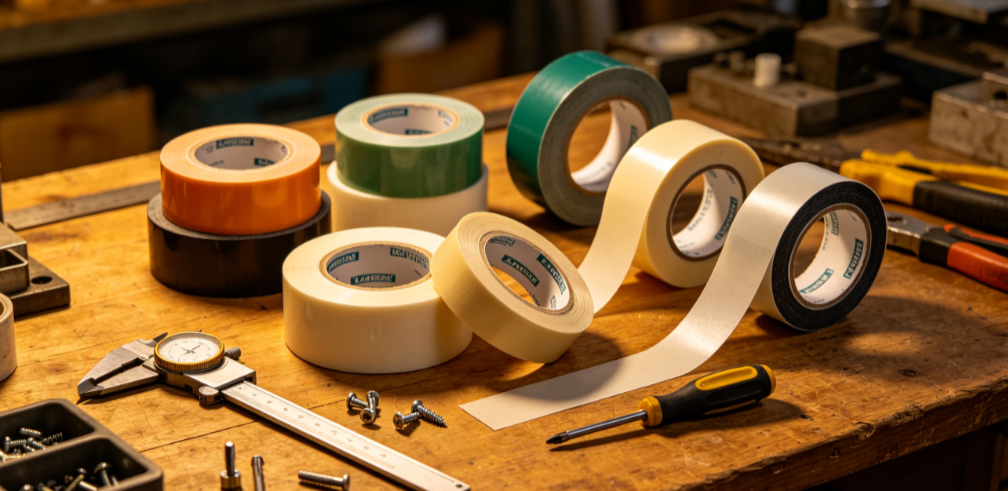
- Carrier Materials: While standard crepe paper is common for general-purpose masking, industrial applications often require fine-line PVC for sharp paint edges, or polyester/polyimide for high-heat resistance. The “stretch” or elongation factor is critical when masking curved surfaces or irregular geometries.
- Adhesive Systems:
- Natural Rubber: Offers high initial tack and excellent adhesion to a variety of surfaces, ideal for short-term masking at moderate temperatures.
- Silicone Adhesive: The gold standard for high-temperature masking (up to 260°C). It is often utilized in powder coating and plating due to its chemical inertness.
- Acrylic Adhesive: Provides superior UV resistance and long-term aging stability, making it suitable for outdoor construction or long-duration masking.
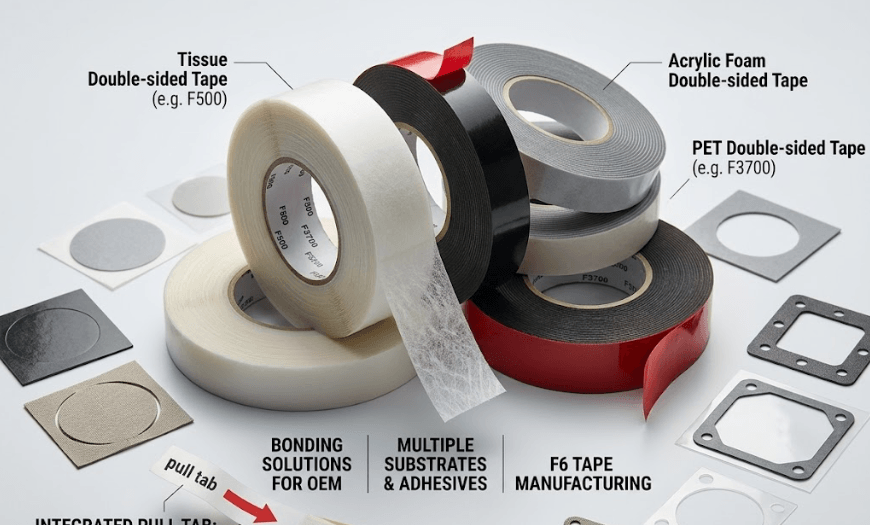
Manufacturers should also consider the synergy between masking and permanent bonding. In complex assemblies, masking tape is often used in tandem with industrial double-sided tape solutions to secure components before a final mechanical fix or permanent adhesive bond. A versatile supplier that can provide both categories simplifies the Bill of Materials (BOM) and ensures chemical compatibility between different adhesive layers.
Performance Comparison: Industrial Masking Chemistries
| Adhesive Type | Temperature Resistance | Solvent Resistance | Clean Removal | Best Use Case |
| Rubber-Based | Up to 80°C – 100°C | Moderate | Good (Short term) | General painting, bundling |
| Acrylic-Based | Up to 150°C | High | Excellent (Long term) | UV exposure, outdoor use |
| Silicone-Based | Up to 260°C | Very High | Excellent (High heat) | Powder coating, E-coating |
Choosing an Industrial Masking Tape Supplier: Capability Evaluation
When moving to the BOFU (Bottom of Funnel) stage, procurement focus must shift from technical specifications to supplier reliability and manufacturing capacity. A “low price per roll” is irrelevant if the supplier cannot guarantee batch-to-batch consistency or meet fluctuating lead times.
1. Production Capacity and Scalability
In large-volume production, a supply chain interruption can halt an entire assembly line. Manufacturers should vet suppliers based on their monthly output capacity and their ability to hold safety stock for long-term contract customers.
2. Compliance and Quality Systems
Ensure the supplier adheres to international standards such as ISO 9001 for quality management and RoHS/REACH for chemical safety. For automotive or electronics OEMs, specific testing according to ASTM D3330 (Peel Adhesion) or ASTM D3759 (Tensile Strength) is often mandatory.
3. Clean Removal Guarantee
Perhaps the most critical industrial KPI is “clean removal.” Residual adhesive requires manual labor for cleaning, which adds significant cost and can damage sensitive substrates. A professional supplier should provide data on the “dwell time” (how long the tape can stay on a surface) before clean removal becomes an issue.
OEM Customization: Slitting, Die-Cutting, and Special Formats
Standard roll widths are rarely sufficient for specialized manufacturing. A Tier-1 industrial masking tape supplier must offer value-added conversion services:
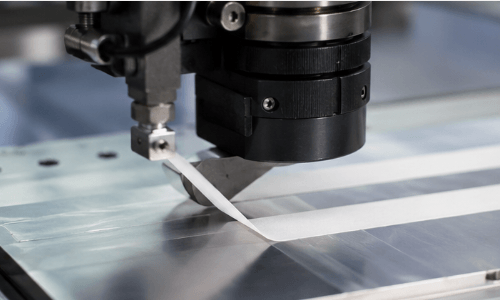
- Precision Slitting: Delivering rolls in custom widths (e.g., 3.5mm for electronics) with tolerances as tight as ±0.1mm.
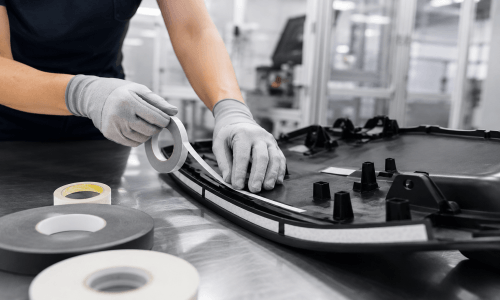
- Die-Cutting: Providing pre-cut shapes on a liner. This is essential for masking complex parts like bolt holes, ports, or logos, allowing for rapid “pick-and-place” application on the assembly line.
- Custom Labeling and Packaging: For private label or specialized inventory management, suppliers should offer customized core printing and moisture-barrier packaging to extend shelf life in humid warehouse environments.
Procurement Workflow: RFQ and MOQ Considerations
Navigating the transactional phase requires clear communication regarding commercial terms. Most industrial suppliers operate on a tiered pricing model.
- Minimum Order Quantity (MOQ): For standard crepe masking tapes, MOQs are usually low. However, for specialized polyimide or custom die-cut parts, MOQs are dictated by the “master log” width and the conversion setup time.
- Lead Times: Standard domestic orders typically ship within 5-10 business days. For customized OEM orders or international shipments, lead times of 4-6 weeks are common.
- Sample Approval: Never commit to a bulk order without an “on-substrate” trial. Request a sample roll to test under your specific thermal cycle (e.g., your specific bake oven temperature and duration).
A successful partnership with a supplier ensures that the adhesive solution is optimized for the Total Cost of Ownership (TCO), factoring in application speed, removal time, and the prevention of surface damage.
FAQ
What is the typical shelf life for industrial masking tape?
Most industrial masking tapes have a shelf life of 12 months when stored in a cool, dry environment (typically 21°C and 50% relative humidity). Past this date, the adhesive may become brittle or leave residue upon removal.
Can I get custom-width rolls for automated dispensers?
Yes. Professional suppliers provide custom slitting services to match the exact specifications of your automated application machinery, ensuring consistent tension and alignment.
How do I request an RFQ for a large-volume contract?
When submitting an RFQ, provide the substrate material, your required temperature range, the width/length of the roll, and your projected annual volume. This allows the supplier to offer the most competitive tiered pricing.
Are samples provided for testing before a bulk purchase?
Reputable industrial suppliers almost always provide samples for validation. It is standard practice to test the tape on your specific material and through your actual production cycle before final approval.
Does the supplier offer RoHS and REACH certifications?
Tier-1 suppliers provide full documentation ensuring that their adhesive products are free from restricted hazardous substances, which is critical for electronics and international export compliance.
Reference Sources
- ISO 9001:2015: Quality Management Systems — Requirements.
- ASTM D3330: Standard Test Method for Peel Adhesion of Pressure-Sensitive Tape. [astm.org]
- PSTC (Pressure Sensitive Tape Council): Industry standards for adhesive performance and testing protocols. [pstc.org]
- RoHS/REACH Compliance: European Chemicals Agency (ECHA) guidelines for industrial adhesives.
- F6 Tape Technical Data: Industrial Double-Sided and Masking Solutions.