
 Canada
 USA
USA Japan
Japan


Industrial Adhesive Tape: Types, Uses & Selection


Choosing an industrial adhesive tape is a specification task, not a catalog exercise. Procurement teams need a repeatable way to connect the tape construction to the substrates, assembly geometry, process conditions and validation plan. A tape that performs well in a short demonstration can still be unsuitable when the surface is textured, the joint is under sustained load, the application temperature changes or the assembly process leaves contaminants behind.
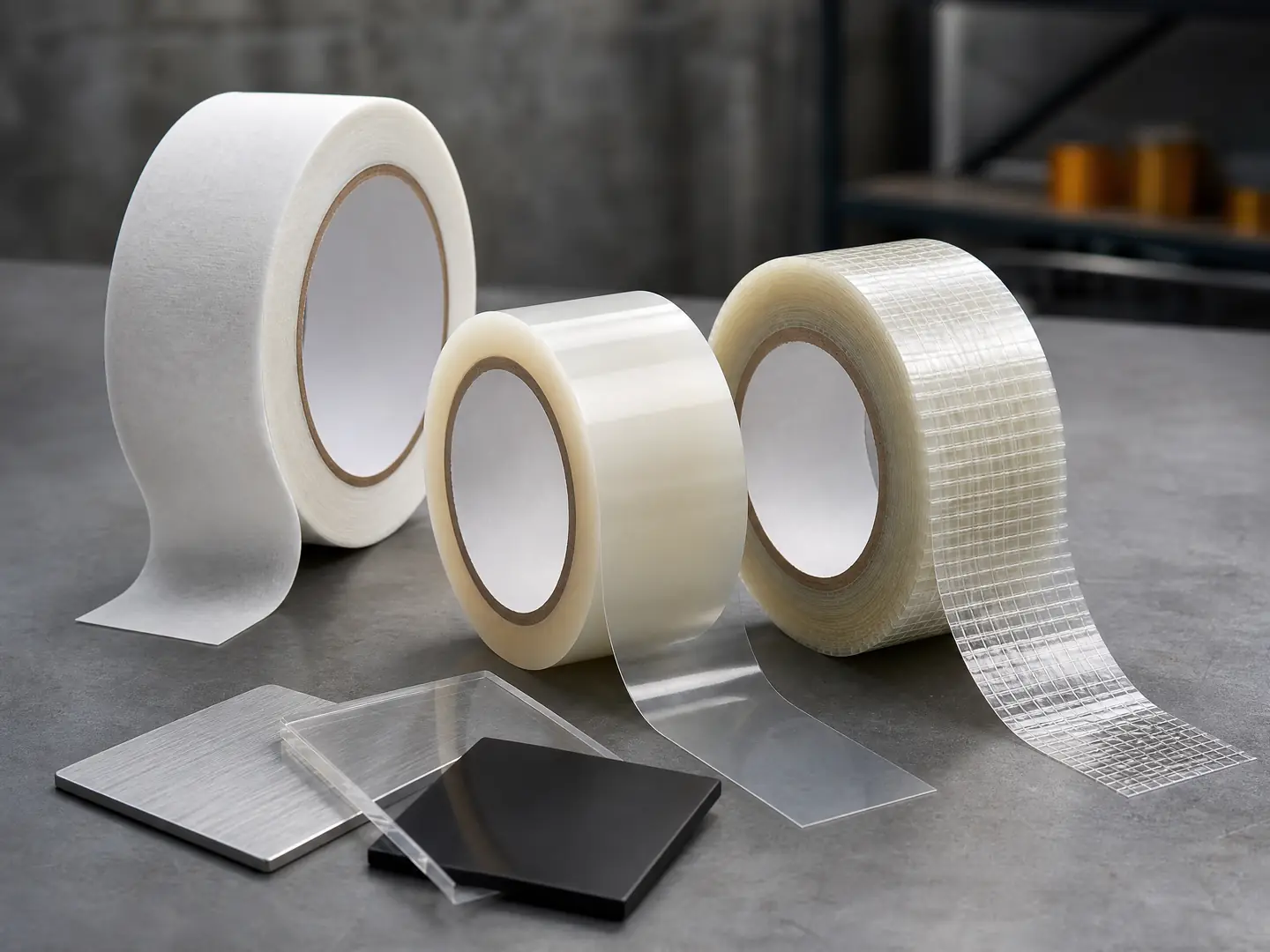
This commercial guide is intended for engineering, sourcing and quality teams evaluating pressure-sensitive tape solutions for industrial assemblies. It explains the main product constructions, the questions that should drive selection and the RFQ data that a supplier needs before recommending a product. It does not treat a category page, a single test value or a product name as proof of fitness for every application.
Start with the joint, not the tape name
First define what the assembly must do. Is the tape holding a light component in position, laminating flexible materials, mounting a nameplate, sealing a temporary interface or replacing a mechanical fastener in a defined joint? Record the materials on both sides, their surface finish, flatness, coating, cleanliness and the actual contact area. Then record service temperature, exposure to moisture or chemicals, expected load direction, required lifetime and the application window on the production line.
These questions matter because adhesive wet-out and contact are substrate-dependent. The Adhesive and Sealant Council notes that surface roughness, contour and surface energy can materially affect PSA-tape selection; rough or irregular surfaces may need a thicker, softer adhesive layer to conform to surface valleys, while low-surface-energy materials warrant particular attention to wet-out and validation [1]. In practical terms, the first shortlist should be built around the joint and process—not a generic “strongest tape” claim.
Industrial adhesive tape types: a practical comparison
| Construction or category | Typical selection role | Key questions before RFQ |
|---|---|---|
| Tissue double-sided tape | Thin, conformable bonding where a tissue carrier is suitable for the assembly. | What are the substrate pair, required tack, temperature profile, foam/plastic compatibility and regulatory requirements? |
| PET double-sided tape | Film-backed double-sided construction for applications that require a PET carrier. | What carrier behavior, thickness, transparency or color is required, and what is the joint geometry? |
| Transfer tape | Adhesive-only transfer construction for an application that does not require a carrier in the final bond line. | How will the adhesive be handled, laminated and protected during assembly? |
| Mesh-fiberglass double-sided tape | Reinforced construction where the specified product architecture and joint need evaluation together. | What tensile, peel, shear and surface requirements apply to the actual assembly? |
| PVC, non-woven or cloth double-sided tape | Category choices that should be compared by carrier, flexibility, process needs and end-use exposure. | What bend radius, surface profile, application method and environmental conditions will the joint see? |
F6 Tapes publicly lists tissue, non-woven, transfer, PET, PVC, mesh-fiber and cloth double-sided tape categories in its industrial double-sided tape range. Those category names are useful for structuring a shortlist, but they are not interchangeable specifications. For example, the public F6 listing for F202 identifies a mesh-fiberglass construction and lists named substrates for permanent bonding, while F500 is presented as a tissue-backed option with its own stated application areas and model-specific data. Product-specific values must remain product-specific and should be confirmed against the final application.
Translate operating conditions into selection criteria
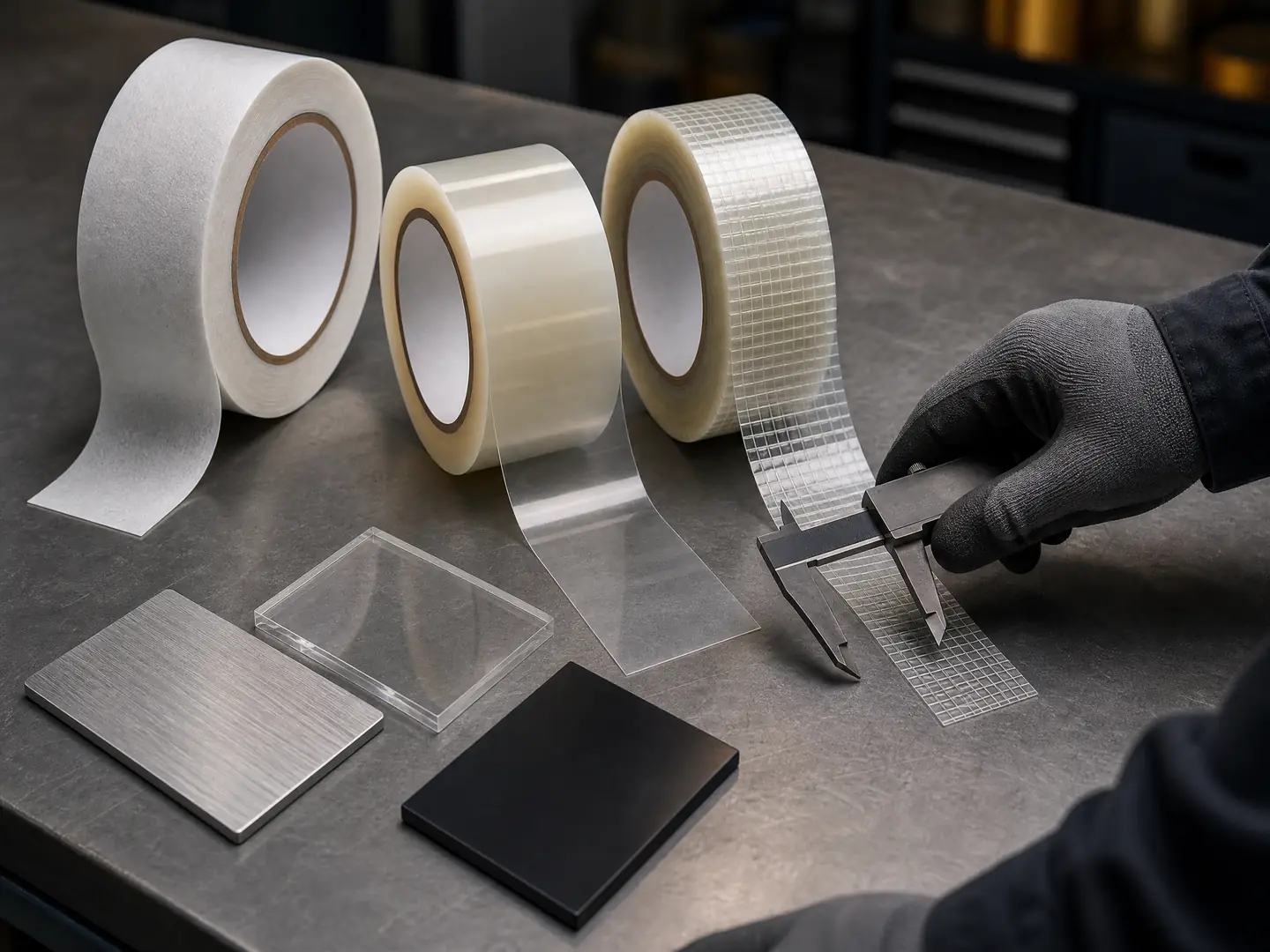
Use a structured decision sequence. Begin with the substrate pair and whether either surface is coated, low-energy, rough, curved or difficult to clean. Next, identify the joint mechanics. Peel, shear, tensile and compression are different loading modes, and a value for one mode should not be interpreted as a guarantee for another. ASTM D3330/D3330M covers measurement of peel adhesion for pressure-sensitive tapes, but explicitly notes that peel data may not provide direct design information for every functional requirement [2].
Then assess the process window. Confirm application temperature, dwell time, pressure or lamination method, release-liner handling, rework needs and storage conditions. Finally, consider the service environment: temperature range, humidity, chemicals, vibration, UV or other relevant exposure. The Pressure Sensitive Tape Council identifies peel and shear holding among the performance characteristics addressed by its laboratory test methods [3]. The appropriate tests and acceptance limits should be agreed for the actual assembly rather than copied from an unrelated product data sheet.
Build a defensible RFQ and validation plan
A commercial RFQ is more useful when it turns unknowns into confirmation points. Ask for a recommended product and data sheet, but also state the assembly details and acceptance criteria. If any value is not explicitly documented for the proposed product, label it “RFQ confirmation required” rather than inferring it from a similar tape.
RFQ checklist for an industrial adhesive tape
- Identify both substrates, including coatings, surface energy concerns, texture and curvature.
- Provide the bond-line geometry, contact area, tape width/length, thickness limit and required color or transparency.
- State application temperature, dwell time, available pressure, assembly speed and any rework requirement.
- Define service conditions: temperature, moisture, chemicals, UV, vibration and expected duration.
- Specify load cases and required validation, such as peel, shear holding, aging or environmental exposure tests.
- Request confirmation of adhesive system, backing, liner, dimensions, compliance documents, sample availability, MOQ and lead time.
F6’s publicly listed tissue double-sided tape options and PET double-sided tape options can be used as starting points for a category-level conversation. For a defined reinforced construction, the F202 mesh-fiberglass double-sided tape page gives a model-specific reference. The supplier should still confirm final suitability, current documentation and commercial terms for the buyer’s real assembly.
How to avoid common sourcing errors
Do not select solely by an isolated adhesion figure, a generic “heat resistant” label or another project’s bill of materials. Avoid assuming that a test on steel predicts performance on a coated polymer, textured composite or contaminated production surface. Likewise, do not equate a category label with a product certification, a guarantee of regulatory compliance or a stated lead time. Each of these items requires product-level documentation and, where relevant, test samples under representative conditions.
A balanced selection process is therefore commercial as well as technical: create a shortlist, obtain comparable product-specific data, agree acceptance criteria, run representative validation and document the result. That approach helps engineering avoid unnecessary risk and gives purchasing a clearer basis for price, availability and supplier comparison.
Frequently asked questions
What is the first question to ask when selecting an industrial adhesive tape?
Identify the actual substrate pair and joint conditions. Surface energy, roughness, contour, cleanliness and the expected load are more useful starting data than a broad strength label.
Can peel adhesion alone qualify a tape?
No. Peel testing can support relative comparison, but ASTM cautions that peel data may not directly represent every functional design requirement [2]. Define the relevant test modes and acceptance criteria for the assembly.
Which tape category should be used for a low-surface-energy plastic?
Do not choose by category name alone. Identify the plastic and surface condition, then request a supplier recommendation and representative validation. The final selection is RFQ confirmation required.
Can F6 category pages confirm all performance or compliance claims?
No. Category pages establish available product families. Any required thickness, temperature limit, certification, test result, lead time, production capacity or application suitability must be confirmed for the specific proposed product.
What should procurement request with a tape sample?
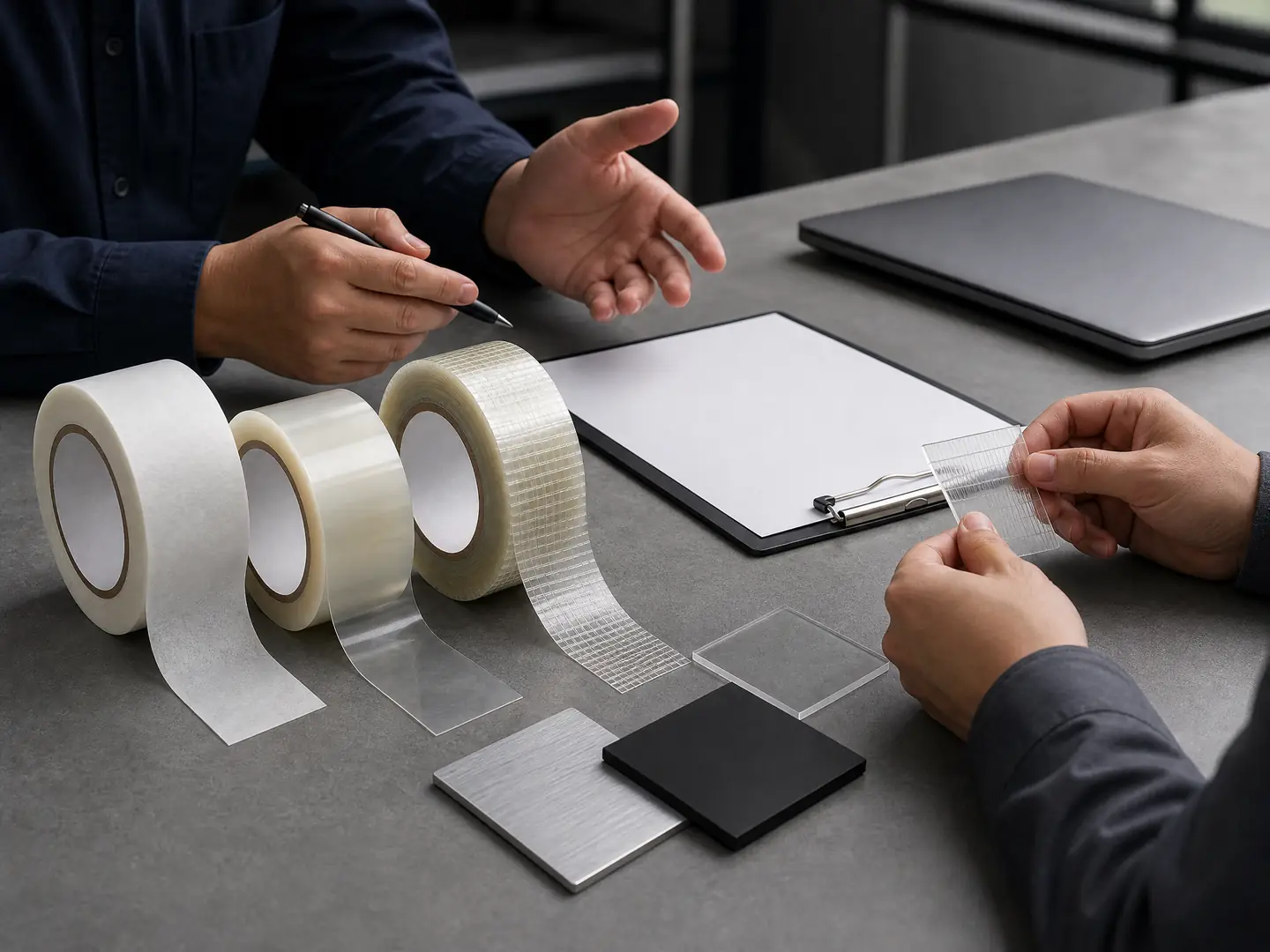
Request the current data sheet, adhesive/backing/liner details, dimensions, relevant compliance documents, storage and application guidance, applicable test methods, sample identification and commercial terms. Match them to a written validation plan.
Next step
For a structured shortlist, share the substrates, joint drawing or photos, production conditions and validation target with F6 Tapes. A complete RFQ enables the supplier to recommend a specific product rather than a category-level assumption, and enables your team to decide whether sample testing is needed before purchase.
References
- Adhesive and Sealant Council, “Pressure Sensitive Adhesive (PSA) Tape Selection Considerations.” Accessed 15 August 2026.
- ASTM International, “D3330/D3330M Standard Test Method for Peel Adhesion of Pressure-Sensitive Tape.” Accessed 15 August 2026.
- Pressure Sensitive Tape Council, “Test Methods.” Accessed 15 August 2026.