
 Canada
 USA
USA Japan
Japan


Mesh Fiberglass Double Sided Tape: How to Choose It for Industrial Bonding

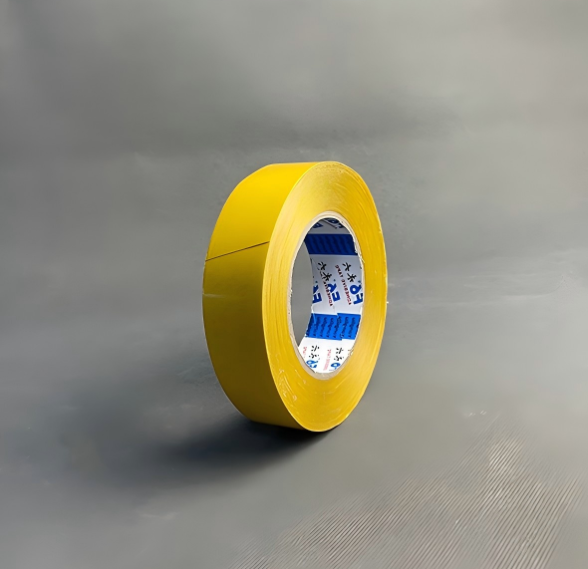
Mesh fiberglass double sided tape is designed for bonding applications where the tape needs more dimensional stability than a lightweight tissue or unsupported adhesive construction can provide.
The fiberglass mesh acts as a reinforcing carrier, while pressure-sensitive adhesive on both sides creates the bond. This combination can be useful for mounting, laminating and permanent fixing where tensile stability, controlled handling and resistance to stretching matter.
For buyers comparing options, however, “fiberglass reinforced” alone is not enough to specify a tape. The substrate, adhesive system, temperature, load direction and converting method all affect whether a particular grade will work.
F6 groups these products within its Mesh Fiber Double-Sided Tape range.
What Does the Fiberglass Mesh Actually Do?
The main difference between mesh fiberglass double sided tape and conventional double sided tape is the carrier.
Instead of relying on a thin film, tissue or adhesive layer alone, fiberglass yarn creates a reinforcing structure inside the tape. This can help limit stretching and maintain the shape of the tape during application or under load.
That matters particularly when the bonded part experiences pulling forces, handling during installation or moderate dimensional movement.
The mesh does not automatically mean the tape will bond better to every surface. Adhesion still depends heavily on the adhesive chemistry and on how well that adhesive wets the actual substrate.
For this reason, buyers should evaluate the carrier and adhesive as one system, rather than selecting a tape only because it contains fiberglass reinforcement.
Where Is Mesh Fiberglass Double Sided Tape Commonly Useful?
This tape construction is worth considering when a thin bonding material is needed but additional reinforcement is also desirable.
Typical uses can include:
- nameplate and sign mounting
- bonding acrylic sheets or components
- wood and laminate fixing
- aluminum and stainless-steel bonding
- industrial panel mounting
- reinforced assembly and lamination
- applications where ordinary lightweight double sided tape stretches too easily
For example, F6’s F202 Mesh Fiberglass Double Sided Tape is specified for applications including nameplates, acrylic, wood, aluminum, laminates, stainless steel and high-carbon steel.
These are application directions rather than guarantees for every surface condition. Coatings, oils, roughness and surface treatments can significantly change actual adhesion.
What Should You Check Before Choosing a Mesh Fiberglass Tape?
1. Start With the Actual Substrate
Do not specify the tape based only on terms such as “metal,” “plastic” or “wood.”
A bare aluminum panel and a powder-coated aluminum panel can behave very differently. The same applies to untreated plastics versus molded or painted plastic components.
Surface energy is particularly important.
F202 is described as suitable for low-surface-energy applications, but buyers should still test the actual plastic or coated surface before production. Polypropylene, polyethylene, powder coatings and other difficult surfaces may require a different adhesive formulation or surface preparation.
2. Look at How the Joint Will Be Loaded
Peel and shear create different stresses in an adhesive bond.
A vertically mounted component may place continuous shear load on the tape, while an edge that can be lifted or pulled introduces peel stress.
Fiberglass reinforcement can improve dimensional stability, but the adhesive still has to resist the dominant load.
When discussing a project with a supplier, provide:
- component weight
- bonding area
- mounting direction
- expected peel or shear forces
- vibration or repeated movement
- expected service life
This information is much more useful than simply asking for a “strong double sided tape.”
3. Separate Application Temperature From Service Temperature
Temperature specifications are often misunderstood.
Application temperature describes the conditions under which the adhesive should be applied. Service or resistance temperature refers to the conditions the bonded tape may experience afterward.
The F202 product information recommends an application temperature of 20°C to 40°C and lists a temperature resistance of 80°C. It also reports holding performance at up to 80°C for 60 minutes.
Those figures should be treated as product-specific reference data rather than a general specification for all fiberglass mesh tapes.
If the assembly will remain close to its maximum temperature for long periods, conduct an application-specific aging or holding test rather than relying only on the headline temperature figure.
F202 as a Practical Mesh Fiberglass Tape Example
| Specification | F202 |
|---|---|
| Carrier | Mesh fiberglass |
| Adhesive | Solvent-based pressure-sensitive adhesive |
| Total thickness | 0.22 mm |
| Liner thickness | 0.11 mm |
| Color | Yellow |
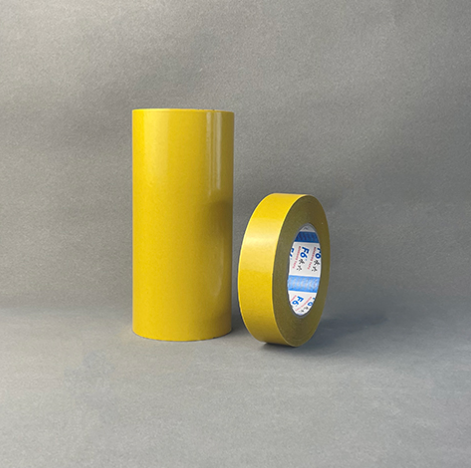
| Size | Customizable |
| Listed temperature resistance | 80°C |
| Recommended application temperature | 20°C–40°C |
| Typical application direction | Nameplates, acrylic, wood, aluminum, laminates, stainless steel and high-carbon steel |
The specifications above make F202 Mesh Fiberglass Double Sided Tape a useful starting point when a project requires a reinforced double sided PSA construction.
Final selection should still be based on the actual substrate, load and working environment.
Mesh Fiberglass vs PET and Tissue Double Sided Tape
These tape constructions solve different problems rather than forming a simple good-better-best hierarchy.
| Tape Construction | Main Characteristic | Common Selection Reason |
|---|---|---|
| Mesh fiberglass double sided tape | Reinforced carrier structure | Dimensional stability and reinforced mounting |
| PET double sided tape | Thin, continuous film carrier | Precise bonding and good dimensional control at low thickness |
| Tissue double sided tape | Soft, flexible tissue carrier | Conformability and general-purpose lamination |
If reinforcement is the main requirement, fiberglass mesh deserves consideration.
If the application instead requires a very thin bond line, precision die cutting or high conformability, another construction within the wider Industrial Double Sided Tape range may be more appropriate.
This distinction is useful because choosing by adhesive strength alone can lead to an unnecessarily thick, stiff or difficult-to-convert tape.
How Should Mesh Fiberglass Double Sided Tape Be Tested?
Supplier data provides a starting point, but production qualification should use the real materials whenever possible.
Peel Adhesion
Peel testing helps evaluate how strongly the tape adheres when force is applied away from the bonded surface.
The current ASTM D3330/D3330M-04(2025) standard covers peel adhesion testing for pressure-sensitive tapes, including a method for double-coated tape.
For international projects, ISO 29862:2024 also covers peel adhesion methods, including measurement of double-sided and transfer tapes.
A laboratory value on stainless steel is useful for quality comparison, but it should not automatically be treated as the expected value on painted metal, plastic, wood or another production substrate.
Shear Adhesion
Shear testing is especially relevant when the bonded component carries a continuous load parallel to the surface.
ASTM D3654/D3654M-06(2024) describes methods for evaluating the ability of pressure-sensitive tapes to remain adhered under constant shear load.
For a real industrial project, the qualification process can also include:
- elevated-temperature holding tests
- thermal cycling
- humidity exposure
- vibration testing
- chemical or cleaner exposure
- aging tests
- production-line application trials
Testing should reproduce the intended application as closely as practical.
Converting Requirements Matter Too
Industrial buyers often focus on adhesion and overlook converting.
For fiberglass-reinforced tape, the finished format can affect both production efficiency and application consistency.
Before requesting a quotation or sample, specify:
Width and roll length: Match the tape to the bonding area and dispensing process.
Core and roll dimensions: Important when rolls are used on automated or semi-automated equipment.
Slitting requirements: Reinforced carriers need clean cutting to avoid poor edges or damaged fiberglass yarn.
Die-cut geometry: If the tape will be supplied as individual parts, provide drawings and dimensional tolerances.
Liner requirements: Liner release characteristics can affect manual handling and automated placement.
F202 is available in customized sizes, making these converting details worth discussing before a production trial rather than after the material has already been approved.
Surface Preparation Can Decide Whether the Bond Works
Even a suitable tape can perform poorly on a contaminated surface.
Before application:
- Remove dust, oil, release agents and other contaminants.
- Allow cleaned surfaces to dry completely.
- Apply the tape within the recommended application-temperature range.
- Use firm, even pressure to increase adhesive contact with the surface.
- Avoid applying the final operating load immediately when the adhesive requires time to develop adhesion.
For painted, coated or low-surface-energy substrates, use representative production parts during testing. A test on clean laboratory stainless steel cannot fully represent a coated component coming from the production line.
What Information Should You Send With an RFQ?
A useful RFQ for mesh fiberglass double sided tape should contain more than tape width and order quantity.
Provide the supplier with:
- material on both sides of the bond
- surface coating or treatment
- required tape width and length
- component weight
- expected temperature range
- indoor or outdoor environment
- exposure to water, oil, cleaners or other chemicals
- peel and shear requirements, if known
- manual or automated application method
- slitting or die-cutting requirements
- expected trial and production quantities
This allows the supplier to recommend a construction based on the application rather than simply quoting the closest standard roll.
For projects that specifically require a fiberglass mesh carrier, buyers can review the complete F6 Mesh Fiber Double-Sided Tape range before requesting samples.
FAQ
Is mesh fiberglass double sided tape stronger than ordinary double sided tape?
The fiberglass mesh provides additional reinforcement and dimensional stability, but overall bond performance also depends on adhesive chemistry, substrate, temperature and load direction. It is better to compare tested performance under the intended conditions than to assume the mesh construction is always stronger.
Can mesh fiberglass tape bond to low-surface-energy plastics?
Some grades are designed for more difficult surfaces. F202 is described as suitable for low-surface-energy applications, but polypropylene, polyethylene and coated plastics should still be tested using actual production parts.
Is F202 suitable for metal bonding?
F6 lists aluminum, stainless steel and high-carbon steel among the intended substrates for F202. Surface contamination, coatings and operating conditions can still affect the final bond.
What is the thickness of F202 mesh fiberglass double sided tape?
The listed total thickness is 0.22 mm, with a 0.11 mm liner.
Should peel strength or shear strength be tested?
Usually both are useful because they describe different loading conditions. Peel testing helps assess resistance to lifting forces, while shear testing eva