
 Canada
 USA
USA Japan
Japan


PET vs Foam vs Tissue: Guide to Adhesive Tape Backing

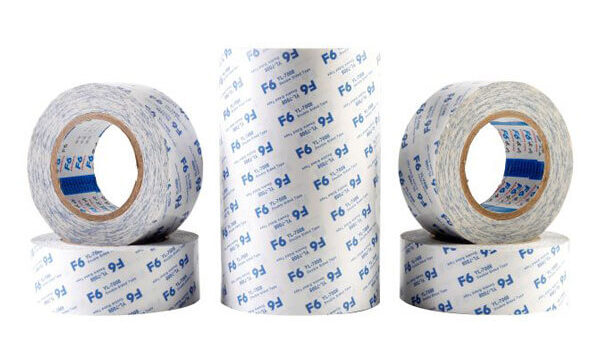
Selecting the right adhesive tape backing materials is critical for any industrial or domestic bonding project. The backing, also known as the carrier, acts as the structural foundation for the adhesive. It determines how the tape reacts to stress, temperature changes, and surface irregularities. This guide explores the differences between PET, foam, and tissue carriers to help you make an informed decision.
Each material offers unique physical properties that suit specific environments. Choosing the wrong carrier can lead to bond failure or inefficient application. By understanding the mechanical limits of these adhesive tape backing materials, you ensure long-term performance. We will examine the data-driven advantages of each type in the following sections.
What Are Common Adhesive Tape Backing Materials?
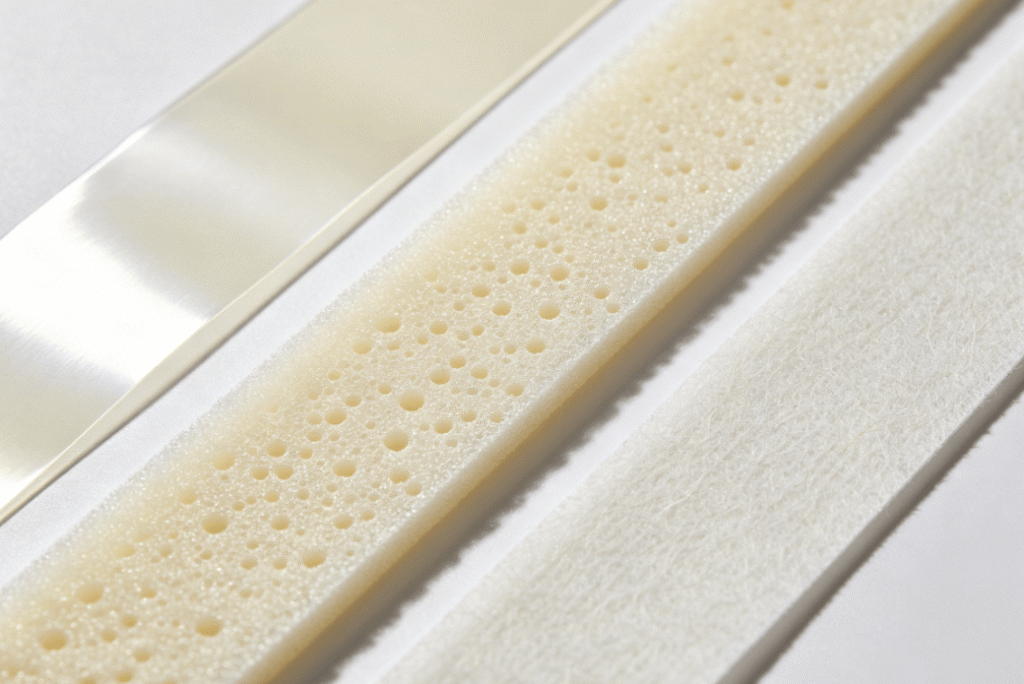
The carrier material defines the tape’s thickness, flexibility, and durability. Manufacturers use various substrates to meet the demands of different industries. Among the most popular adhesive tape backing materials are polyester (PET) films, specialized foams, and non-woven tissues. Each serves a distinct purpose in the bonding process.
PET film is recognized for its high tensile strength and clarity. Foam carriers are used when gap-filling or vibration damping is required. Tissue backings provide a lightweight and conformable option for permanent bonding. Understanding these categories is the first step toward optimizing your assembly process.
The choice of carrier often depends on the “bond line” requirements. If you need a nearly invisible bond, thin films are the standard choice. If the surfaces are rough or uneven, thicker materials like foam are necessary. These adhesive tape backing materials allow engineers to tailor the tape to the specific geometry of the parts being joined.
Understanding the Performance of PET Film Carriers
Polyester or PET is a high-performance plastic film used in demanding environments. It provides exceptional dimensional stability, meaning it does not stretch or shrink under tension. Most PET films used in tapes have a tensile strength exceeding 150 to 200 MPa. This makes them ideal for high-speed automated application processes.
Temperature resistance is another key feature of PET adhesive tape backing materials. These tapes can typically withstand continuous operating temperatures from -40°C to 150°C. Some specialized versions can even handle short-term exposure up to 200°C. This thermal stability is essential for electronics manufacturing and automotive under-the-hood applications.
PET carriers are also excellent for precision die-cutting. The material’s stiffness allows for clean edges and consistent shapes. Because PET is moisture-resistant, it protects the adhesive from degrading in humid conditions. It is frequently the preferred choice for mounting decorative trims and electronic displays.
The Benefits of Foam Adhesive Tape Backing Materials
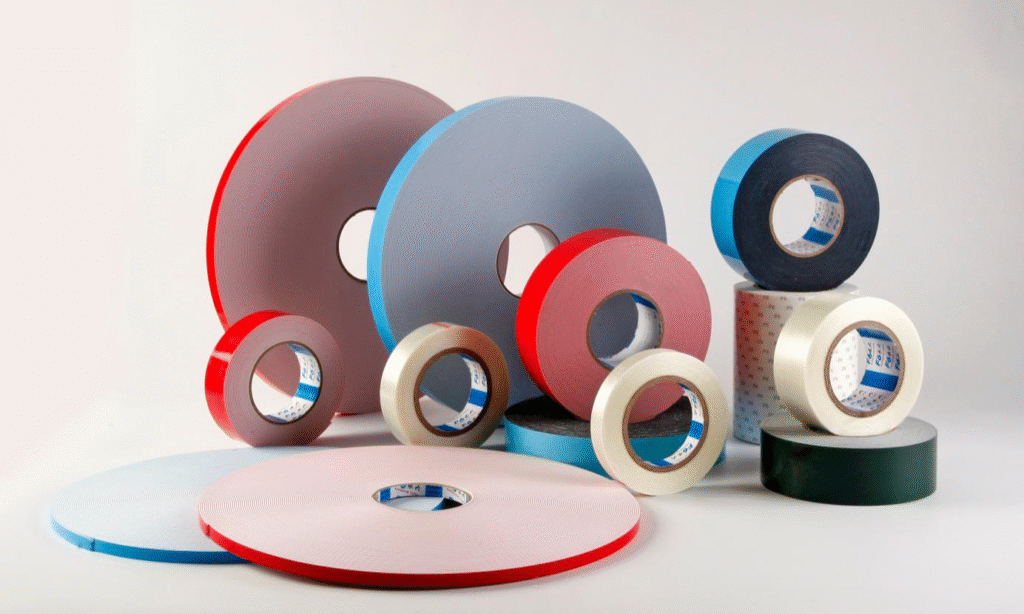
Foam carriers differ significantly from films due to their three-dimensional structure. They are usually made from Polyethylene (PE), EVA, or Acrylic foam. These adhesive tape backing materials range in thickness from 0.5 mm to over 3.0 mm. Their primary function is to compensate for “surface mismatch” between two substrates.
One of the most valuable traits of foam is its ability to absorb impact. Industrial foams often have a density between 64 kg/m ³ and 100 kg/m ³. This density allows the tape to dissipate stress and reduce noise. Consequently, foam tapes are standard in the construction and automotive sectors for mounting heavy panels.
Foam also provides an effective seal against dust and moisture. When compressed, the internal cells of the foam prevent environmental contaminants from passing through the bond. These adhesive tape backing materials are highly effective for outdoor signage. They provide a “cushion” that handles the expansion and contraction of materials like metal and plastic.
Why Choose Tissue Carriers for Light Bonding?
Tissue-backed tapes use a non-woven carrier made from natural or synthetic fibers. This material is incredibly flexible and conforms to curved or irregular shapes. Unlike PET or foam, tissue is often hand-tearable, which increases efficiency during manual assembly. It is a lightweight alternative to traditional film carriers.
In terms of thickness, tissue backings are usually between 0.08 mm and 0.15 mm. They allow the adhesive to saturate the fibers, creating a strong mechanical bond. These adhesive tape backing materials are commonly used in the paper, packaging, and leather industries. They offer a high-tack solution that is both economical and reliable.
However, tissue carriers have lower tensile strength compared to PET. They are not intended for high-tension applications or heavy load-bearing tasks. Instead, they excel in “splicing” operations where a thin, conformable bond is required. Their ability to “wet out” on textured surfaces makes them a favorite for laminating foams and fabrics.
Technical Comparison of Backing Materials
To help you compare these options, the following table summarizes the key technical data. Note how thickness and temperature ranges vary between the three types.
| Feature | PET Carrier | Foam Carrier | Tissue Carrier |
| Typical Thickness | 0.012 – 0.125 mm | 0.5 – 3.0 mm | 0.08 – 0.15 mm |
| Tensile Strength | Very High | Low to Moderate | Low |
| Heat Resistance | Up to 150°C-200°C | Up to 80°C-120°C | Up to 120°C |
| Conformability | Low | High | Very High |
| Common Use | Electronics, Nameplates | Automotive, Mounting | Splicing, Lamination |
These values represent industry standards for high-quality adhesive tape backing materials. Always verify specific data sheets for individual products. External factors like UV exposure and chemical contact should also influence your final selection.
Selecting the Right Carrier for Your Industrial Application
Choosing between PET, foam, and tissue requires a clear understanding of your bond environment. You must first evaluate the surface energy of your substrates. If you are bonding smooth glass or metal, a thin PET carrier provides a sleek, high-strength finish. For rough masonry or plastic trim, a foam carrier is the only way to ensure 100% surface contact.
Consider the mechanical stresses the bond will face over its lifetime. Will the tape experience constant shear force or sudden vibrations? Foam carriers are the best for absorbing energy, while PET is best for resisting permanent stretch. If the application is simple lamination or temporary positioning, tissue offers the most cost-effective path.
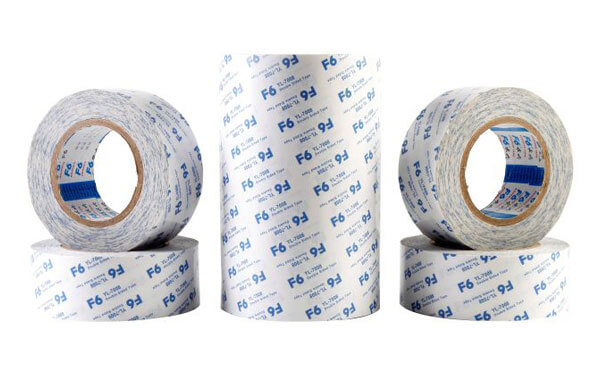
Reviewing the technical requirements of your project will lead you to the correct carrier. High-performance projects often require specialized materials that meet rigorous safety and durability standards. You can evaluate a wide range of professional-grade options by visiting the F6 Tape product page. This resource provides detailed insights into various carrier types for industrial use.
Summary
In conclusion, adhesive tape backing materials like PET, foam, and tissue serve distinct roles in bonding. PET provides high strength and heat resistance for precision tasks. Foam offers thickness and damping for gap-filling and mounting. Tissue ensures flexibility and ease of use for lamination. Matching the carrier to your surface ensures a lasting, high-quality bond.
FAQ
Q:Which backing material is best for high-temperature applications?
PET (Polyester) is the superior choice for high-heat environments. It can typically withstand temperatures up to 150°C or higher without losing its shape. This makes it ideal for electronics and automotive parts.
Q:Can I use tissue tape for heavy-duty mounting?
No, tissue tape is generally not recommended for heavy mounting. It lacks the tensile strength and thickness required to hold significant weight. Foam or thick PET carriers are better suited for load-bearing applications.
Q:What is the main advantage of using foam backing?
The primary advantage of foam is its ability to fill gaps between uneven surfaces. It provides vibration damping and creates a seal against moisture. Foam is the best choice for mounting objects on textured walls or vehicles.
Q:Is PET tape easy to tear by hand?
No, PET film is very strong and resistant to tearing. You will need a dispenser or cutting tool to apply PET-backed tapes. If you need a hand-tearable option, tissue-backed tape is the more appropriate choice.
Reference Sources
- Pressure Sensitive Tape Council (PSTC) – https://pstc.org/
- European Adhesive Tape Association (AFERA) – https://www.afera.com/
- ASTM International (Standards for Adhesives) – https://www.astm.org/