
 Canada
 USA
USA Japan
Japan


High Temperature Double Sided Tape for Automotive Engine Compartments: Selection Guide

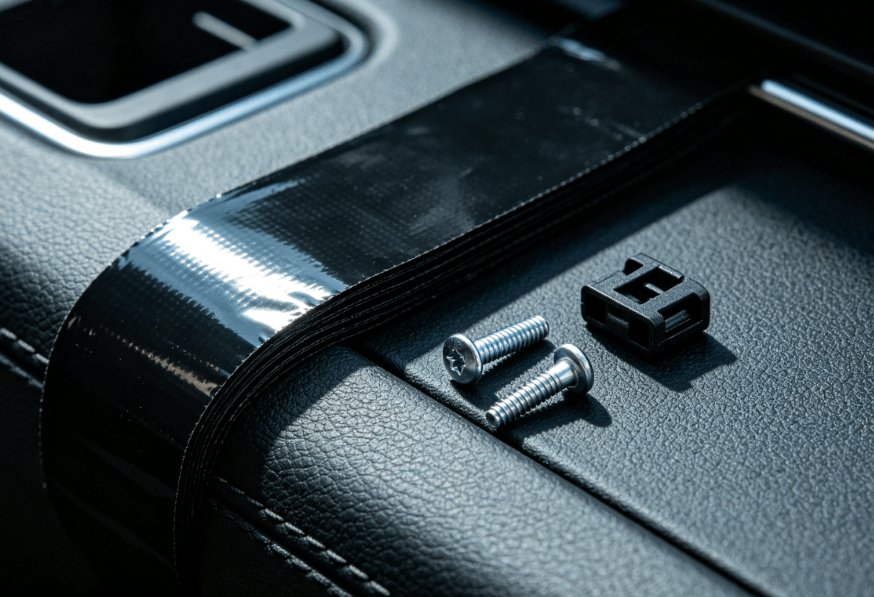
Automotive engine compartments are exposed to extreme conditions including high temperatures, vibration, moisture, and chemical exposure. Standard adhesive tapes often fail under these environments.
High temperature double sided tape provides a reliable bonding solution for automotive components where mechanical fasteners are difficult to use.
In the high-stakes environment of an automotive engine compartment, adhesive failure is not an option. For OEM project managers and Tier 1 automotive engineers, the challenge lies in securing components—ranging from cable clips and sensors to acoustic dampeners—against a backdrop of extreme heat, constant vibration, and chemical exposure. Selecting the correct high temperature double sided tape for car engine applications requires a deep understanding of polymer chemistry and mechanical stress distribution.
Standard pressure-sensitive adhesives (PSAs) typically lose structural integrity at temperatures exceeding 80°C. However, a modern car engine bay frequently experiences thermal peaks of 150°C or higher. When the adhesive reaches its glass transition temperature, it softens, leading to “creep” and eventual part detachment. This guide analyzes the technical benchmarks required for permanent bonding in these critical thermal zones.
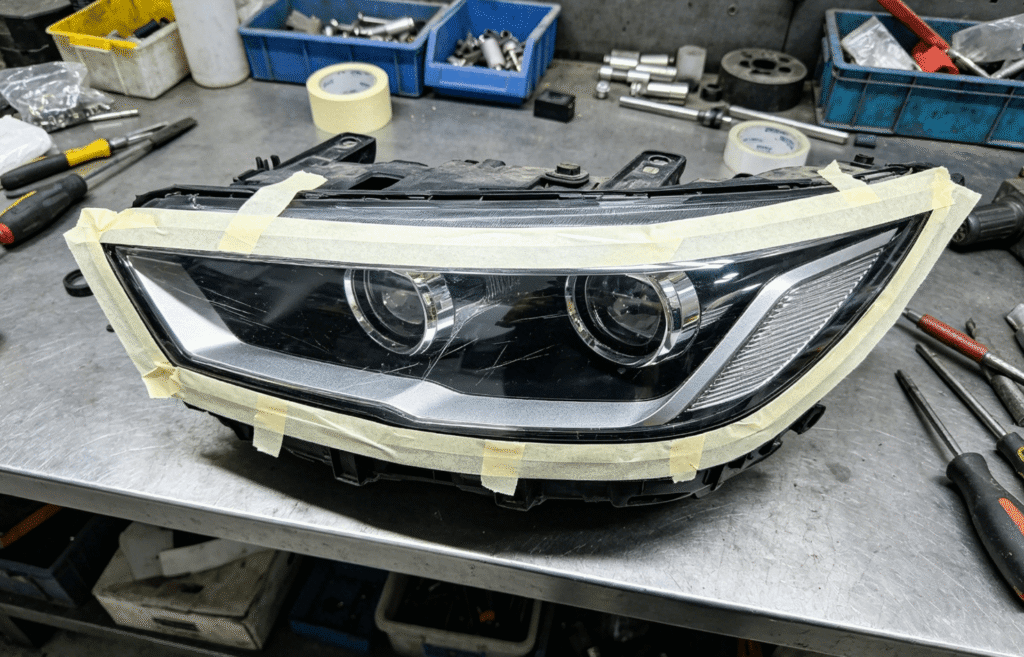
The Engineering Challenges of Under-the-Hood Environments
The engine compartment is perhaps the most hostile environment for any adhesive material. To specify a reliable high temperature double sided tape for car engine components, engineers must account for three primary environmental stressors:
1. Thermal Cycling and Peak Excursions
Engine components do not just stay hot; they undergo rapid heating and cooling cycles. This “thermal shock” causes materials to expand and contract at different rates. If the tape lacks sufficient viscoelasticity, the bond line will fracture. High-performance tapes utilize cross-linked acrylic chemistry to maintain a consistent modulus from -40°C up to continuous operating temperatures of 120°C, with short-term peaks up to 200°C.
2. Chemical and Solvent Resistance
Adhesives in the engine bay are routinely exposed to engine oil, gasoline, brake fluid, and road salt spray. Standard rubber-based adhesives will dissolve or swell when in contact with hydrocarbons. For automotive applications, modified acrylic adhesives are preferred due to their inherent resistance to chemical degradation and oxidation.
3. Surface Energy Management
Modern engine bays utilize a variety of substrates, including powder-coated metals, glass-filled nylons (PA66), and polypropylene (PP). Many of these are low-surface-energy (LSE) plastics that are notoriously difficult to bond. A specialized automotive tape must be engineered to “wet out” the surface quickly, ensuring maximum contact area at the molecular level.
Comparison: Acrylic Foam vs. Thin-Bond Industrial Tapes
When sourcing for automotive assembly, the choice often comes down to the carrier material. The following table highlights the performance trade-offs for high-temp applications.
| Feature | High-Temp Acrylic Foam Tape | Standard Double Sided PET Tape |
| Peak Temp Resistance | Up to 200°C (Short term) | Up to 120°C |
| Vibration Damping | Excellent (Viscoelastic core) | Poor |
| Gap Filling | High (Conforms to textures) | Low (Requires flat surfaces) |
| Solvent Resistance | High (Cross-linked acrylic) | Moderate |
| Best Use Case | Exterior trim, engine sensors | Interior cabin electronics |
For industrial-scale manufacturing, the specialized industrial double sided tapes utilized in automotive sectors often leverage a viscoelastic acrylic foam core. This core allows the tape to act as both a fastener and a shock absorber, neutralizing the mechanical energy generated by the engine’s internal combustion or the high-frequency hum of an electric powertrain.
Key Technical Specifications for Selection
To ensure the longevity of a bond, procurement consultants should audit the technical data sheet (TDS) for the following ASTM-tested metrics:
- 90-Degree Peel Adhesion (ASTM D3330): Measures the force required to remove the tape from a specific substrate. For engine applications, look for values exceeding 20 N/cm on stainless steel.
- Static Shear Strength (ASTM D3654): Vital for parts under constant gravitational or mechanical load. High-temp tapes must demonstrate zero slippage at 150°C for at least 10,000 minutes.
- Outgassing: In high-heat zones, certain adhesives release volatile organic compounds (VOCs). Low-outgassing tapes are essential to prevent the “fogging” of nearby optical sensors or headlamp lenses.
Application Logic: Where Specification Matters Most
The deployment of high temperature double sided tape for car engine components isn’t a “one-size-fits-all” scenario. The application dictates the material thickness and adhesive density.
Sensor and Harness Mounting
Electronic sensors must remain fixed despite high-frequency engine vibration. A 0.5mm to 1.1mm acrylic foam tape is typically used here to provide enough mass to dampen the vibration while maintaining a rigid bond to the engine block or manifold housing.
Acoustic and Thermal Shields
Heat shields are often bonded to the firewall or the underside of the hood. These materials are heavy and subject to intense radiant heat. In these cases, a tape with a reinforced carrier—such as glass cloth or high-temp PET—is used to provide the tensile strength needed to hold the weight of the shielding material.
EV Battery and Inverter Cooling
In the era of electrification, the “engine bay” has evolved. Inverters and battery management systems (BMS) require high-temp bonding that also offers dielectric insulation. Tapes in these zones must meet UL 94 V-0 flame retardancy standards while managing the heat generated during rapid DC charging.
Quality Assurance: The IATF 16949 Benchmark
In the automotive B2B supply chain, a supplier’s certification status is as important as the product’s TDS. Reliable partners, such as those providing advanced industrial adhesive solutions, must adhere to IATF 16949 standards.
This certification ensures that the manufacturing process for the tape includes:
- Advanced Product Quality Planning (APQP): Ensuring the tape is designed specifically for the automotive lifecycle.
- Statistical Process Control (SPC): Guaranteeing that every roll of tape produced has identical adhesive weight and thickness.
- Traceability: The ability to trace a specific roll of tape back to the raw chemical batch in the event of a field failure.
Strategic procurement involves moving beyond the “price-per-roll” metric. Instead, engineers calculate the Total Cost of Ownership (TCO), which includes the cost of assembly labor (manual vs. automated dispensing), the reduction in mechanical fasteners (screws and clips), and the mitigation of warranty claims caused by adhesive failure.
Why Choose F6 Tape for Automotive High Temperature Applications?
Choosing the right automotive adhesive tape supplier is critical for ensuring reliable bonding performance in demanding environments such as engine compartments. High temperature double sided tape must maintain strong adhesion, heat resistance, and long-term durability under continuous exposure to vibration, temperature changes, and automotive fluids.
F6 Tape provides customized adhesive tape solutions designed for automotive applications where reliable bonding performance is required.
Key advantages include:
Manufacturing Experience
With professional manufacturing capabilities and experience in adhesive tape production, F6 Tape understands the requirements of automotive bonding applications and provides solutions suitable for different industrial environments.
Customized Tape Solutions
Different automotive components require different bonding properties. F6 Tape can provide customized solutions based on:
- Application requirements
- Temperature resistance levels
- Surface materials
- Bonding strength requirements
- Thickness and size specifications
OEM and Industrial Support
For automotive manufacturers, suppliers, and distributors, stable product quality and consistent supply are essential. F6 Tape supports OEM cooperation and bulk orders with professional technical assistance.
Wide Range of Automotive Applications
High temperature double sided tape from F6 Tape can be used for applications such as:
- Wire harness fixing
- Electronic component mounting
- Sensor attachment
- Heat shield bonding
- Interior and exterior automotive parts assembly
By selecting an experienced automotive tape manufacturer, companies can reduce assembly complexity, improve production efficiency, and achieve reliable bonding performance in high-temperature environments.
FAQ
What is the maximum temperature high temperature double sided tape can handle?
High-performance automotive tapes typically handle continuous temperatures of 120°C (248°F) and short-term excursions (minutes to hours) up to 200°C (392°F). For anything near the exhaust manifold, specialized mechanical fasteners or heat-reflective tapes are required.
Can I use standard VHB tape for a car engine?
Not necessarily. While many VHB (Very High Bond) tapes have excellent strength, not all are rated for the specific chemical and UV exposure found under the hood. You must verify that the specific grade is “Automotive Grade” and has been tested against automotive fluids like oil and coolant.
How do I prepare the surface for high-temperature bonding?
Surface preparation is critical. We recommend a 50:50 Isopropyl Alcohol (IPA) and water mix to remove oils. For LSE plastics (like Polypropylene), a chemical primer or plasma treatment may be required to increase the surface energy and ensure a permanent bond.
Does the tape thickness affect its temperature resistance?
Thickness doesn’t directly change the thermal limit of the chemical bond, but it does affect how the tape manages thermal expansion. Thicker foam tapes (e.g., 1.1mm) are better at absorbing the differential expansion between a metal engine component and a plastic cover than very thin tapes.
Reference Sources
- IATF 16949:2016 – Quality management system requirements for automotive production.
- ASTM D3330 – Standard Test Method for Peel Adhesion of Pressure-Sensitive Tape.
- SAE J1756 – Determination of the Fogging Characteristics of Interior Automotive Materials.
- ISO 16750-4 – Environmental conditions and testing for electrical and electronic equipment (Climatic loads).
- UL 746C – Standard for Polymeric Materials – Use in Electrical Equipment Evaluations.